

As of September 7, 2026, Texas A&M camps remain on the fall baseball calendar for youth and high school players who meet the listed age or grade requirements. For Texas families, the main value is clarity: exact dates, age ranges, session lengths, costs, and player limits are already posted, so parents and coaches can match a camp to a player’s stage instead of guessing. Texas A&M announced the 2026 fall camp dates on July 16, 2026, through its official athletics site official announcement.
Texas A&M Camps Schedule By Date
The fall schedule is centered in College Station. All listed camps are scheduled for Olsen Field at Blue Bell Park and the Texas A&M Baseball Player Development Center. The official camp page lists each session as first-come, first-served for players who meet the posted age or grade rules camp registration details. That first-come setup matters for families because several sessions have small player limits.
Key Dates For Families
The posted schedule includes one September date, one October date, several November dates, and several December dates. The Aggie Experience Camp is scheduled for September 26, 2026, for graduates in the 2027 through 2031 classes. It runs from 8:30 a.m. to 2:00 p.m., costs $125, and is capped at 75 players.
The Pitcher / Catcher Camp is scheduled for October 10, 2026, for ages 13 through 19. It runs from 8:30 a.m. to 1:00 p.m., costs $250, and lists a limit of 40 pitchers or 24 catchers. That smaller group size makes registration timing worth watching, especially for catchers, where the posted limit is lower.
The Aggie Legends Camp appears twice on the posted fall calendar: November 1, 2026, and December 13, 2026. Each session is listed for 8th grade through high-school senior players, runs from 8:30 a.m. to 3:00 p.m., costs $300, and is capped at 44 players.
| Camp | Date | Eligible Players | Time | Cost | Limit |
|---|---|---|---|---|---|
| Aggie Experience Camp | September 26, 2026 | 2027-2031 grads | 8:30 a.m.-2:00 p.m. | $125 | 75 |
| Pitcher / Catcher Camp | October 10, 2026 | Ages 13-19 | 8:30 a.m.-1:00 p.m. | $250 | 40 pitchers or 24 catchers |
| Aggie Legends Camp | November 1 and December 13, 2026 | 8th grade-senior | 8:30 a.m.-3:00 p.m. | $300 | 44 |
| Hitting Under the Lights | November 20, December 4, December 11, 2026 | Ages 7-19 | 5:30-9:00 p.m. | $175 | 68 hitters |
| Fall Prospect Camp | November 21-22, 2026 | Ages 13-19 | Day 1: 9:00 a.m.-7:00 p.m.; Day 2: 8:30 a.m.-2:00 p.m. | $500 | 60 |
| Fall Elite Camp | December 5-6, 2026 | Ages 8-12 | Day 1: 9:00 a.m.-7:00 p.m.; Day 2: 8:30 a.m.-2:00 p.m. | $500 | 56 |
| Premier Stars Camp | December 12, 2026 | Ages 12-14 | 8:30 a.m.-3:00 p.m. | $250 | 60 |
Choosing A Camp By Age And Role
Not every camp fits every player, even if a player meets the listed age range. A 7-year-old hitter and a 19-year-old pitcher do not need the same day length, pace, or position focus. Parents should read the posted eligibility first, then consider whether the session length matches the player’s stamina, attention span, and baseball goals.
Which Texas A&M Camps Match Your Player
The Hitting Under the Lights sessions are listed for ages 7 through 19, which is the broadest age range on the schedule. Since those sessions run from 5:30 to 9:00 p.m., families with younger players should think through school-day fatigue, dinner timing, and the ride home from College Station. The camp title points to hitting work, but the provided research does not list exact station plans, drill order, or coach assignments, so families should rely on the official registration page for any added details.
For players ages 13 through 19, the Pitcher / Catcher Camp and Fall Prospect Camp offer older-player options. The Pitcher / Catcher Camp is position-specific by name and has separate limits for pitchers and catchers. The Fall Prospect Camp is the longest listed older-player format, with a two-day schedule on November 21-22, 2026. Day 1 runs 9:00 a.m. to 7:00 p.m.; Day 2 runs 8:30 a.m. to 2:00 p.m. That kind of schedule can test routine, recovery, and focus as much as baseball skill.
Younger players ages 8 through 12 have a two-day option in the Fall Elite Camp on December 5-6, 2026. The Premier Stars Camp on December 12, 2026, is listed for ages 12 through 14. Those middle-school ages are often a bridge point in Texas youth baseball: players are still learning good habits, but the game is starting to move faster. A camp choice should support that growth rather than rush it.
Preparing Without Overtraining
The value of Texas A&M camps will depend partly on how a player arrives. That does not mean extra swings until the hands blister or bullpen sessions stacked on top of league games. It means showing up rested, organized, and ready to listen. For a youth player, a clean routine in the week before camp can matter more than cramming new mechanics at the last minute.
Practice Habits Before Camp Day
Because the research provides dates and logistics rather than practice plans, the safest preparation advice is simple: keep baseball work age-appropriate. Hitters can focus on timing, balance, and controlled swings. Pitchers and catchers can keep throwing work sensible and avoid adding heavy volume just because a camp date is near. Players heading to longer two-day sessions should practice staying engaged between reps, listening to instructions, and moving with purpose from one task to the next.
Coaches can help by keeping the final pre-camp practices sharp but not exhausting. A good local team practice does not need to copy a college camp. It should build habits that transfer anywhere: warm up on time, play catch with intent, run the bases correctly, and compete without losing focus. For families building a weekly routine, this site’s Texas youth baseball practice plans can help coaches organize reps before camp season.
- Confirm the exact camp date, start time, and age or grade rule before planning travel.
- Match the camp length to the player’s maturity and current workload.
- Pack normal baseball gear, then check the official camp page for any required items.
- Plan food, hydration, and rest around the posted session times.
- Ask the player what he wants to learn, not just what he wants to show.
Planning For College Station Camp Days
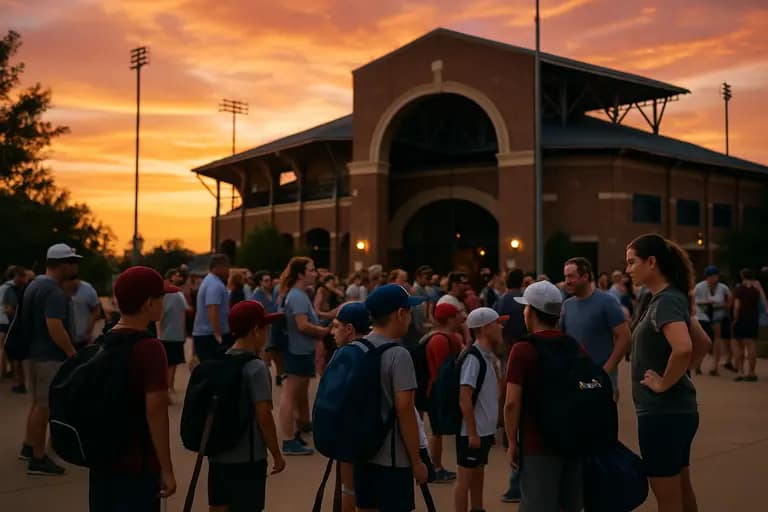
College Station camp days reward families who plan early. The schedule includes morning starts, evening hitting sessions, and two-day formats. That mix affects meals, sleep, school routines, and parent work schedules. A 5:30 p.m. hitting session may sound easier than an early morning report, but for younger players it can still be a long night after a full school day.
Reading Capacity And Cost
For Texas A&M camps with smaller capacity, families should treat the posted player limit as a real planning point. The Aggie Legends Camp lists 44 players. The Pitcher / Catcher Camp lists 40 pitchers or 24 catchers. The Fall Elite Camp lists 56 players. If a player has a narrow position need or a specific date window, waiting can reduce options.
Cost also varies across the fall schedule. The Aggie Experience Camp is listed at $125. Hitting Under the Lights is listed at $175 per session. The Pitcher / Catcher Camp and Premier Stars Camp are each listed at $250. Aggie Legends is listed at $300. The two-day Fall Prospect Camp and Fall Elite Camp are each listed at $500. Families should weigh those prices against age, readiness, travel needs, and whether the player can get the full value from the posted session length.
Parents should also keep expectations grounded. The research does not state that attendance guarantees recruiting contact, roster interest, rankings, or future placement. For youth players, the better goal is development: learn a cue, compete around new players, handle a different setting, and bring useful feedback back to the local team.
Why Texas A&M Camps Fit Youth Development
Texas A&M camps can fit a youth development plan because the posted schedule gives players several entry points by age, date, and baseball focus. A young hitter may use an evening session to experience a different practice setting. A middle-school player may use Premier Stars or Fall Elite to build confidence. An older pitcher, catcher, or prospect-age player may choose a longer or more position-specific option.
The key is fit. A camp should not replace local coaching, team practice, or steady skill work. It should support them. If the player returns home with one better routine, one clearer goal, or one stronger understanding of where he stands, the day has value. For Texas baseball families, that is the right way to view the fall schedule: not as pressure, but as a set of organized opportunities on clear dates at College Station facilities.