

I’ve seen many baseball tryouts in Texas and they can be chaotic. Clipboards are everywhere, parents are always around, and coaches are checking stopwatches. But, it doesn’t have to be this way.
A good tryout evaluation toolkit makes these events more professional. Why is this important for youth baseball coaching in Texas?
In Texas, baseball sometimes gets less attention than football. We need to use our resources well and find real talent. College scouts look for more than just talent. They want to see work ethic, leadership, and baseball skills. These are the same qualities youth coaches should look for from the start.
This guide is more than just a list. It’s your guide to fair, efficient, and defendable selections. It helps when parents disagree, saying their kid is the next big thing.
We’re talking about using numbers and coaching experience together. Can we just use numbers to judge a player? Or should we trust our instincts? The answer is to find a balance between player assessment strategies and real coaching wisdom.
Pre‑tryout checklist waivers rosters stations staff roles and timing
Think tryouts start with warm-ups? You’ve already lost. Victory comes from the details no one wants to talk about. Running successful baseball tryouts Texas coaches learn is all about preparation.
I learned this the hard way as a first-time head coach. We had forty kids, three coaches, and no plan beyond “let’s see who can hit.”
The result was chaos. Parents were angry, kids were confused, and everything was a mess.
Liability waivers are your first priority. Texas youth sports have specific legal needs that generic forms can’t cover.
You need lawyers who know sports law to review these waivers. They should cover medical emergencies, transportation, photos, and injury protocols.
Think of them as insurance in legalese. They’re boring until you need them most. Then, they’re vital.
Next, focus on roster management. How many players registered? What age groups? Which kids played for you before?
This info shapes your evaluation process. A returning player needs different standards than a newcomer.
Context is key in the team selection process. You can’t establish context without solid roster data. Use spreadsheets to track registration, previous teams, and parent info.
Station mapping needs precision. If you’re testing sprints, exit velocity, and throwing, you need space without bottlenecks.
I plan stations on field diagrams, like an urban planner. Where does the sprint end? Does it block infield grounders?
Can outfielders catch fly balls without danger from throwing stations? These questions seem paranoid until a line drive nearly hits your timer.
Clear staff roles eliminate confusion and errors. Everyone needs clear duties in writing.
Who times sprints? Who records radar gun readings? Who manages station transitions? Who answers parent questions?
Ambiguity slows things down and messes up your data. Different timing methods or techniques make comparisons useless.
| Staff Role | Primary Responsibility | Required Equipment | Skills Needed |
|---|---|---|---|
| Station Timer | Record sprint times with precision | Stopwatch, clipboard, roster | Attention to detail, consistency |
| Radar Gun Operator | Measure throwing and exit velocity | Radar gun, data sheets | Equipment familiarity, accuracy |
| Station Coordinator | Manage player flow between drills | Whistle, roster groups | Organization, communication |
| Parent Liaison | Answer questions, manage logistics | Facility map, schedule | People skills, patience |
Timing is more than just clock management. You’re balancing family schedules with evaluation needs.
Rushing evaluations misses key observations. Dragging them out loses focus and goodwill.
I aim for two-hour tryouts for youth. This allows full evaluation without losing energy.
The team selection process relies on quick, efficient execution. Every minute of confusion is lost opportunity.
Start planning three weeks before tryouts. This time lets you collect waivers, finalize rosters, train staff, and buy equipment without stress.
Preparation might seem dull compared to evaluating players. But it’s the foundation for making informed coaching decisions.
Without prep, you’re just guessing. With it, you’re shaping young athletes’ futures.
This is the difference between running tryouts and actually evaluating talent with precision and fairness.
Testing batteries 60 yd or 30 yd sprint exit velo throwing velo pop time IF OF grounder eval pitching bullpen command
Here’s where we separate the wheat from the chaff—the actual testing protocols that turn your tryout from a chaotic circus into legitimate athletic assessment. The numbers you collect during skills testing either validate what your eyes are telling you or expose the gaps in your observational powers.
The eternal question: sixty yards or thirty? The answer isn’t as simple as flipping a coin.
Your field dimensions matter, obviously. But more importantly, what are you actually measuring? The sixty-yard sprint reveals pure top-end speed, the kind that separates triples from doubles. The thirty-yard dash captures explosive first-step quickness, which matters more for stolen bases and getting jumps in the outfield.
Both metrics have legitimate value. Consistency in your measurement approach trumps the specific distance every time.
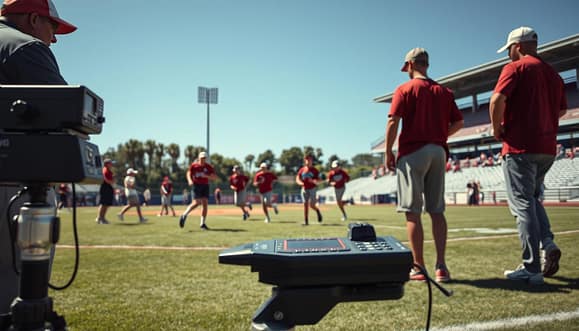
Exit velocity has become the stat everyone obsesses over, thanks to technology making velocity measurement accessible to programs beyond the elite level. Walk into any baseball tryouts Texas coaches organize these days, and you’ll see radar guns pointed at batting cages like they’re dispensing lottery numbers.
But here’s the inconvenient truth: exit velo without contact ability is just loud outs. A kid who crushes three balls at 92 mph and whiffs on seven others isn’t necessarily more valuable than the player hitting consistent line drives at 84 mph. Measure it, absolutely—but contextualize it within actual batting practice performance, pitch recognition, and swing decisions.
Throwing velocity matters across every position, though the implications shift dramatically based on defensive role. An outfielder’s cannon arm affects relay throws, assists at third, and whether runners even attempt to advance. A middle infielder’s arm strength matters less than quick release and accurate feeds on the double play.
For catchers, pop time remains the gold standard metric. Sub-2.0 gets college attention; sub-1.9 turns professional heads.
But smart evaluators dig deeper. Receiving skills, blocking technique, and leadership presence separate good catchers from great ones. A catcher is basically a field general, and you don’t promote generals based solely on their forty-yard dash times.
| Test Type | What It Measures | Position Priority | Context Needed |
|---|---|---|---|
| 60-Yard Sprint | Top-end speed, acceleration endurance | OF, SS, CF (high); C, 1B (lower) | Compare to base-running instincts during live play |
| 30-Yard Sprint | Explosive first step, quick burst | All positions (steal/jump evaluations) | Correlate with actual stolen base attempts |
| Exit Velocity | Bat speed, power | Universal (all positions) | Must pair with contact rate and plate discipline |
| Throwing Velocity | Arm strength, mechanical efficiency | C, OF (critical); IF (moderate) | Accuracy and release speed matter equally |
| Pop Time | Catch-to-release speed for catchers | Catcher-specific (essential) | Receiving and blocking skills complete the picture |
Infield and outfield grounder evaluations should test both routine plays and chaos scenarios. Anybody can field a ball hit directly at them at comfortable speed. That’s not evaluation; that’s participation.
The real questions emerge when you introduce variables: the short hop, the ball in the gap, the do-or-die play with imaginary runners advancing. How does the player adjust footwork? Do they attack the ball or wait for it? What’s their glove position at contact?
Consistency under pressure reveals more than ten perfect reps under laboratory conditions.
Pitching evaluations present their own labyrinth of complexity. Bullpen sessions reveal velocity, movement quality, and mechanical soundness. You can clock fastball speed, measure breaking ball depth, assess arm slot consistency.
But command under pressure requires live batters. A pitcher throwing absolute gas in a bullpen who can’t locate it within the same area code during games isn’t very useful. It’s the difference between range practice and actual combat.
Skills testing during baseball tryouts Texas programs conduct should include both controlled bullpen work and simulated game situations. Watch how velocity changes with runners on base (real or imaginary). Observe pitch selection when facing actual hitters instead of a catcher’s mitt.
The key throughout these testing batteries is standardization. Same conditions, same measurement tools, same instructions, same evaluators when possible.
Inconsistency invalidates comparison. If one group runs the sixty on a wet field while another runs on dry turf, your data is compromised. If different coaches are calling balls and strikes in bullpen sessions, your command evaluations become subjective noise.
Coaches notice effort and intangibles even beyond perfect performance metrics. The kid who sprints through the finish line versus the one who coasts tells you something no stopwatch can measure. The player who encourages teammates between stations reveals leadership that no velocity measurement captures.
Athletic assessment works best when numbers and narrative inform each other. The data provides objective anchors; your coaching eye supplies context and projection. Neither alone tells the complete story.
Scoring rubric downloadable sheets objective and coach feel blend
The scoring rubric is key to showing your coaching philosophy. It can make your decisions clear or lead to accusations of favoritism. A clear evaluation framework is like insurance for your coaching career.
Many programs struggle with player evaluation. They see it as a choice between data and gut feeling. Some say data is best, while others trust their experience.
Both views are wrong. Baseball isn’t played in a lab, so data alone isn’t enough. On the other hand, relying only on experience can lead to bias.
The best approach combines both. Your evaluation criteria should have clear, measurable standards. But also, leave room for experienced coaches to assess players.
Start with what the stopwatch and radar gun show. Your skills testing should include:
- Sprint times (60-yard or 30-yard splits)
- Exit velocity and throwing velocity across positions
- Pop times for catchers and accuracy percentages
- Pitch command metrics from bullpen sessions
- Fielding success rates on standardized drills
These measurements are solid and fair. They help avoid arguments about who’s faster. But, they don’t show baseball IQ, coachability, or effort under pressure.
Your evaluation sheets need numbers for what you can measure plus ratings for what you can’t. Use a 1-5 scale for intangibles with clear descriptions. This helps explain why a player is rated a certain way.
| Assessment Category | Objective Component | Subjective Component | Weighting |
|---|---|---|---|
| Athletic Performance | Sprint times, velocity readings, pop times | Body control, explosiveness, fluidity | 40% |
| Position Skills | Accuracy percentages, success rates on drills | Instincts, anticipation, game awareness | 30% |
| Mental Approach | N/A | Coachability, focus, composure under pressure | 20% |
| Potential Ceiling | Age-relative performance metrics | Physical projection, learning curve, work ethic | 10% |
This system values both what you can measure and what you must judge by experience. The weights show that some things matter more than others. This is fair and defensible.
Don’t make your rubric too complicated. It should be easy to use during games. If it’s hard, people will just use their heads instead.
The things you can’t measure are just as important. Work ethic, leadership, and how well a player handles pressure are key. These qualities make a player valuable, even if they’re not the fastest.
When rating players, be specific. A 4 in “baseball IQ” means something. It means the player can read the game and adjust their play. A 2 means they’re mostly reactive and struggle to adjust.
Having multiple coaches evaluate players helps. If there’s a big difference in ratings, you need to talk it out. This ensures everyone is on the same page.
Using both data and experience is not a weakness. It’s the best way to evaluate players. Saying you can only use one or the other is not true. The best approach is a mix of both.
Player meetings selection calls decline scripts and roster release timing
The hardest part of roster decisions isn’t choosing who makes the team. It’s telling them with respect and clarity. If the evaluation process tests athletic ability, then the team selection process shows your program’s character. This is where many coaches, despite their baseball tryouts Texas expertise, stumble.
Player meetings for those who earned spots should be more than just saying “Congratulations, you’re in.” They should clarify expectations, commitment levels, and practice schedules. It’s like the difference between handing someone keys to a car versus teaching them how to drive it.
The tougher conversations involve players who didn’t make the cut. Having a framework, not a rigid script, is essential here.
Crafting Your Communication Framework
A decline script shouldn’t sound like a telemarketer. It must cover critical points consistently. Your player communication framework should include:
- Genuine appreciation for their effort, time, and courage to try out
- Specific reasons for the decision tied to observable performance metrics
- Constructive feedback that identifies clear development pathways forward
- Encouragement to continue pursuing baseball through other programs or training
- Availability for follow-up questions from player or parents
The worst decline conversations rely on formulaic platitudes. Instead, try: “Your arm strength improved noticeably from last year, but we needed infield range that tested above 4.2 seconds on the 60. Working with a speed coach this summer could close that gap.”
Timing Your Roster Release
When should you announce roster decisions? The timing matters a lot. Too quick and families question if evaluation was thorough. Too delayed and you’ve created unnecessary anxiety.
Generally, 48 to 72 hours after tryout completion is best for baseball tryouts Texas programs. This allows you to review scoring sheets and prepare thoughtful communication.
Should you deliver news by phone or email? It depends on your relationship with the player and family dynamics.
| Communication Method | Best Used For | Key Advantages | Potential Drawbacks |
|---|---|---|---|
| Personal Phone Call | Players you’ve coached before or have strong relationships with | Shows respect, allows immediate questions, provides emotional closure | Can feel performatively cruel, forces composure during disappointment |
| Email Notification | Large tryout groups or players new to your program | Allows processing time, ensures consistent messaging, creates documentation | May feel impersonal, leaves questions unanswered initially |
| In-Person Meeting | Players who were borderline decisions or returning players | Most respectful approach, facilitates dialogue, demonstrates investment | Time-intensive, requires scheduling coordination |
| Text Message | Never appropriate for roster decisions | None for this context | Disrespectful, inadequate for serious news, unprofessional |
Made-the-Team Notifications
For players who earned spots, personal calls add a meaningful touch. This is your first chance to build team culture and excitement. Keep these calls focused but warm:
- Congratulate them on what impressed you most during evaluation
- Communicate next steps including parent meeting dates, uniform sizing, and first practice
- Set expectations about playing time philosophy, practice attendance, and commitment requirements
- Answer immediate questions about schedule, costs, or logistics
- Express excitement about what they’ll contribute to the team
These positive conversations build momentum and show your program values clear player communication from day one.
The Decline Conversation That Matters
Rejection conversations affect your program’s reputation and the young player’s relationship with baseball. Never rush through them or treat them as administrative tasks.
When delivering difficult news, be specific, constructive, and honest without being brutal. Avoid vague statements like “we went in a different direction” or “it was a really competitive tryout.” Those provide zero actionable feedback.
Instead, try frameworks like this: “You showed solid hitting mechanics with three line drives during live pitching. The roster decision came down to defensive versatility—we needed players who could cover multiple positions. Focusing your off-season work on outfield routes and first-base footwork would make you extremely competitive for next year’s team.”
Notice how this approach acknowledges strengths, explains the specific gap, and provides a clear development roadmap. That’s respectful player communication that serves the athlete’s long-term growth.
Following Up After Initial Contact
Your team selection process doesn’t end when you make the calls. Make yourself available for follow-up questions during the week after roster decisions are released. Some players and families need processing time before they can formulate meaningful questions.
Send a follow-up email three to five days later checking in, discussing development plans, or pointing families toward other quality programs. This shows your interest in player development extends beyond your own roster.
How you handle rejection defines your program’s character more than championships ever will. Do it with the seriousness, sensitivity, and professionalism it deserves.
Draft and parity strategies snake vs coach‑look guidelines
After the games end, Texas youth coaches face a big challenge. They need to turn numbers into fair teams. The numbers show who can hit and throw, but they don’t show how to keep everyone happy and competitive.
The team selection process has two main views. Snake drafts and coach-look assignments are both debated fiercely. Neither is clearly better, leading to endless discussions.
Snake drafts are like fantasy football, making them fun but not always fair for baseball. They make sure no coach gets all the best players. This way, every coach has a chance to pick in each round.

Snake drafts seem fair because they follow a set rule. Parents like this because it’s clear and fair. But, it focuses more on being fair than on making teams balanced.
Coach-look selection is different. It lets evaluators choose players based on more than just numbers. They consider who fits with the coach and who can play well together. They also think about practical things like carpooling.
| Selection Method | Primary Advantage | Main Drawback | Best League Fit |
|---|---|---|---|
| Snake Draft | Process transparency prevents favoritism perceptions | Ignores personality fit and logistical factors | Leagues with trust issues or new parent communities |
| Coach-Look Assignment | Balances talent, positions, and practical logistics | Requires trusted evaluators and established credibility | Mature leagues with experienced coaching staff |
| Hybrid Model | Combines transparency with evaluator discretion | More complex to explain and administer | Competitive leagues balancing multiple priorities |
Which method is best? It depends on your league’s values. If parents are skeptical, snake drafts might be better. But if you trust your evaluators, coach-look could be the way to go.
Draft strategies are important because they affect how fair the league is. A league with too much imbalance isn’t good for anyone, including the players.
Use rules to keep teams balanced, no matter the method. These rules help prevent teams from getting too strong. The exact rules depend on your league’s needs.
Here are some guidelines for keeping things fair:
- No team gets more than two top players.
- Every team has at least three players with experience.
- Teams can’t have too many players for one position.
- Age is spread out in multi-age divisions.
- Coaching relationships are tracked to avoid favoritism.
The debate between snake and coach-look drafts misses a key point. What’s more important is the rules you set. A well-regulated snake draft is better than a poorly done coach-look.
Explain your draft method before tryouts start, not after complaints begin. Share your criteria and reasons. Being consistent builds trust faster than any system.
Some Texas leagues use a mix of both methods. They start with snake drafts for fairness, then adjust for better balance. This approach needs clear explanations to parents.
The main goal is to help players grow and stay interested. If only a few teams are competitive, your system needs work, no matter how fair it seems.
Post‑tryout feedback for cuts and development plans
Every coach talks about player growth, but it’s hard when it’s about kids who didn’t make the team. We preach about growth and long-term goals, yet we often treat those who didn’t make it as if they’ve hit a dead end. The truth is, how you talk to players who didn’t make it shows more about your program than any win-loss record.
What makes a youth program stand out is structured, specific feedback that sees rejection as a chance to grow. A generic “thanks for trying out” email is worse than no email at all. It shows you didn’t really evaluate that player as an individual—you just sorted them into “roster” or “reject.”
Good feedback starts with honest assessment from the fairness principles in evaluations you set during skills testing. Players should know where they stand compared to your competitive level. Saying “great effort” doesn’t help a thirteen-year-old figure out what to work on.
Your feedback should include four key parts:
- Specific observations from your evaluation: “Your sixty-yard sprint time and arm strength tested above average for your age group, but your fielding mechanics on ground balls need refinement—you’re receiving the ball too upright instead of getting low and working through it.”
- Actionable recommendations with resources: “Spend this off-season working with a hitting instructor on your swing path. You’re dropping your back shoulder and creating too much loft. Here are three instructors in the Houston area who specialize in this mechanical issue.”
- Alternative opportunities: “You’re not quite ready for this competitive level yet, but our developmental program would give you at-bats and defensive reps to improve. Here’s the contact information for that coordinator.”
- Encouragement grounded in reality: “You’ve got athletic tools and work ethic, which means improvement is absolutely possible. Baseball development isn’t linear—plenty of players who didn’t make teams at your age went on to play at higher levels.”
This approach takes time and emotional effort. That’s why most coaches skip it. But consider the alternative: a kid who loves baseball gets a brief, harsh message saying they didn’t make it. No explanation. No guidance. Just rejection.
How many future players have we lost to that careless communication?
If you used player evaluation software during tryouts, you already have the data for specific feedback. Use their exit velocity numbers, pop times, and sixty-yard splits. Show them you actually measured their performance, not just made a subjective judgment.
| Feedback Approach | Impact on Player | Long-term Program Benefit |
|---|---|---|
| Generic rejection email with no specifics | Confusion, resentment, possible exit from sport | Reputation as impersonal program, reduced future tryout participation |
| Brief phone call with vague encouragement | Slight appreciation but no actionable direction | Neutral—meets minimum courtesy standard |
| Detailed written feedback with metrics and recommendations | Clear understanding of gaps, motivated improvement plan | Builds pipeline of developing players, enhances program credibility |
| In-person meeting with development roadmap and alternative options | Valued as individual, clear next steps, maintained passion | Creates ambassadors for program, strengthens community relationships, future talent retention |
The best development plans connect current assessment to future paths. Maybe a player’s arm strength isn’t ready for competitive travel ball, but their baseball IQ and work ethic make them perfect for mentoring younger players. Maybe their hitting mechanics need a complete rebuild, but their speed and instincts are great for a summer league that focuses on base-running.
Knowing where you stand in the team selection process helps target the right next steps. Without clarity, players might quit or waste time training the wrong skills for the wrong opportunities.
Development plans for cuts aren’t charity—they’re an investment in your sport’s future. Today’s cut thirteen-year-old might become next year’s roster addition. Or they might become a coach, a volunteer, or a parent who supports your program because you treated their kid with dignity during a difficult moment.
The players who made your roster will practice regardless of how you communicate with them. The players who got cut are at a crossroads where your feedback either fuels improvement or extinguishes their passion for baseball entirely. Which outcome do you want your program to create?
Video capture best practices tripod angles and privacy rules
Modern baseball tryouts in Texas use video a lot. But, many setups are shaky and ignore privacy laws. Good video capture turns your evaluation into solid evidence. It’s all about using the right equipment, angles, and following the law.
Use a tripod for clear footage. Handheld shots are bad for evaluating players. A tripod makes your video useful for tracking ball flight and swing analysis.
Camera angles are key. Different shots are needed for different parts of the game. Trying to do everything from one spot makes your video weak.
For batting mechanics and swing analysis, use a side view camera. This shows how the player loads, transfers weight, and swings. You need to see the whole body from start to finish.
For pitching delivery, side angles are best. They show hip rotation, stride, and arm slot. Add a camera from behind home plate for more detail on pitch movement.
For defensive play, use elevated angles. This captures the whole field. Ground-level shots miss important details like quickness and route efficiency.
Frame rate is important for analysis. 30fps is okay for general footage. But, for detailed analysis, use 60fps minimum. Your smartphone can do this.
| Evaluation Component | Recommended Angle | Minimum Frame Rate | Key Metrics Captured |
|---|---|---|---|
| Batting Mechanics | Side view perpendicular to plate | 60fps | Swing path, weight transfer, extension, exit velocity context |
| Pitching Delivery | Side view + elevated home plate angle | 120fps | Arm slot, stride, hip rotation, pitch command, velocity mechanics |
| Defensive Positioning | Elevated wide angle | 60fps | First step, route efficiency, reads, throwing accuracy |
| Baserunning Speed | Side angle parallel to baseline | 60fps | Acceleration, form, game speed decisions |
Privacy rules for filming minors are strict. Texas protects children’s privacy, and youth sports must follow. Get written consent from parents before filming.
Consent forms must be clear. Parents should know how you’ll use the footage:
- Evaluation purposes only for coaching staff review
- Development feedback shared with individual families
- Highlight reels for player recruitment promotion
- Social media or public posting (requires additional specific consent)
- Retention period and deletion timeline
Don’t rely on vague waivers. Create a specific video consent form. Include details on access, storage, and deletion.
Storage and access are critical. Decide who can see the footage. This affects security and liability.
Best practice: Store footage on a password-protected cloud. Limit access to coaching staff. Never post identifiable footage on social media without consent.
Technology should help, not hinder. If video capture doesn’t improve your assessment, it’s not worth it. Focus on what’s valuable.
Integrate video with your scoring rubric for specific uses. Film batting practice for exit velocity and swing consistency. Record pitching for command and velocity under fatigue.
For recruitment, use well-edited highlight videos. Keep them short and showcase key skills. Include player information and contact details.
Equipment doesn’t have to be expensive. A $50 tripod and a smartphone are better than a pricey camera system. Focus on angles, frame rates, and legal use.
Good video documentation supports your evaluation, protects your organization, and helps players improve. Poorly done, it wastes time and exposes you to liability. Choose wisely and implement well.
Sample emails to parents timeline from invite to uniform sizing
Let’s talk about the invisible skill that separates professional youth coaches from well-meaning chaos agents: systematic parent communication. Your evaluation rubric might be flawless, your timing stations perfectly designed, but if your communication resembles a game of telephone played underwater, you’re setting yourself up for failure.
Every experienced coach running baseball tryouts Texas knows this truth. Clear, timely communication prevents roughly 90% of the headaches that make you question why you volunteered for this in the first place.
Your organizational planning should include a complete communication timeline. This starts weeks before the first player steps onto the field and continues through the first practice. Each touchpoint serves a specific purpose in building trust and setting expectations.
Here’s what a professional communication timeline looks like from invitation through uniform ordering:
| Timeline Stage | When to Send | Purpose | Critical Components |
|---|---|---|---|
| Initial Invitation | 3-4 weeks before tryouts | Provide detailed information and set a professional tone | Date, time, location, what to bring, weather plans, duration, format, FAQ link |
| Pre-Tryout Reminder | 48 hours before event | Reduce no-shows and last-minute confusion | Quick bullet-point recap, parking details, registration table location, emergency contact |
| Post-Tryout Acknowledgment | Within 24 hours of tryouts | Confirm receipt and set decision timeline | Thank you message, specific decision date, next steps overview, evaluation transparency |
| Roster Announcement (Selected) | By stated deadline | Celebrate selection and outline commitments | Congratulations, first practice details, season schedule, financial obligations, equipment needs, uniform sizing form |
| Respectful Decline | Same day as acceptances | Maintain dignity and provide growth path | Appreciation, specific feedback offer, alternative opportunities, invitation to future events |
The initial invitation email sets your entire organizational tone. Send it with minimum two weeks’ notice, preferably three to four. This isn’t just courtesy; it’s practical recognition that families juggle multiple commitments and need planning time.
Your invitation should answer every question before it gets asked. Include the obvious details like date, time, and location, but also cover the less obvious: what to wear, what equipment to bring, how long it will last, what the format involves, and what happens if weather doesn’t cooperate. Professional operations think three steps ahead; casual pickup games wing it.
The 48-hour reminder exists because despite your beautifully crafted initial email, approximately one-third of families will forget until reminded. This isn’t an insult; it’s reality. Keep this message short and action-oriented with bullet points that take 30 seconds to scan.
After tryouts conclude, send an acknowledgment within 24 hours. This simple message does heavy psychological lifting. It confirms you received their information and commits you to a specific decision timeline. Then actually meet that deadline, because nothing erodes trust faster than missing your own stated date.
Your roster acceptance email transforms your team selection process from evaluation to execution. It should include congratulations (people like feeling celebrated), next steps clearly outlined, first practice details, season schedule overview, and importantly, financial obligations with payment schedule. Transparency about costs prevents ugly surprises later.
Add uniform sizing information with clear instructions and deadlines. This seems minor until you’re scrambling to get jersey numbers sorted three days before the season opener. Ask for measurements now, order promptly, and you’ll avoid that chaos.
For players not selected, craft your decline email with the same care as your acceptance message. Express genuine appreciation for their participation. Acknowledge that decisions are difficult and based on current roster needs. Offer specific feedback or the opportunity for a feedback conversation. Suggest alternative opportunities instead of leaving them in a dead end. Many of these families will return next season, and your professionalism now builds goodwill for later.
Template these communications but personalize them strategically. Mail merge functionality is your friend, but verify that “Dear [PARENT_NAME]” actually populates with real names before hitting send. Nothing screams “I don’t actually care” quite like a form letter with placeholder text.
Throughout your parent communication timeline, maintain consistent tone. Professional but not corporate-stiff. Friendly but not inappropriately casual. Informative but not overwhelming. You’re communicating with people who are investing significant time and money in their child’s development. That investment deserves respect.
Here’s a sample invitation email structure that covers all bases:
- Subject line: Clear and specific, e.g., “2024 Select Baseball Tryout Details – March 8th”
- Opening: Warm welcome and excitement about the upcoming season
- Logistics block: Date, time, location with address and parking instructions
- What to bring: Glove, bat, cleats, water, appropriate athletic clothing
- Format overview: Brief description of stations and evaluation process
- Duration: Expected start and end times
- Weather contingency: How you’ll communicate postponement or location changes
- Questions: Contact information or FAQ link for additional inquiries
- Closing: Encouraging message and signature with your coaching credentials
Sample acceptance email components should include:
- Congratulations message: Celebrate their selection genuinely
- First practice: Date, time, location, what to bring
- Season commitment: Practice schedule, game schedule, tournament dates
- Financial details: Registration fees, uniform costs, tournament fees, payment schedule
- Equipment requirements: What they need to purchase and where to get it
- Uniform sizing: Link to sizing form with clear deadline
- Team policies: Playing time philosophy, attendance expectations, communication protocols
- Next steps: What they need to do immediately versus what can wait
Your decline email should maintain dignity while providing value. Express sincere appreciation for their participation and effort. Acknowledge that decisions are difficult and based on current roster needs. Offer specific feedback either in the email or through a scheduled conversation. Suggest alternative opportunities instead of leaving them in a dead end. Many of these families will return next season, and your professionalism now builds goodwill for later.
The difference between good parent communication and great communication often lies in proactive updates. Don’t wait for questions to flood your inbox. Send periodic meaningful updates as the team selection process unfolds. “We’re currently reviewing evaluations and remain on track for our March 15th notification date” takes 30 seconds to write and prevents 20 anxious emails.
Remember that youth sports represent significant family investments. Time commitments alter work schedules and weekend plans. Financial commitments compete with mortgages and college savings. Your communication should honor that reality with professionalism that matches the seriousness of their commitment. You’re not just organizing a baseball team; you’re stewarding family resources and childhood development. Communicate appropriately.
Download kit links and editable templates
Reading about evaluation systems is one thing. But using them on a Tuesday evening with thirty kids? That’s a different story. You need real coaching resources you can use right away.
Your tryout evaluation toolkit should have customizable forms. Start with a pre-tryout checklist for liability waivers and equipment inventory. You’ll need templates in both PDF and spreadsheet formats. This way, all coaches can use what they prefer.
The communication template package is key. You’ll need invitation emails, reminders, roster acceptance letters, and decline notifications. I learned the hard way about the importance of clear wording. A poorly timed email led to seventeen parent calls before breakfast.
Station rotation schedules should work for any team size. You’ll also need video capture guides with equipment checklists and parental consent forms. These must meet Texas legal standards.
The scoring rubric templates mix objective measurements with coaching assessments. You’ll also need snake draft worksheets and parity analysis tools. These help balance teams, no matter how you choose your players.
Every template is available in Microsoft Word, Google Docs, Excel, and Google Sheets. You can’t use rigid, unchangeable forms. Your program is unique, and it needs customizable options.
This collection turns tryout chaos into a structured assessment. Download, customize, implement, and refine each season based on your experience.