

Here’s a truth nobody likes to share at travel ball meetings: most camps are just babysitting with radar guns. You pay a lot for drills that treat all pitchers the same. This means a tall power arm gets the same treatment as a short finesse pitcher.
But there are programs that really work. They start with something not so exciting: movement screening. It’s not about throwing. It’s about checking posture, stride, and mobility assessment. This shows if a pitcher’s strength is real or just a cover-up.
This isn’t like a TSA pat-down. It’s about understanding what you’re working with. The throwing mechanics and patterning drills show if a shoulder can handle fastballs without surgery by age 19.
The results are clear. Programs like Tread Athletics helped Cole Ragans go from 94 to 101 mph. This is real training, not just summer camps with L-screens.
Throwing Schedule on‑ramp Pen Days Recovery and Long Toss Map
Many youth pitching camps treat throwing like a competition. They push kids to throw until they can’t lift their arms, then ice them. This isn’t development; it’s like controlled demolition with a baseball.
The throwing schedule on-ramp is like a blueprint. It needs careful planning, like a Mars landing. Going from zero throws to 75 pitches in one day is not safe. Yet, this happens at camps across America every summer.
Start with a plan that respects biology. Week one might include long toss to 120 feet and light bullpen work. Week two adds more distance and throws, up to 60-70.
The Throwzone Academy shows this works. They have three sessions a week for two-and-a-half hours each. Each pitcher gets a personalized plan, not a one-size-fits-all approach.
They believe playing in games often doesn’t improve skills. Instead, development is key. This idea makes travel ball coaches nervous.
Bullpen planning is important in this framework. Pen days are structured, not random throwing sessions.
Here’s what a proper pen day includes:
- Targeted warm-up sequence with specific movement patterns
- Command work at submaximal effort before intensity increases
- Progressive velocity work with adequate rest between repetitions
- Pitch-specific work tailored to individual development needs
- Deceleration protocols with weighted balls for arm health
Recovery days are active, not just sitting on the couch. They include arm care, mobility work, and monitored long toss. The arm care schedule is part of a cohesive system, not an afterthought.
Long toss mapping is based on distance and intensity. It starts at comfortable distances and gradually increases. This approach helps avoid injuries.
A smart long toss map looks like this:
- Weeks 1-2: Maximum distance 120-150 feet, focus on extension and follow-through
- Weeks 3-4: Progress to 180 feet, introduce compression throws on return
- Weeks 5-6: Reach 200+ feet for appropriate athletes, maintain mechanical integrity
- Recovery throws never exceed 120 feet regardless of training phase
The Throwzone uses weighted ball throwing routines tailored to each pitcher. This approach is personalized, not generic. It focuses on individual needs and developmental stages.
Pitch counts in this schedule follow recovery science, not tournament schedules. A 13-year-old throwing 85 pitches on Saturday needs four days of recovery before throwing again.
Compare the approaches in your youth pitching camp planning:
| Training Component | Traditional Camp Approach | Evidence-Based Progression |
|---|---|---|
| Weekly Throwing Frequency | 6-7 days with games | 3 structured sessions plus games |
| Volume Management | Throw until fatigue or game ends | Prescribed counts based on recovery |
| Long Toss Protocol | Maximum distance competition | Mapped progression with quality focus |
| Recovery Integration | Ice and hope | Active protocols and monitoring |
Post-workout arm protocols include specific exercises, not just ice and ibuprofen. Weighted ball deceleration work helps absorb forces from throwing. This is essential for any throwing progression.
Your camp’s bullpen planning should be like air traffic control. Every session has a purpose, spacing, and clear goals. Intensity changes based on competition and recovery.
The volume of throwing follows a prescription logic. You wouldn’t take all your antibiotics at once. Don’t rush throwing volume for tournaments. Progressive overload needs time, and shortcuts can lead to injuries.
This structured approach makes camps that develop pitchers stand out. The on-ramp isn’t sexy, but it builds durable athletes. They improve velocity, command, and longevity.
This is worth more than any trophy. And it’s definitely worth more than funding an orthopedist’s yacht collection.
Command First Target Ladders Differential Command Approach Plans
Pitching coaches always talk about command. But when a pitcher throws a 91 mph fastball, suddenly everyone wants to talk about arm strength. I’ve seen this happen at many showcases.
The kid who throws 84 mph and paints the corners gets a nod. But the 90 mph pitcher who hits two batters gets all the attention from college coaches.
Velocity is important, but command development is key for a long career. A pitcher with speed but no control might get drafted. But the pitcher who can’t locate is often in extended spring training, while the command artist starts games in Double-A.
The hierarchy is not just about speed or control. It’s about both.
Throwzone Academy gets this right. They know throwing strikes is important. But they also know that faster pitching generates more swings and misses. This means command is even more valuable when you have speed.
Think of it like a car. Command is like excellent handling. Speed is like a Ferrari. You need both, but speed gets you noticed first.
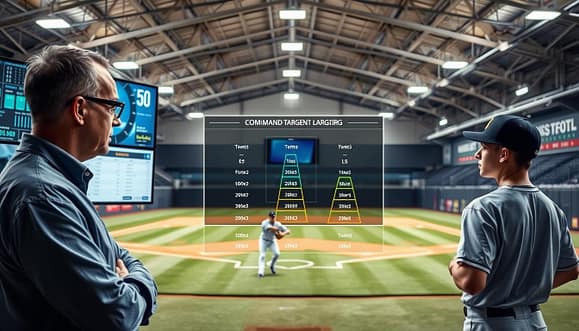
Good bullpen design starts with a plan, not just throwing pitches. Target ladders make bullpen work more than just repetition. They help build skills through a targeting system that improves pattern recognition.
Here’s how smart programs do it:
- Low-to-high progressions that train release point consistency before worrying about edges
- Quadrant work that builds four-zone command before demanding corner painting
- Mirror sequences that develop feel for replicating locations on both sides of the plate
- Intentional miss-locations that teach pitchers how to adjust mid-outing without panicking
Why practice missing your spot?
Because in-game adjustments are what separate pros from the rest. Pitch location training that only rewards perfection can make mechanics brittle under pressure.
Differential command is what separates showcase arms from scholarship-worthy pitchers. Commanding your fastball is basic. Commanding your changeup with the same arm action is artistry. This gap requires thousands of reps with specific feedback.
Most programs treat all pitches the same. They don’t.
Fastball command comes from repetition and mechanics. Off-speed command needs neurological pattern matching. This is complex.
Video analysis is key in serious programs. It’s the feedback loop that makes command drills effective. Throwzone’s focus on video review addresses the biggest command killer: the gap between what pitchers think they’re doing and what’s actually happening.
I’ve seen pitchers think they’re releasing out front but are actually releasing early. Without video, this misconception persists through thousands of reps.
Tunneling exercises add another layer. They train deception, making different pitches look the same for as long as possible. This isn’t about tricks. It’s about making your command more effective by disguising your intent.
Here’s a sample progression structure that reflects actual command development sequencing:
| Phase | Focus Area | Success Metric | Video Review Element |
|---|---|---|---|
| Foundation (Weeks 1-2) | Strike zone presence, any location | 70% strike rate across all quadrants | Release point clustering analysis |
| Refinement (Weeks 3-4) | Quadrant-specific command | 60% hit target quadrant on call | Arm slot consistency comparison |
| Precision (Weeks 5-6) | Edge work and corner command | 50% corner accuracy on demand | Late shoulder rotation timing |
| Integration (Weeks 7-8) | Differential command across pitch mix | Changeup command within 15% of fastball | Tunneling overlay comparison |
Notice how success metrics decrease as skills increase? This is intentional. Programs that expect 80% accuracy on corner work from day one are either very talented or dishonest.
Consistency from outing to outing is the final frontier in command development. Any pitcher can locate well when fresh and relaxed. But can they do it consistently? That’s what college coaches evaluate.
They’re not watching your best bullpen. They’re watching your fifth start in three weeks. Can you execute your fastball to the glove side? That’s command that matters.
Smart camps build this reality into their structure. You’re not just developing command in a sterile bullpen. You’re training command that holds up when tired, when counts go sideways, and when facing a tough hitter.
Velocity might get you the opportunity, but command determines whether you keep it.
Velocity Safely Sprint Work Med Balls Intent Pens and Using Radar Smartly
The physics of throwing hard doesn’t care about your travel team politics. Velocity is baseball’s great equalizer—the one measurable skill that cuts through coaching nepotism and organizational bias. But here’s the tension that makes this topic fascinating: chase velocity recklessly and you’re booking orthopedic appointments; ignore velocity training entirely and you’re accepting a biological ceiling that might sit 8 mph below your actual genetic.
So how do we build throwing speed without building injury risk at the same rate? The answer lives in the word “safely” tucked into this section’s title. That’s not legal disclaimer language—it’s a training philosophy.
Sprint work for pitchers isn’t conditioning. It’s patterning drills that teach your nervous system what explosive hip engagement feels like without a baseball creating artificial movement constraints. When you sprint at 90% effort with proper mechanics, you’re training the same kinetic chain sequencing that powers a 95 mph fastball.
The connection between sprint mechanics and throwing velocity isn’t metaphorical. Both movements require triple extension—ankle, knee, and hip firing in rapid sequence to generate force. When pitchers learn to load their hips and explode forward in sprint training, that motor pattern transfers directly to the mound.
Medicine ball drills build the foundational force production capacity underlying every high-velocity fastball. We’re talking slam variations, rotational throws, overhead tosses, and chest passes that develop explosive power through full ranges of motion. Throwzone Academy incorporates this explosive training alongside ropes, chains, box jumps, and weighted sprints for complete power development.
The beauty of medicine ball work is its safety profile. A 6-pound med ball moving at maximum velocity teaches force production without the deceleration demands of a 5-ounce baseball traveling 90+ mph. You’re building the engine without constantly red-lining it.
Quality programs structure these patterning drills into periodized training blocks. You don’t throw med balls randomly on Tuesdays because someone posted a drill on Instagram. You integrate them strategically during strength phases when arm volume is lower and power development is emphasized.
Intent pens are where velocity training gets psychologically interesting. You’re creating a structured environment where maximum effort is encouraged within carefully designed constraints. This teaches your body that “trying hard” and “throwing hard” aren’t the same neurological process.
Most young pitchers think throwing hard means gritting your teeth and muscling the baseball. That’s a recipe for 83 mph with compensatory movement patterns. Real velocity comes from relaxed aggression—a paradox that medicine ball drills and intent throwing sessions help solve.
Now let’s talk about radar gun usage, because this is where camps either accelerate development or create anxiety-driven athletes. The radar gun is a measurement tool, not a motivational device. Programs like Throwzone record all reps and velocities because data reveals training patterns and validates programming decisions.
But smart coaches don’t let 15-year-olds turn bullpens into max-effort showcases for social media. The radar tells you whether your training stimulus is working over weeks and months. It doesn’t determine your self-worth on Tuesday afternoon.
Tread Athletics has documented this approach with remarkable results. Their testimonials show pitchers jumping from 86-87 mph to 92-95 mph, 88 to 98 mph, 90 to 98 mph. These aren’t outliers—they’re the predictable result of proper velocity training combined with intelligent monitoring.
When Brice Deaton gained 8 mph in less than a year, it wasn’t because someone yelled “throw harder” while pointing a radar gun. It happened because coaches programmed the right ratio of explosive power work, intent throwing, and recovery. The radar simply confirmed what the training methodology predicted.
Perhaps most tellingly, MLB pitcher Mitch Keller described his jump from 93-95 mph to touching 100 mph as “getting back to being me.” That’s the goal of intelligent velocity development—unlocking natural talent instead of forcing artificial mechanics.
Your camp blueprint should detail exactly how these elements integrate. Sprint mechanics sessions might happen twice weekly during off-season training blocks. Medicine ball drills could bookend throwing days, priming the nervous system before bullpens and aiding recovery afterward.
Intent pens need clear parameters. Maybe it’s 8-10 throws at 90% effort with full recovery between reps. Maybe it’s constraint-based work where pitchers throw from their knees or use step-behind mechanics to remove lower-half compensation patterns.
Radar gun usage requires written protocols. Measure everything, but don’t turn every measurement into a performance evaluation. Track trends over training blocks, not individual bullpen sessions. Use velocity data to validate recovery status—unexpected drops often signal fatigue before pitchers consciously feel it.
Here’s a framework that programs like Throwzone and Tread Athletics have proven works:
| Training Component | Frequency | Intensity | Primary Benefit |
|---|---|---|---|
| Sprint mechanics work | 2-3x weekly | 85-90% effort | Hip loading patterns and kinetic chain sequencing |
| Medicine ball drills | 3-4x weekly | Maximum intent | Explosive power and rotational force production |
| Intent pens | 1-2x weekly | 90-95% effort | Velocity expression with movement quality |
| Radar monitoring | All throwing sessions | Measurement not motivation | Trend validation and fatigue detection |
Band work, Plyocare throws, and reverse-weighted implements fit into this system as complementary tools. Throwzone includes various deceleration work with weighted balls because building velocity safely means training both acceleration and deceleration capacities equally.
The programs that produce consistent velocity gains share common characteristics. They measure everything systematically. They periodize intensity instead of maintaining constant max-effort work. They teach movement quality before chasing radar readings.
And perhaps most importantly, they recognize that velocity development is a process measured in months and years, not a light switch you flip during a weekend showcase camp. The radar gun is your feedback mechanism, confirming whether your training methodology is working. It’s not the methodology itself.
Build your camp’s velocity component around explosive power development first, movement patterning second, and intent throwing third. Use the radar to validate your programming decisions, not to create anxiety-driven athletes who think their value as pitchers lives and dies with every bullpen reading.
That’s how you square the circle—developing legitimate velocity gains while keeping arms healthy enough to actually use that velocity when games matter.
Secondary Pitches Age Appropriate Grips Changeup First Breaking Ball Later
Every orthopedic surgeon in Texas can spot a premature breaking ball pitcher right away. They know it because they see the nice cars these pitchers drive. The truth is, the curveball your twelve-year-old learned might be from a 2009 YouTube video. It’s not about long-term development, but weekend wins.
Real pitch development means understanding that biology doesn’t bend to your summer plans. It’s about letting your body grow at its own pace.
The talk about secondary pitches can tell you a lot about a program. A good youth pitching camp focuses on building a strong foundation. They teach the changeup first and the breaking ball later. This approach is about long-term growth, not quick fixes.
Biomechanics and skeletal maturity are key reasons for this order. The changeup helps with deception and forearm rotation, which is good for the elbow. But teaching breaking balls too early can lead to injuries.
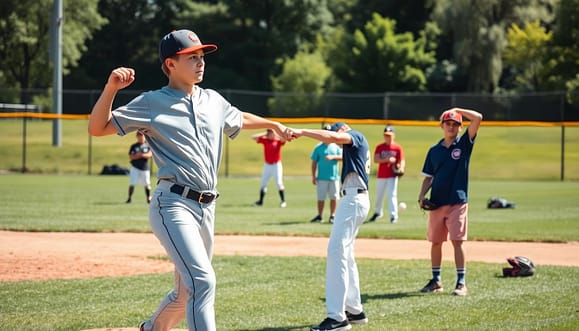
The changeup mechanics start with fastball command. You can’t sell a changeup if your fastball isn’t respected. Programs introduce changeup grips that match hand size and arm speed first. Only after mastering velocity, command, and maturity do they introduce breaking balls.
Tread Athletics shows how this approach works. Luke Thelen’s pitches improved as he gained velocity to 100 mph. His arsenal grew with his physical development, leading to sustainable gains.
Your age-appropriate training plan should have clear guidelines. It should stand up to pressure from coaches. Here’s what it looks like:
- Ages 9-12: Focus on fastball command and basic changeup grips.
- Ages 13-14: Improve changeup mechanics and introduce two-seam movement.
- Ages 14-15: Start breaking ball work for physically mature athletes.
- Ages 16+: Develop full arsenal, including sliders and cutters.
- All ages: Always work on fastball velocity and command.
No breaking balls before age 14-15, no matter the tournament schedule. This respects neuromuscular development. Hand size is also important, as it affects grip choice.
| Development Aspect | Changeup First Approach | Premature Breaking Ball | Long-term Impact |
|---|---|---|---|
| Injury Risk | Low—promotes pronation | High—encourages torque | Elbow health through college |
| Fastball Enhancement | Improves via arm speed match | Degrades as focus shifts | Velocity ceiling preservation |
| Deception Quality | Sustainable through mimicry | Relies on manipulation | Effectiveness at higher levels |
| Physical Requirements | Works with current maturity | Demands premature adaptation | Natural development timeline |
Grip variations are as important as pitch timing. A good youth pitching camp offers various changeup grips. Circle changes fit larger hands, while three-finger changes are better for smaller hands. Vulcan changes teach finger pressure.
Measuring secondary pitch development goes beyond just fooling hitters. It looks at arm speed, spin axis, and command zones. These metrics predict college success, not just travel ball wins.
Programs like Throwzone Academy focus on building a strong arsenal. They understand scouting realities. Scouts look for pitchers who can command their pitches, not just throw different ones.
The age-appropriate training philosophy is not just about being nice. It’s about respecting the body’s growth timeline. Your camp plan should outline when to introduce each pitch and how to measure them. We’re building pitchers for the long haul, not just for weekend wins.
Live Setting Game Plan Pickoffs Holds 1st and 3rd Communication with Catcher
Game situations show us the truth. Controlled drills don’t always mean success in games. I’ve seen many pitchers do great in practice but struggle when it really matters.
This is why game situation training is key. It’s not just about playing games. It’s about structured training that prepares you for real games.
Throwzone Academy gets this. They include mound work in their training. They know that playing more games doesn’t always help improve skills. Controlled environments do.
Game planning is more than just throwing strikes. It’s about understanding the game and making smart decisions. It’s about recognizing patterns and adjusting your strategy.
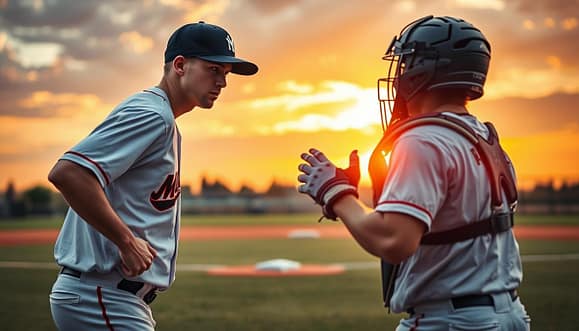
Pickoff moves are often overlooked. But they’re important. Without proper training, pitchers struggle to pick off runners.
Holds to second and third are also critical. So is 1st-and-3rd defensive strategies communication. These skills help pitchers compete, not just throw.
Your bullpen design for live settings should include these essential elements:
- Simulated game situations with runners on base and specific count scenarios
- Consequences for execution failures that mirror real game pressure
- Decision-tree work that teaches lineup turnover thinking
- Communication drills with catchers that go beyond head-nodding
- Video review sessions that build analytical capacity
Tread Athletics shows what this looks like. They review video together and give feedback. This builds self-diagnostic skills.
The catcher coordination aspect is vital. Pitcher-catcher communication is learned, not instinctive. Your camp needs clear protocols for signs and calls.
Here’s how to make live reps meaningful:
- Design scenario cards that specify runner situations, outs, score, and inning context
- Track results with the same rigor you’d apply to bullpen velocity readings
- Rotate catchers so pitchers learn to communicate with different styles
- Include pickoff attempts as mandatory elements, not optional extras
- Build in mid-simulation adjustments where coaches provide real-time feedback
This isn’t just scrimmage ball. Every simulation should have clear goals and results. Without this, development happens by chance.
Consider how different training environments affect game situation work. Bullpen design matters. You need space for full defensive setups.
Pickoff moves need dedicated instruction. Start with mechanics like footwork and timing. Then add tactical application.
The 1st-and-3rd scenario is a key test. Does the pitcher know defensive strategies? Can he execute pickoff moves under pressure? Is his pitcher-catcher communication clear?
Your camp should make this failure a teaching moment. Practice the scenario, review the video, and adjust. This cycle builds competence.
| Training Component | Traditional Approach | Game-Ready Development | Competitive Impact |
|---|---|---|---|
| Bullpen Work | Isolated throwing to a target | Simulated game situations with runners and consequences | Pitcher learns sequencing under pressure |
| Pickoff Practice | Occasional footwork drills | Integrated defensive scenarios with timing work | Controls running game effectively |
| Catcher Coordination | Assumed through game experience | Explicit communication protocols and sign systems | Reduces crossed signals and defensive breakdowns |
| Video Review | Coach-directed feedback only | Collaborative analysis building self-diagnosis skills | Pitcher makes faster in-game adjustments |
Programs that focus on game situation training produce better pitchers. They understand the importance of tactics and strategy.
Elite programs create game-ready pitchers through systematic simulation work. Mediocre programs rely on talent and more innings. Hope isn’t a development strategy.
Your camp’s live setting work should bridge mechanical skill and competitive application. It’s where all the hard work comes together under game-like pressure. Skip this bridge, and you’re sending kids into competition without the skills they need.
Build it right, and you’re creating pitchers who step on the mound with more than just physical tools. They bring operational competence, communication skills, and the ability to adjust when needed. That’s the difference between throwers and pitchers.
Arm Care Prehab Bands Iso Holds Cuff Slides and Sleep Hydration Notes
The most powerful injury prevention tool in baseball is simple and free. It takes just fifteen minutes a session. Yet, it’s often overlooked, like vegetables at a kid’s party.
Arm care is not just a warm-up. It’s the base that keeps everything else strong. The work with bands, holds, and cuff slides targets key tissues. These tissues handle the forces of stopping a throw.
Throwzone Academy knows that arm care is more than just exercises. They focus on the whole body, not just the arms. This approach is key to avoiding injuries.
They understand that fixing arm issues needs more than just arm exercises. The real problem often lies in the spine and glutes. Fixing these areas is essential for a healthy throw.
By focusing on the spine and glutes, they help prevent injuries. This approach ensures that the body works together smoothly. It prevents problems from spreading to the shoulders.
The prehab exercises should follow a clear plan. Start with simple exercises and gradually add more. This builds strength and prevents injuries.
At Tread Athletics, recovery and durability are key. This focus helps athletes last longer and perform better. It’s about long-term success, not just quick gains.
Recovery is just as important as training. Tools like MarcPro units help heal muscles faster. Cupping and mobility work also play a big role in recovery.
Throwzone’s post-workout routines help reduce inflammation. This is key to avoiding injuries. Waiting too long to recover can lead to more problems.
Sleep and hydration are critical, but often ignored. They affect how well your arm care program works. Without them, all your efforts might be for nothing.
Dehydration makes tissues more prone to injury. Sleep helps your body learn and remember new skills. Without enough sleep, even the best training won’t stick.
| Arm Care Component | Frequency | Duration | Primary Benefit |
|---|---|---|---|
| Band Work & Cuff Slides | Daily | 10-12 minutes | Rotator cuff strengthening, scapular stability |
| Isometric Holds | 4x per week | 8-10 minutes | Eccentric strength, deceleration capacity |
| Thoracic/Glute Activation | Pre-throwing | 8 minutes | Kinetic chain efficiency, compensation prevention |
| Recovery Modalities | Post-throwing | 15-20 minutes | Tissue healing, inflammation management |
| Sleep (Quality) | Nightly | 8-9 hours | Neural adaptation, tissue repair, hormone regulation |
Your camp should teach sleep habits that work for teenagers. Telling them to sleep more is not enough. Give them specific tips to improve their sleep.
Teaching hydration is just as important. It’s not just about drinking water. Give them specific tips on how much to drink and when.
Nutrition is key for recovery. Protein, carbs, and anti-inflammatory foods help your body heal. These details make a big difference in your pitcher’s health.
Quality injury prevention programs focus on what happens outside of training. A good program considers sleep and diet. These factors are more important than training itself.
Plyocare balls and deceleration work are essential. They target the phase where most injuries happen. Start slow and focus on quality, not just intensity.
Don’t treat pitcher health as an afterthought. It’s the foundation of all your training. Without it, your efforts are wasted.
Your camp should prioritize arm care. Spend 20-25% of your time on it. Track sleep and hydration as closely as you track velocity. Healthy pitchers are more valuable than fast ones.
This section should detail specific exercises and recovery plans. Vague promises are not enough. You need to be specific to build strong athletes.
Pitch Counts Rest Days and Texas Tournament Management
Here’s the uncomfortable truth about tournament scheduling: we’re managing pitcher workload management like they’re minor inconveniences instead of career-defining decisions. The gap between what we know about arm health and what actually happens at weekend tournaments could fill a medical textbook. And spoiler alert: that textbook would be titled “Preventable Injuries We Saw Coming.”
The Throwzone Academy philosophy cuts through the noise with surgical precision. All-star tournaments and showcases in Arizona, Florida, and similar destinations? A colossal waste of time, according to their explicit stance. Development trumps all games played, period.
That’s not anti-competition rhetoric. That’s pro-longevity reality.
Let me ask you something: when did throwing 97 pitches on Friday, 54 on Sunday, and another 72 the following Thursday become acceptable? Better question: when did we decide that path leads anywhere except an orthopedic surgeon’s office? The pitch counts conversation isn’t about being overprotective or soft. It’s about understanding that a pitcher’s currency is measured in healthy innings, not plastic trophies.
The Texas Baseball Ranch methodology brings structure to chaos. Their approach to workload management represents a philosophical fork in the road. You can manage pitchers for short-term wins in meaningless games, or you can manage them for long-term development and actual availability when it matters.
Here’s what quality camps build into their blueprint: rest protocols that account for both volume and intensity. Not every 75-pitch outing carries the same recovery cost. A kid cruising through five innings at 70 percent effort needs different rest than one grinding through three innings of max-effort fastballs with runners in scoring position.
Individual workload tolerance matters more than blanket rules. Some athletes bounce back from 75 pitches in 48 hours. Others need 96 hours after 60 pitches. The smart camp teaches you how to read fatigue indicators specific to your pitcher.
Let’s get specific with age-appropriate thresholds and recovery windows:
| Age Group | Single Game Maximum | Weekly Pitch Limit | Minimum Rest After 60+ Pitches |
|---|---|---|---|
| 9-10 years | 50-75 pitches | 75-100 pitches | 3 days complete rest |
| 11-12 years | 60-85 pitches | 90-125 pitches | 3-4 days complete rest |
| 13-14 years | 75-95 pitches | 100-140 pitches | 4 days complete rest |
| 15-16 years | 90-105 pitches | 115-160 pitches | 4-5 days complete rest |
Those numbers aren’t arbitrary. They’re derived from pitcher health guidelines that actually consider physiology instead of tournament bracket schedules. Notice the ranges? That’s intentional. Cookie-cutter limits ignore individual development, throwing history, and current training status.
Now for the controversial part that makes travel ball coaches uncomfortable: tournament scheduling guidance should explicitly empower parents to say no. When Coach wants your 14-year-old to throw his third game in five days because “we need him for the championship,” you need permission to protect your kid’s arm.
Consider this your permission slip.
The Throwzone criticism of showcase culture deserves unpacking. Those Arizona and Florida events aren’t helping your pitcher develop—they’re helping tournament organizers monetize parental anxiety about college recruiting. You know how many college coaches with actual scholarship budget attend most of these showcases? Approximately zero with decision-making authority.
Here’s what belongs in a workload management approach to a camp:
- Individualized tracking systems that monitor cumulative pitch counts across all throwing environments, not just games
- Fatigue assessment protocols that go beyond “how do you feel” and include objective markers like velocity decay and command deterioration
- Recovery timeline calculators that factor age, throwing intensity, pitch type distribution, and recent workload history
- Tournament decision frameworks that prioritize long-term arm health over short-term competitive outcomes
- Parent education materials that provide data-backed ammunition for difficult conversations with coaches who don’t understand physiology
The quality camp doesn’t just teach pitchers mechanics and command. It teaches parents and coaches how to manage the marathon of a baseball career. Because here’s the thing about UCL injuries: they have a 100 percent failure rate if you mismanage workload long enough.
Basic risk management suggests we should stop running that experiment on 13-year-olds.
Smart pitch counts and rest protocols aren’t about limiting opportunity. They’re about creating sustainable opportunity. The kid who throws 140 intelligent innings over three high school seasons has infinitely more college options than the one who threw 95 pitches every weekend at 14 and needed Tommy John surgery at 16.
Do the math. Then do what’s right.
Parent Education What to Chart in Games and How to Help at Home
Let’s solve the parent puzzle in pitching development. There’s a big difference between being a kid’s development partner and being a coach from the bleachers. The parent involvement part makes a huge difference between good camps and bad ones.
It’s not about making parents assistant coaches. It’s about family education that helps, not hurts.
Parents should track certain things during games. It’s not about the umpire’s eyesight. It’s about getting data that helps with development. The right game charting gives you patterns, not just numbers.
What Parents Should Chart:
- Pitch counts broken down by type (fastball, changeup, breaking ball)
- Location patterns beyond simple balls versus strikes (quadrants matter)
- Sequencing decisions across different counts and situations
- Fatigue indicators inning by inning (velocity drop, command drift, body language)
- Recovery time between outings with arm feel notes
The Throwzone Academy shows the truth through their camp notebooks. They track velocity, strength, and daily progress. This shows that what gets measured gets improved.
But here’s the key: charting is descriptive, not prescriptive. It’s about collecting data, not coaching from the stands. The data helps in talking to real coaches.
How parents help at home is more important than what happens in practice. This is where home training support becomes real. Teenagers left alone will choose comfort over long-term growth.
Productive Home Support Actions:
- Ensuring arm care routines happen consistently, even when tired
- Managing nutrition and hydration (because Hot Cheetos aren’t a food group)
- Enforcing sleep schedules that allow actual recovery
- Creating mental space away from performance pressure
- Maintaining the throwing schedule during off-weeks
Good camps give parents tools they can use. This includes charting templates and clear rules on when to help. They explain what work at home looks like.
The resources should show what complementary work looks like at home.
| Helpful Parent Behaviors | Unhelpful Parent Behaviors | Development Impact |
|---|---|---|
| Tracking pitch counts and types objectively | Analyzing mechanics from the bleachers | Data enables coaching decisions vs. creating confusion |
| Enforcing sleep and nutrition routines | Turning car rides into performance interrogations | Recovery happens vs. anxiety compounds |
| Asking “How did you feel out there?” | Asking “Why didn’t you throw your curveball?” | Opens dialogue vs. defensive shutdown |
| Celebrating process wins and effort | Obsessing over velocity readings | Builds intrinsic motivation vs. external pressure |
The Tread Athletics philosophy values open communication and teamwork. It makes parents informed partners, not worried managers. The way we talk about development is key.
Camp plans should include sessions for parents. These sessions explain the development philosophy. They talk about realistic progress and answer parents’ questions.
The approach should give families game charting tools to use at home. These tools are simple and help parents see patterns. They guide parents to make useful observations, not worry too much.
Setting boundaries is as important as support. Parents need to know when to step in and when to step back. This prevents chaos that can harm development.
The measurement philosophy goes beyond just numbers. It includes tracking sleep, hydration, and arm care. This shows that throwing harder starts with recovering better. Parents control most of this.
What makes good parent involvement is knowing your role. You’re not the coach or the sports psychologist. You’re the support system that makes development work. That’s the harder job, and camps should recognize it.
Camp Template Two‑day and Four‑week Versions with Staffing Chart
Having a plan is important. It shows if you’re serious about growth or just playing games. The camp structure you pick makes a big difference.
There are two main plans. The two-day program is for quick checks and learning the basics. It’s like a quick test and a blueprint handout.
The four-week plan is for real growth. Throwzone Academy runs sessions on Mondays, Tuesdays, and Thursdays. Each session is 2½ hours long and has 14 players max.
Planning each session is key. Week one sets the base. Weeks two and three add more training. Week four puts it all together and tests it again. Each session starts with mental training, goal setting, and warm-ups.
Staffing needs grow with the program. You need a main instructor, assistant coaches, and video analysts. It’s all about giving personal attention while keeping costs down.
Prices show how serious you are. Throwzone offers different packages. Two weeks cost $409, three weeks $599, and four weeks $749. The eight-week package is $1,418. A $100 deposit is needed, with the rest due on the first day. Sessions start on June 7 and July 5.
There’s a clear plan out there. It’s up to you to make it happen. The difference is between real growth and just playing games.