
So, you’ve decided to stop throwing money at travel ball tournaments where Little Timmy strikes out against a kid whose birth certificate deserves carbon-dating? Welcome to the club.
I’ve looked closely at Prime Performance Kingwood. It’s different from the “elite” academies run by someone’s cousin who played Single-A ball for three months. This place isn’t your grandfather’s batting cage. It’s a place with a real approach to youth baseball training, not just about looking good on Instagram.
The facility has different areas. There are hitting labs with tech that would impress NASA engineers. There are pitching areas based on science, not just telling kids to throw harder. And there are strength spaces made for growing bodies.
What really caught my eye? The 1.2K+ athletes developed and 115+ who’ve made it to college or pro baseball.
The journey starts with a $100 assessment. It’s a 90-minute deep dive into your athlete’s abilities, biomechanical analysis, and a plan for growth. It’s like a medical check-up before treatment, which is new in a field where everyone gets the same program.
In the next sections, I’ll break down each part of this player development system. I’ll look at it with the same doubt I have for politicians’ promises.
Membership options punch cards groups privates team rentals and open cage rules
Ever wondered how much training at Prime Performance Kingwood costs? Unlike many places, they share their prices openly. This honesty is rare in a field where costs are often a secret.
The membership system is straightforward, with no hidden fees. They offer three main training packages for different needs and schedules. Each package is filled with real value, not just fancy math.
The 4-Session Package costs $399 a month, which is about $66.50 an hour. It’s perfect for athletes who are new or have a busy schedule. It gives a good start without too much commitment.
For more regular training, the 6-Session Package at $475 monthly is a better deal. It works out to $52.77 an hour. This shows that regular training is more effective than just occasional sessions.
The Unlimited Package is $549 a month. If you train a lot, the cost per hour drops to $16.89. This makes it a great deal for athletes who are serious about training.
Prime Performance Kingwood is different because it doesn’t just repeat the same thing over and over. Each 90-minute session combines performance training with skill development. This means your athlete won’t just swing or lift weights without learning anything new.
The All-Inclusive option adds hitting and pitching for an extra $25 a month. This is great for athletes who play two positions or are trying to find their place on the field. It’s a smart choice for kids under 14 who are exploring different roles.
| Package Type | Monthly Investment | Sessions Included | Effective Hourly Rate | Ideal For |
|---|---|---|---|---|
| 4-Session Package | $399 | 4 sessions (90 min each) | $66.50/hour | Multi-sport athletes testing commitment level |
| 6-Session Package | $475 (discounted from $600) | 6 sessions (90 min each) | $52.77/hour | Focused players building consistent routines |
| Unlimited Package | $549 | Unlimited sessions | $16.89/hour (with frequent training) | Dedicated athletes maximizing development |
| All-Inclusive Add-On | +$25 to any package | Adds both hitting and pitching | Same as base package | Two-way players and position-flexible youth |
Memberships are for six months, which helps build lasting relationships. Quick fixes don’t work in youth sports, despite what some clinics say. But, you can ask about shorter contracts if you want to try before you commit.
Scheduling is easy and clear. Sessions are Monday to Friday, starting at 4PM. This fits with school times. Weekends are for private lessons, giving athletes a chance to work on specific skills.
The pricing structure shows the facility’s values, not just numbers. Prime Performance Kingwood focuses on long-term growth, not just quick wins. They offer group, private, and team training options to meet different needs.
This approach is better for youth sports. It teaches athletes the value of consistent effort. Pay-per-session models can make kids think showing up is optional. But, monthly packages with fair rates teach the importance of commitment.
Hitting lab curriculum movement screen bat speed attack angle timing plan
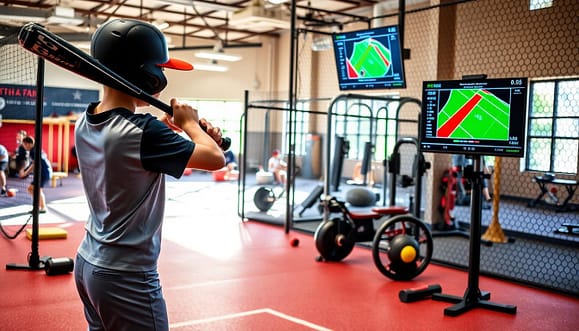
Most youth baseball training places kids in cages with a bat. But Prime’s hitting lab does it differently. It starts with movement screening to see how each athlete’s body works before looking at swing mechanics.
This method is a big change from the usual “just see the ball, hit the ball” coaching. The movement screen looks at hip rotation, thoracic spine mobility, and stability. It finds out why kids look good in practice but struggle in games.
Prime’s program focuses on bat speed through better mechanics, not just telling kids to swing harder. The goal is to improve physics, not just motivation. Coaches work with each hitter’s natural movements to boost their skills.
Attack angle optimization gets a detailed look, unlike the launch angle craze of 2017. Prime looks at each athlete’s swing path to find the best attack angle for them. This approach is so smart, it’s surprising it’s not used more in youth baseball.
The timing plan combines visual skills with physical action. It shows that knowing pitch types is only half the battle. The program helps hitters adjust to live pitching, not just crush batting practice fastballs.
Inside the cages, technology gives instant feedback. Exit velocity, launch angle, and contact consistency are tracked precisely. This approach makes progress measurable, not just based on coach opinions.
The competitive group setting at Prime adds a level of accountability missing from private lessons. Athletes motivate each other, and expert coaches guide them with data, not old-fashioned wisdom. This setup boosts improvement through learning and competition.
Prime’s program creates complete hitters with power, discipline, and control. It improves skills right away and builds a strong foundation for the future. Increasing exit velocity is important, but only if it doesn’t harm the athlete’s mechanics.
| Curriculum Component | Assessment Focus | Technology Used | Development Outcome |
|---|---|---|---|
| Movement Screening | Hip rotation, thoracic mobility, stability patterns | Functional movement analysis tools | Identifies compensation patterns and mobility restrictions |
| Bat Speed Development | Biomechanical efficiency and swing path | Velocity tracking systems | Increased power through improved mechanics |
| Attack Angle Optimization | Individual swing trajectory and launch characteristics | Launch angle monitors | Personalized approach matching natural movement |
| Timing Integration | Visual processing and mechanical adjustment speed | Pitch recognition software and video analysis | Game-ready swing adaptability and pitch recognition |
Prime’s success is clear: they create elite hitters who perform well at all levels. These athletes use disciplined approaches and focus on barrel control and biomechanics. This approach leads to lasting success, unlike quick fixes that dominate youth baseball.
Pitching development long toss Plyo wall patterning command and velocity days
The Prime Performance Kingwood pitching program is simple. It says complete pitchers win games, not just hard throwers. Youth baseball often produces two types of arms: those who throw hard but walk batters, and those who throw accurately but not hard enough.
The pitching program focuses on both velocity and command. It trains pitchers to throw hard and accurately. This approach prevents injuries and helps pitchers succeed.
Long toss is key, but it’s not just random throwing. It builds arm strength and teaches proper throwing patterns. This youth baseball training helps pitchers gain speed without hurting their arms.
The training cycle focuses on different skills to avoid injuries. Each part of the training helps build the pitcher’s skills over time.
| Training Component | Primary Focus | Development Outcome |
|---|---|---|
| Long Toss | Arm strength and deceleration | Velocity foundation and injury prevention |
| Plyo Wall Work | Explosive power and sequencing | Efficient energy transfer through kinetic chain |
| Patterning Days | Mechanical consistency | Repeatable delivery under pressure |
| Command Sessions | Location and pitch sequencing | Zone control and competitive execution |
| Velocity Days | Max-effort throwing | Peak power output development |
Plyo wall work boosts explosive power. It helps pitchers throw hard and efficiently. Think of Tim Lincecum, who threw hard and accurately every time.
Patterning days make throwing movements automatic. This mechanical consistency helps pitchers perform well under pressure. Even unusual throwing styles can be effective if they’re consistent.
Command development gets special attention. This includes target work and learning to sequence pitches. Many programs focus too much on speed and not enough on accuracy.
Velocity development happens on specific days. This approach helps pitchers throw their best without sacrificing control. Mixing these two can lead to poor performance.
The program aims to create “complete pitchers.” These athletes throw hard, accurately, and stay healthy. They also gain confidence on the field.
Success in youth baseball requires balancing several factors:
- Velocity gains through proper arm strengthening and explosive power development
- Command improvement via systematic target work and situational execution
- Injury prevention through proper deceleration patterns and workload management
- Mental toughness developed in competitive group environments
- Mechanical efficiency creating repeatable deliveries under pressure
The competitive group environment boosts accountability and intensity. Private lessons can give false feedback. Real competition demands better.
Prime’s approach avoids focusing on one aspect at the expense of others. This creates well-rounded pitchers who succeed in the long run. The facility’s success shows that systematic training builds lasting skills.
Arm care thrower mobility scap and hip stability with progression ladders
Prime Performance Kingwood’s arm care program tackles a tough truth: throwing baseballs can harm shoulders without proper care. Coaches often talk about arm health, but players often ignore it. This neglect can lead to serious injuries.
The throwing motion is very unnatural for humans. Your shoulder isn’t made for throwing fast. That’s why thrower-specific mobility work is key. It helps avoid injuries by improving the right movements.
Scapular stability is a big deal because the shoulder blade is essential. Most youth pitchers have scapular issues that are bad for their throwing. But coaches often miss this, focusing too much on arm mechanics.
Hip stability and mobility training are also important. Power starts in the hips and moves up to the arm. Without strong hips, the arm can get hurt. It’s all about the whole body working together.
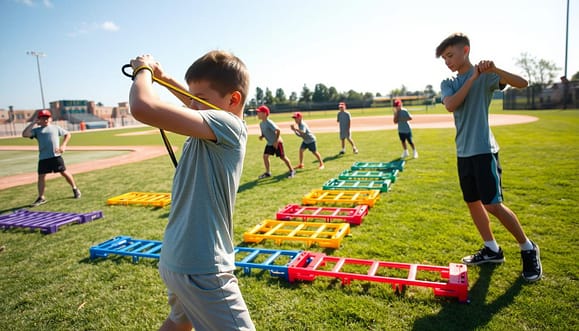
The progression ladders help players get better in a safe way. They make sure training fits the player’s age and skill level. This approach is better than treating all players the same.
| Mobility Area | Common Deficiency | Throwing Consequence | Training Focus |
|---|---|---|---|
| Shoulder External Rotation | Limited layback position | Reduced velocity and elbow stress | Sleeper stretches and band work |
| Thoracic Spine | Restricted rotation | Arm compensates for trunk limitations | Extension and rotation drills |
| Hip Internal Rotation | Glute dominance imbalance | Poor energy transfer and timing | 90/90 positions and loaded stretches |
| Scapular Control | Winging and dyskinesis | Unstable throwing platform | Serratus activation and wall slides |
Prime Performance Kingwood makes arm care a regular part of training. This way, players do it consistently. Ignoring homework is common, but ignoring exercises is dangerous.
The recovery area helps players cool down properly. This is important for their bodies to adapt to training. It’s all about building strong athletes for the long term, not just for short-term wins.
Throwing fast at a young age isn’t worth risking injury. Sustainable velocity development focuses on building strong tissues. The industry often overlooks the importance of injury prevention for long-term success.
Strength for baseball age appropriate blocks hinge squat push pull core sprint
The strength lab at Prime Performance Kingwood focuses on real athletic growth, not just muscle. They know young baseball players need training that fits their age, not just to look good on social media.
Young athletes grow at their own pace. Training meant for older players can be too hard for younger ones. It doesn’t matter how advanced they seem.
Age-appropriate training is key here. The program respects each stage of growth. It avoids pushing too hard too soon.
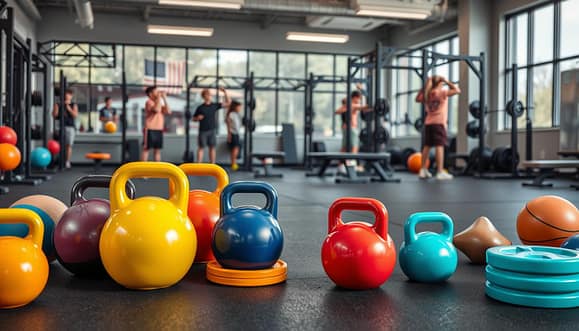
They focus on basic movement patterns in a smart order. These exercises are chosen carefully to build true athleticism, not just follow trends.
Hinge patterns help with hip movement, which is vital for baseball. They teach athletes to use their hips and legs for power, not just their arms.
Squats build strength and mobility in the lower body. It’s not just about lifting heavy weights. How well you move is more important.
Push exercises strengthen the upper body without harming the shoulders. Many young players get hurt from too much bench pressing. Prime’s method balances strength training with movements that are actually useful for baseball.
Pull exercises are important for the back and shoulders. They help counterbalance the effects of pushing exercises. This is critical for throwing athletes to stay healthy and strong.
Core training here is not about doing lots of crunches. It focuses on movements that help with baseball, like resisting rotation and transferring force.
Having strong abs is not just about looking good. It’s about being able to control your body during a swing. This helps with throwing and using power efficiently.
Sprint training focuses on quick starts and fast changes of direction. Baseball needs short, explosive speed, not long-distance running. Yet, many programs focus too much on endurance.
| Movement Pattern | Primary Focus | Baseball Application | Key Progressions |
|---|---|---|---|
| Hinge (Deadlift) | Posterior chain strength and hip flexion mechanics | Rotational power generation from ground contact | Bodyweight RDL → Kettlebell → Trap bar → Barbell variations |
| Squat | Lower body strength, mobility, force production | Explosive movements, fielding positions, base running | Goblet squat → Front squat → Back squat → Single-leg variations |
| Push | Upper body pressing without shoulder restriction | Functional strength maintaining throwing mobility | Push-ups → Dumbbell press → Landmine press → Bench variations |
| Pull | Back strength and scapular control | Arm health, throwing mechanics, bat control | Inverted rows → Cable rows → Pull-ups → Olympic pull variations |
| Core/Sprint | Anti-rotation stability and explosive speed | Power transfer, injury prevention, base stealing | Planks → Pallof press → Med ball throws → Sprint mechanics drills |
The strength lab uses block periodization. This means training is divided into focused phases. Each phase focuses on different skills, like strength or speed.
This method follows the principle of progressive overload. It helps athletes get better over time. Random workouts just lead to fatigue without progress.
Each 90-minute session is split. Athletes spend 45 minutes on performance training and then practice their skills.
This mix of physical training and skill work is key. It helps athletes develop both their strength and their skills together.
Prime Performance Kingwood aims to create “complete athletes.” These are players who move well, generate power, and recover fast. The training is designed for each age group, reducing injuries and building baseball skills.
The training focuses on building athletic foundations. It’s about developing the skills needed for baseball, not just looking good. Chasing after muscle or copying professional athletes is not the goal.
Training loads need to match the athlete’s age and development. Ignoring this can lead to injuries, not toughness.
The athletic development system here respects each athlete’s growth stage. It trains based on their current abilities, not their dreams or parents’ wishes.
Building force, moving efficiently, and staying injury-free are the main goals. These skills help athletes perform better and have longer careers.
This approach prepares athletes for both immediate success and long-term growth. The performance training helps them move well, recover fast, and reach their full genetic ability.
Not every young athlete will play pro baseball. But every one deserves training that builds them up, not breaks them down. This is Prime’s philosophy in every session.
Data and video service reports for coaches team dashboards and goal sheets
Posting exit velocity screenshots on Instagram is not the same as using real performance metrics. Prime Performance Kingwood offers true data and video services. They show what real data-driven training looks like.
Their system turns guesses into facts. No more “he’s getting better” talks with parents.
They track important things, not just how many games you play. Biomechanical analysis shows what radar guns miss.
Video analysis services show movements from all sides, then break them down. This finds ways to get better that you can’t see live.
People are bad at seeing fast movements. Even coaches can’t see everything.
The facility looks at key performance metrics like:
- Exit velocity and bat speed
- Attack angle data
- Pitch velocity and spin rate
- Release consistency
- Movement efficiency
Coach reports help teams and travel groups talk clearly. They show how athletes are doing and what they need to work on.
This way, athletes get the same message from everyone. It stops confusion and helps everyone work together.
Team dashboards show how everyone is doing together. It helps leaders see how the whole team is improving.
Decisions are made based on facts, not opinions. It’s about what’s best for the team, not who complains the most.
| Reporting Component | Primary Function | Key Stakeholder |
|---|---|---|
| Individual Assessments | Baseline establishment and periodic testing | Athletes and parents |
| Coach Reports | Development communication and program alignment | Team coaches and organizations |
| Team Dashboards | Collective performance monitoring | Directors and administrators |
| Goal Sheets | Individualized target setting | Athletes and trainers |
Goal sheets set targets based on how athletes are doing. They help athletes stay focused and avoid unrealistic goals.
The progress tracking system keeps everyone on track. It starts with a baseline, sets goals, tests progress, and reports back.
This method shows that youth baseball training should be measurable. Just doing the same thing over and over is not enough.
At Prime Performance Kingwood, technology helps coaches, not replaces them. They have 15+ top coaches who use data to guide training.
But, the latest tools make coaching better. They help plan training without guessing. This is important when parents invest a lot in their kids’ sports.
Using progress tracking with video and reports makes a big difference. It shows real training, not just posting on Instagram.
Safety and staffing USAB Mobile background checks AED EAPs and heat plans
The difference between top-notch youth baseball training and amateur programs is often in the details. Prime Performance Kingwood focuses on safety protocols to stand out. They ensure a safe environment, unlike some places that rely on waivers and hope for the best.
USAB Mobile background checks are a must for coaches. They check if coaches are safe to work with kids. This step keeps predators away from young athletes.
Coaching staff must pass a thorough background check. Certified coaching means coaches are vetted to ensure they’re safe around kids. It’s like checking a building’s structure before adding more floors.
AEDs are ready for heart emergencies during intense training. They save lives when heart issues pop up during sports. But, having an AED is only the start. Trained staff and clear plans are key to saving lives quickly.
Emergency plans outline what to do in medical crises. They tell who calls 911 and who gets the AED. These plans turn chaos into a smooth response, saving lives.
Heat safety plans are vital in Texas’s hot climate. Young athletes might ignore their body’s signals of heat exhaustion. It’s important to watch for signs of heat illness, as it can get serious fast.
Prime Performance Kingwood has a team of 15+ elite development coaches and expert directors. This team ensures quality coaching, even when staff members are out. It’s all about providing consistent, top-notch training.
The facility’s hours are designed for families. They’re open Monday through Thursday 4PM to 8:30PM, Friday until 7PM, and offer weekend private sessions. This schedule helps athletes fit sports into their busy lives.
| Safety Component | Implementation Standard | Purpose | Staff Requirement |
|---|---|---|---|
| USAB Background Checks | All coaching staff verified | Prevent predatory access to minors | Mandatory for hire |
| AED Equipment | On-site with trained users | Cardiac emergency response | CPR/AED certification |
| Emergency Action Plans | Written protocols for all scenarios | Coordinated crisis response | Regular drill practice |
| Heat Safety Monitoring | Environmental tracking and modifications | Prevent heat-related illness | Symptom recognition training |
Prime Performance Kingwood has the professional setup that should be standard. They’ve moved beyond relying on passion alone. Their safety protocols show they’re ready for any situation, even the ones they hope never happen.
Rates scheduling app cancellation and make‑up policy
Some gyms really help athletes grow, while others just make a lot of money. The real difference is in the hidden fees, strict rules, and hard-to-deal-with paperwork. Prime Performance Kingwood’s membership and rules need a close look because feeling stuck by rules you didn’t know about can really upset people.
The gym has six-month contracts with three price levels. The monthly costs are $399, $475, or $549, based on how often you train and what you get. If you need something shorter, you can ask for one-month or three-month contracts by emailing kingwood@m.primeperformancehtx.com. This way, families can fit training into their busy lives without being tied down for too long.
Choosing a longer contract can make things cheaper. But, it’s important to remember that getting better takes time. Skills get better with practice over months, not just weeks. Prime Performance Kingwood wants you to commit for a reason, not just because it’s easy.
The gym uses an app for booking and managing training. This makes it easy to plan without needing to call or email. It’s all about making things clear and easy for families to manage their athlete’s schedule.
Training happens Monday through Friday starting at 4PM. This fits well with school hours. There are also evening and weekend slots for extra training. The app shows when coaches are free, so you don’t have to guess.
| Contract Length | Monthly Rate Range | Booking Method | Session Days |
|---|---|---|---|
| 6-month standard | $399 – $549 | App-based scheduling | Monday – Friday 4PM+ |
| 3-month option | Email for pricing | Direct inquiry required | Monday – Friday 4PM+ |
| 1-month option | Email for pricing | Direct inquiry required | Monday – Friday 4PM+ |
| Private weekend | Package dependent | Custom scheduling | Saturday – Sunday varies |
How a gym handles cancellations and make-ups is very important. It shows if they care about their customers or just want to make money. Most gyms charge for last-minute cancellations, but they usually work with you if something serious comes up.
Call (832) 706-4102 for any questions about contracts, scheduling, or policies. Email kingwood@m.primeperformancehtx.com for questions that need more details. The gym wants to balance making money with treating customers right, even when things don’t go as planned.
How a gym handles everyday stuff shows what they really value. Clear prices, flexible scheduling, and fair make-up policies show they care about families. Prime Performance Kingwood’s approach to these details can make or break how happy families are with their experience.
How to trial first session flow and evaluation template
At Prime Performance Kingwood, you need to book a $100, 90-minute assessment first. This trial session helps figure out what you need through a detailed evaluation. It checks what really matters.
First, athletes create digital accounts and pay for the assessment. Then, they book a time slot without any phone calls. The evaluation looks at hitting or pitching, biomechanics, performance, and training systems. Coaches check strength, power, movement, and mobility to help improve skills.
This process gives you a plan to improve, showing your strengths and areas to work on. The 90 minutes are enough to test everything without rushing. Families get to see how training works, the technology used, and what to expect before joining.
The evaluation finds that many problems come from physical issues, not just technique. Like personalized training programs, Prime Performance Kingwood creates plans for each player. These plans fit into group settings, mixing personal touches with team goals.
This first session is a real investment in your baseball training, not just a sales pitch. The fee shows you’re serious about improving, making it worth it for families.