

The 2026 Junior League Baseball Southwest Region Tournament in Seguin gave Texas coaches and families a clean case study in player development after the event was held July 23–29, 2026. Six teams competed: Arkansas from Little Rock, Avoyelles American LL from Louisiana, Roadrunner LL from New Mexico, Rosenberg National LL from Texas East, El Paso Border Youth BB LL from Texas West, and New Braunfels as the host team, according to the official Southwest Region tournament page. Roadrunner LL of Albuquerque finished 4-0 and won the region, while Rosenberg National LL went 3-2 and El Paso Border Youth BB LL went 2-2. For training programs across Texas, the lesson was not just who won. It was how depth, recovery, pressure control, and steady fundamentals showed up across a full tournament week.
Junior League Baseball Lessons From Seguin
Seguin offered a useful training snapshot because the tournament stretched across seven calendar days. That matters for youth programs. A one-day event rewards quick energy. A weeklong regional event asks players to repeat routines, manage soreness, accept lineup changes, and stay ready after wins or losses. Coaches in Texas can use that format as a teaching point during fall workouts, spring practice, and summer tournament prep.
What Junior League Baseball Showed Coaches
The strongest message was roster depth. Roadrunner LL did not go unbeaten by relying on a single moment. A 4-0 regional record points to a group that handled multiple game situations across the week. Training programs should read that as a push to develop more than the top pitcher and the loudest bat. A good youth plan builds reliable throwers, catchers who can handle pressure, infielders who communicate, outfielders who take clean first steps, and bench players who are ready before their name is called.
The clearest Junior League Baseball lesson for Texas teams is that player growth has to be shared across the roster. If one player carries too much of the load in May and June, the team may look strong early but run thin late. Programs can fight that by rotating defensive spots in practice, giving secondary pitchers structured bullpen work, and making batting practice competitive without turning every rep into a tryout. Kids learn more when they get real responsibility before the bracket gets tight.
Depth Beats A One-Player Plan
Rosenberg National LL, representing Texas East, played five games and finished 3-2. El Paso Border Youth BB LL, representing Texas West, finished 2-2. Those records show how quickly tournament paths can differ once a team has to rebound, rest, and prepare again. A Texas training program should ask a simple question after seeing those results: if our number one arm is unavailable, who can throw strikes, field the position, and keep the dugout calm?
Depth is not only pitching. It also includes emotional range. Young players need practice handling a strikeout, a bad hop, a tight inning, or a long day at the park. Coaches can build that during normal workouts by adding score-and-situation drills. Put runners on base. Set a one-run inning. Ask the defense to win the next pitch. Let hitters practice moving a runner instead of always swinging for the biggest result. These small details are where tournament-ready players are shaped.
Training Priorities For Texas Programs
Texas youth baseball often runs through long drives, hot afternoons, and packed tournament weekends. The Seguin bracket gave families a regional example close to home, but the training lessons fit teams from Houston suburbs to West Texas fields. Programs should be careful not to turn every practice into a grind. The better plan is to connect tournament demands to age-appropriate skill blocks.
Build A Weeklong Practice Rhythm
Because the Southwest Region event ran from July 23 through July 29, 2026, players had to reset more than once. That can be practiced. A team might use a three-day rhythm during training: competition day, recovery and skill day, then pressure-situation day. On the recovery day, younger players can work on catch play quality, footwork, base running reads, and communication rather than throwing at full speed for another long session.
Coaches should also plan for the player who did not start yesterday but may be needed tomorrow. That means warmup routines should include everyone. Defensive reps should not stop at the starting nine. Batting groups should give equal attention to contact, bunting if used by the team, two-strike approach, and situational hitting. For more practice ideas tied to tournament play, Texas coaches can connect these lessons with summer tournament skills that turn pool play and warmups into better development time.
Teach Pressure Before It Arrives
New Braunfels, the host team, went 1-2 and did not advance. That result should be handled with respect. Host players often deal with extra attention from local friends, relatives, and community members. Rather than guessing how players will respond, coaches can teach pressure as part of practice. Ask players to breathe before a pitch. Give them simple reset cues. Keep dugout jobs clear so a player who is not in the lineup still has a purpose.
Parents help here, too. A calm ride to the field can matter. So can a calm ride home. Young athletes need adults who separate effort from outcome. A regional tournament can end quickly, even for a prepared team. The goal is not to remove disappointment. The goal is to help a player learn from it and return to work with confidence.
Workload, Safety, And Long-Term Growth
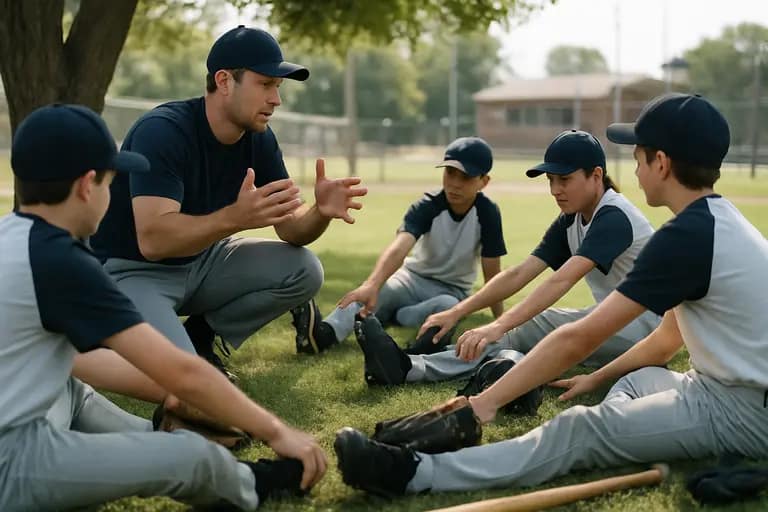
Summer baseball can pile up fast. The research notes tied this tournament to a larger concern: youth players who specialize early or train too heavily can face higher injury risk than multi-sport peers. A prospective study on youth baseball players reported that high specialization was associated with increased injury frequency, and the authors discussed injury risk concerns tied to sport specialization in the youth baseball injury study. For Texas coaches, that should lead to better planning, not fear.
Use Rest As Part Of Training
Rest is not wasted time. It is part of the development plan. Pitchers need tracked workloads. Catchers need attention because squatting, throwing, blocking, and taking foul balls can wear on young bodies. Position players need throwing volume watched during practice, not only during games. A player who throws hard in pregame, pitches, then plays shortstop the next day may be carrying more stress than the scorebook shows.
A practical Texas plan starts with communication. Ask families about other teams, private lessons, camps, and recent soreness. Keep a simple throwing log. If a player reports elbow or shoulder pain, stop the throwing session and involve the family. Coaches are not doctors, but they are responsible for listening and adjusting baseball activity. That kind of care builds trust and keeps kids in the sport longer.
Favor Fundamentals Over Early Labels
Another Seguin lesson is positional flexibility. Young players should not be boxed in too early. A 13- or 14-year-old who is a catcher in March might help at third base in July. A corner outfielder might grow into a pitcher after learning better balance and direction. Training programs should use early practices to evaluate throwing, fielding, running, hitting, and coachability before fixing roles.
- For coaches: rotate practice stations so every player gets defensive reads, throwing reps, and game-speed decisions.
- For parents: ask whether a program teaches all-around skills, not only tournament results.
- For players: learn more than one position and take pride in small jobs like backing up bases.
- For program directors: build schedules that include rest windows, recovery days, and skill review after events.
Fundamentals are not boring when they are taught with purpose. A clean relay, a correct cutoff angle, a good secondary lead, or a throw that hits the chest can change a game. Those are trainable skills. They also help players stay useful even when they are not the biggest or strongest athlete on the field.
What Junior League Baseball Means For Texas Training
For Texas families, Junior League Baseball is a checkpoint between childhood baseball and the more demanding high school years. The 2026 Seguin event showed how quickly the game asks for maturity. Players had to compete, recover, accept coaching, and stay ready across several days. That is exactly where youth training should aim: not just a better swing in the cage, but a better prepared ballplayer.
Texas programs can take the regional results and build smarter local habits. Develop multiple pitchers. Give bench players real reps. Practice pressure. Track throwing. Respect rest. Keep parents informed. Use tournament outcomes as teaching material, not as a final grade on a child’s future.
Use the 2026 Seguin results as a reminder that Junior League Baseball rewards steady development. Roadrunner LL’s unbeaten run, Rosenberg’s five-game week, El Paso’s 2-2 showing, and New Braunfels’ host experience all point to the same truth for Texas coaches: a strong program prepares the whole roster, protects growing bodies, and teaches players how to compete again after the last game is over.