

Showcase Coaching Strategies matter most after a recent high school baseball college showcase because the event should not end when the radar gun, stopwatch, and clipboard go away. For Texas coaches, the real coaching work is helping players understand what was measured, what was noticed, and what must improve before the next evaluation setting.
Showcase Coaching Strategies After Recent Events
A college showcase gives players a short window to show tools, movement quality, and competitive habits. Coaches should treat that window as feedback, not a final judgment. A player who ran well, threw with carry, or showed clean defensive actions needs to know how to keep building. A player who struggled needs a calm plan that separates one rough event from long-term potential.
The recent showcase lesson for Texas high school programs is clear: coaches cannot prepare players only through batting practice and weekend games. The showcase setting is different. Players are tested in isolated actions, watched during warm-ups, and compared across positions. That means preparation has to connect measurable skill work with baseball actions that still look natural under pressure.
Showcase Coaching Strategies For The First Week
The first week after a showcase should be a review week. Coaches can sit with each player and sort feedback into three buckets: tools, movement, and habits. Tools include speed, arm strength, bat speed, and defensive range. Movement covers how the player runs, throws, rotates, fields, and changes direction. Habits include body language, pace between reps, coachability, and how the player responds after a mistake.
These Showcase Coaching Strategies work best when the coach avoids vague praise or vague criticism. “Get better” is not a plan. “Improve first-step direction on ground balls to the glove side” gives a player something he can train. “Compete harder” is too broad. “Sprint through every 60-yard dash finish line and every foul-ball retrieve in practice” is coachable.
Why Movement Quality Shows Up Early
College evaluators often watch before the formal rep begins. How a player warms up, changes direction, plays catch, gathers a ground ball, or loads in the cage can reveal athleticism and body control. Premier Athletes notes that college coaches value quantifiable skills such as arm strength, bat speed, running speed, and defensive range more than traditional game statistics because game stats can be shaped by different competition levels measurable skills over game statistics.
That should change how coaches run practice. A lazy warm-up is not harmless. A sloppy catch-play segment is not filler. If a player wants to be evaluated as an athlete, every transition, shuffle, crow hop, sprint, and throw should show intent. Texas coaches can make this part of team culture without turning practice into a showcase every day. The standard is simple: move well before you move fast.
Build The 30 Day Plan Before Testing
One of the strongest lessons from showcase preparation is that players need time to build, not cram. WIN Reality describes a 30-day showcase preparation plan built around initial assessments, targeted training, and tapering before the event 30-day showcase prep plan. Coaches can use that structure even when they do not control every part of a player’s schedule.
For a Texas high school player, the 30-day window may sit between summer tournament weekends, school workouts, private lessons, or fall ball. The coach’s job is to organize the work so the athlete is not just doing more. He is doing the right work at the right time. The first phase should identify the current baseline. The middle phase should train the largest gaps. The final phase should reduce heavy workload and sharpen timing, rhythm, and confidence.
Assessment, Training, And Taper
The assessment phase should be short and honest. Time the player, track throwing accuracy, chart quality contact, and watch defensive footwork. Coaches do not need to publish numbers to the whole team. The purpose is to help each player see the gap between where he is and what he wants to show.
The training phase should connect measurable tools to baseball movement. A player trying to improve a 60-yard dash time still needs better starts, posture, acceleration, and finish-line habits. A player chasing more arm strength still needs footwork, direction, and clean transfer patterns. A hitter trying to show better impact should not only swing harder; he should control the strike zone, arrive on time, and keep his move repeatable.
The taper phase is where many young players miss. They keep taking max-effort swings, max throws, and extra running until their legs feel flat. A coach can protect the player by reducing volume while keeping quality. Shorter defensive work, crisp batting practice rounds, and controlled sprint starts can keep the player sharp without draining him.
Teach Metrics Without Chasing Numbers
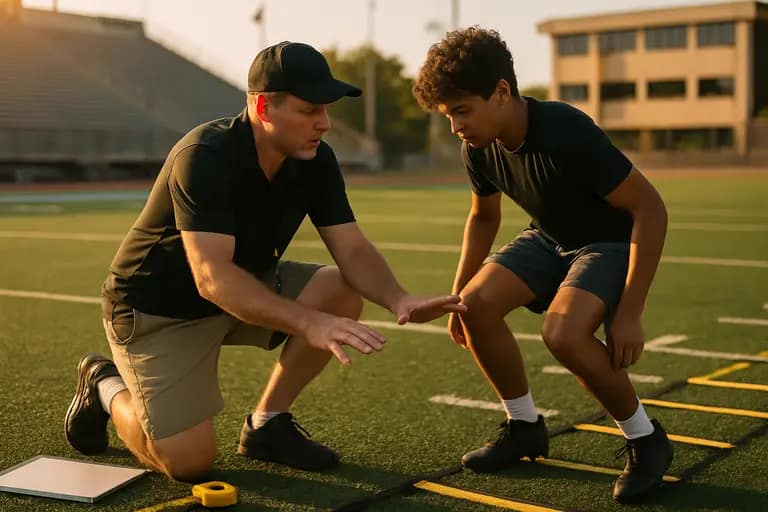
Showcase baseball can tempt players to chase a number instead of becoming better baseball players. Coaches should teach the difference. A stronger throw matters, but only if the player can control it. A faster run time matters, but only if the player takes efficient routes and runs the bases with awareness. Higher bat speed matters, but only if the swing can find pitches in the zone.
The best Showcase Coaching Strategies link metrics to game skill. If a player wants to improve exit velocity, practice should include better contact point, timing, lower-half stability, and swing decisions. If an infielder wants to show range, practice should include first-step reads, angles, body control, and throwing on the move. If an outfielder wants to show arm strength, practice should include approach footwork and carry through the target.
Metrics Coaches Can Teach
Coaches can build a simple practice menu around the tools that evaluators often measure:
- Speed: start position, first three steps, acceleration posture, and finish through the line.
- Arm Strength: footwork, direction, clean exchange, and controlled intent.
- Bat Speed: balanced load, timing, efficient turn, and contact quality.
- Defensive Range: pre-pitch readiness, first step, angle, and body control.
This list should not become a pressure sheet. It should become a teaching sheet. Players need to know what they can control each day. They can control preparation. They can control movement quality. They can control effort and response. They cannot control which college coach watches a specific rep or how another player performs in the same group.
Character And Pace Still Matter
Showcases are not only testing tools. They also reveal how a player acts in an unfamiliar setting. Coaches should prepare players to carry themselves well during downtime, after errors, and during instruction. Hustle should be normal, not staged. A positive attitude should show in how the player listens, resets, and treats others.
That is where mentorship fits the recruiting process. A coach who has built trust can tell a player the truth without crushing him. If your program is trying to strengthen that part of player development, the same principles connect well with baseball mentorship programs that pair instruction with accountability.
Showcase Coaching Strategies For Texas Development
Showcase Coaching Strategies should end with a development plan, not a stack of loose notes. After the event, each player should leave with one tool goal, one movement goal, and one habit goal. Keep it simple enough to train. Keep it specific enough to measure.
For example, a middle infielder may need cleaner lateral movement, a quicker exchange, and better sprint habits. A catcher may need sharper receiving rhythm, stronger throws, and steadier body language after a missed block. A pitcher may need better direction, more consistent catch-play intent, and a calmer tempo before throwing in front of evaluators. Each plan should fit the player’s position and current stage.
Coaches should also help families understand the recruiting side without making promises. A good video, clear communication, and smart event selection can support a player, but none of those replaces development. Players still have to show tools, move well, and compete against strong peers. The coach can guide the process by helping families choose events that match the player’s level and target schools rather than chasing every invitation.
Player Ownership After The Event
The player should own the next step. Coaches can assign a short reflection: What did I show well? What exposed me? What will I train for the next 30 days? That reflection turns a showcase from a one-day performance into a month of better work.
Use Showcase Coaching Strategies as a bridge between Texas tournament reps, school workouts, and the recruiting process. The goal is not to make every practice feel like an audition. The goal is to prepare players so that when evaluation comes, their tools, movement, habits, and confidence are already part of who they are.