

The Tyler Lloyd Vision at Frenship High School started with a local return, not a distant hire. On June 24, 2026, Frenship ISD announced that Tyler Lloyd, a Frenship High School graduate, had been selected as the new Head Baseball Coach at Frenship High School Frenship ISD announcement. For Texas baseball families and youth coaches, that detail matters. A coach who grew up inside the school community brings a different kind of accountability. He knows the hallways, the expectations, the local pride, and the pressure that comes with wearing the same colors he once wore as a player.
How Tyler Lloyd Vision Fits Frenship Baseball
The Tyler Lloyd Vision In Plain Coaching Terms
Lloyd’s public message centered on standards, care, and development. FOX34 reported that he described Frenship as a “dream job” and that he pointed to a “high standard of excellence,” love and care for players, and the need to develop skills that help athletes become good baseball players and good young men FOX34 report. That is the working definition of Tyler Lloyd Vision from the facts available: keep the bar high, coach the player as a person, and make baseball growth part of a bigger teaching job.
That message fits Texas high school baseball because the best programs are not built only on varsity talent. They are built on daily language. A freshman needs to hear the same core standard as a senior. A junior varsity assistant needs to teach a drill in the same spirit as the head coach. Parents need to understand that care does not mean soft standards, and standards do not mean cold coaching. Lloyd’s comments put those two ideas together.
Why A Frenship Return Changes The Teaching Tone
Lloyd’s connection to Frenship goes back to kindergarten, according to the reported details of his hire. He played his high school baseball there, returned in 2025 as an assistant baseball coach, and then was promoted to head coach in 2026. That path gives the program a strong local thread. It also gives young players a simple story to understand: a Frenship player can leave, grow, coach, and come back to lead.
For coaches, that story has teaching value. Youth players in Wolfforth, Lubbock County, and across Texas often need concrete examples more than speeches. A local coach who once sat in their same school setting can speak about habits with credibility. He can talk about how a practice rep connects to a varsity opportunity, how classroom conduct reflects on the team, and how a player’s name carries weight beyond the field.
What Texas Youth Coaches Can Learn
Start With A Standard Players Can Repeat
Youth coaches should not try to copy a high school program down to the minute. A 10U practice does not need a varsity workload. But the idea behind the Tyler Lloyd Vision can be scaled down: set a standard that players can repeat and coaches can enforce. If the standard is hustle, define it. If the standard is respect, show what it looks like when a player talks to an umpire, a teammate, or a parent after a tough inning.
A useful youth version might be three phrases: show up ready, compete with control, and treat people right. Those phrases are not official Frenship policy; they are a practical coaching translation of the publicly stated ideas of excellence, care, and development. The key is consistency. If a coach praises talent but ignores effort, the team learns that talent is the real standard. If a coach teaches body language after strikeouts, bench conduct, and how to respond after errors, the team starts learning baseball maturity.
Teach Skill And Character In The Same Rep
Lloyd’s stated focus on building good baseball players and good young men gives youth coaches a strong practice-planning model. A ground-ball drill can teach footwork, but it can also teach response. Does the player reset after a booted ball? Does he blame the field? Does he listen to the correction and ask for another rep? That is where player development becomes more than mechanics.
The same applies to hitting groups. A coach can teach contact point, timing, and swing decisions while also teaching players to track pitches for teammates, shag with purpose, and encourage the next hitter. None of that requires a long lecture. It requires coaches to connect behavior to baseball. A player who pays attention in the cage becomes a better teammate. A player who owns a throwing mistake becomes easier to coach. A player who learns to compete without pouting is more prepared for higher levels of Texas baseball.
- For tee-ball and coach pitch: make listening, safety, and effort the first standards before scorekeeping takes over.
- For 9U through 12U: teach routines before and after each rep, including where to stand, where to look, and how to respond.
- For junior high players: start linking practice habits to high school readiness, especially punctuality, arm care, and teammate conduct.
- For select teams: match tournament ambition with clear expectations for rest, school, family communication, and sportsmanship.
Building A Staff Message Around Standards
Use The Head Coach Message As A Daily Filter
Lloyd entered his 12th year of coaching in 2026, with four years of head coaching experience, according to the FOX34 report. That experience matters because a head coach is not only writing lineups. He is shaping how other coaches speak, correct, encourage, and organize work. While head coach at Tulia High School, Lloyd led the program to a 20-win season and guided Tulia to its first playoff appearance in seven years, as reported by FOX34. Those facts do not guarantee any future result at Frenship, but they do show prior head coaching experience tied to program progress.
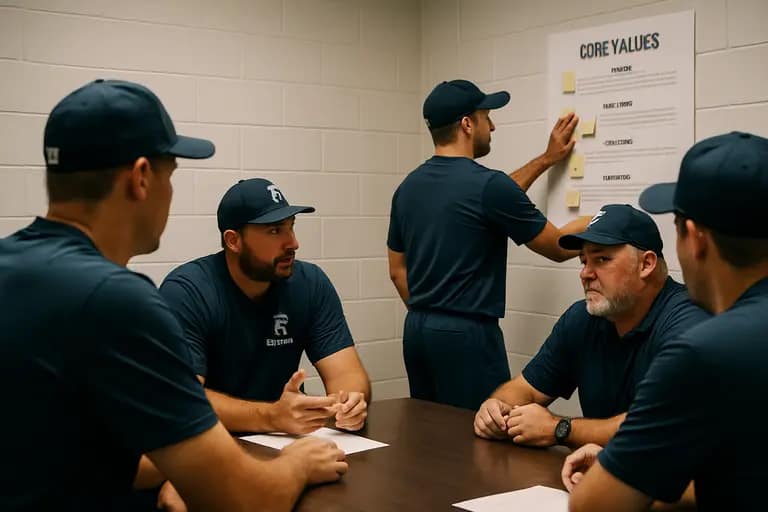
For a youth league or travel organization, the staff lesson is direct: every coach needs the same filter. If the message is excellence, care, and development, then practice plans should reflect all three. Excellence means the drill has a purpose. Care means the player is corrected without being embarrassed. Development means coaches are teaching the next skill, not just rewarding the biggest or fastest kid on the roster.
Keep Family Roots From Becoming Sentiment Only
The public details around Lloyd’s return also included family ties. His wife, Kenzi, is a Frenship graduate, and she was set to serve as a reading interventionist at Bennett Elementary, with their sons expected to attend Bennett Elementary during the 2026-27 school year, according to FOX34. That family connection adds community weight to the hire. Still, coaches should treat roots as a starting point, not the full plan.
Local ties can open trust, but daily organization keeps it. Parents want to know that a coach cares about kids, yet they also watch how practice time is used. Players want to feel supported, but they also know when a program lacks structure. The best use of a homegrown coaching story is to turn it into action: clear communication, consistent expectations, and practices that make players better by the week.
What Tyler Lloyd Vision Means For Frenship Baseball
No performance record for Frenship under Lloyd as head coach was included in the research notes provided, so any prediction about wins, playoff runs, or roster outcomes would be guesswork. The supported story is the coaching transition itself: a Frenship graduate returned as an assistant in 2025, was named head coach in June 2026, and publicly framed the job around excellence, care, skill growth, and the development of young men.
If the Tyler Lloyd Vision takes hold, the first signs may show up before any standings tell the story. Watch for shared language across the program, cleaner practice habits, and a stronger bridge between younger players and the high school standard. For Texas youth coaches, that is the real takeaway. A program identity is not built on slogans. It is built when coaches use the same words, teach the same habits, and hold players to a standard that respects both the game and the kid wearing the uniform.