

Texas State Coaching is worth studying before 2027 because the Bobcats have moved through real staff change, a new conference home, and fresh teaching priorities. For Texas youth baseball coaches, the value is not copying a football coverage or basketball press. The value is seeing how a college program assigns roles, protects its standards, and teaches players through change.
Texas State Coaching Moves Coaches Can Study
Texas State Coaching Signals For Youth Staffs
Texas State officially joined the newly restructured Pac-12 Conference as a foundational member on July 1, 2026, participating in all sports from that date forward Texas State announcement. That move matters for coaches because a conference change forces a staff to check travel routines, preparation language, scouting habits, and competitive standards. A youth baseball team in Texas faces a smaller version of that same challenge when it moves from local league play to tournament weekends in Dallas-Fort Worth, Houston, San Antonio, or Central Texas.
The main Texas State Coaching lesson is simple: the schedule can change, but the teaching system cannot become scattered. If your 12U team adds tougher tournaments in March, you do not need a brand-new personality every weekend. You need clear defensive calls, a repeatable pregame routine, and a staff that knows who handles warmups, who tracks pitch limits, who speaks with parents, and who settles the dugout after an error.
Dates And Duties Matter
On December 19, 2025, Texas State hired Will Windham as defensive coordinator and safeties coach, replacing Dexter McCoil; Windham came from South Alabama, where his defense ranked third in the Sun Belt in total defense during the 2025 season Yahoo Sports report. That is a staff-role fact, not just a nameplate change. A new coordinator brings new teaching language, and every assistant under him must carry that language the same way.
Youth baseball staffs should take that seriously. If the head coach says the team will run aggressive first-and-third defense, every assistant must teach the same timing, verbal cue, and cutoff rule. If one coach tells the catcher to throw through and another yells for a pump fake, the players pay for adult confusion. Staff meetings do not need to be long. Ten minutes after practice can answer three questions: what did we teach, what phrase did we use, and what gets repeated next time?
Staff Change Lessons For Youth Baseball
Replacing A Coach Without Losing The Team
The research notes show Texas State dealt with more than one staff adjustment before September 11, 2026. Marcus Patton was added as secondary coach and Chris Gistorb as defensive line coach on January 21, 2026. The notes also state that Gistorb coached first-team All-Southland defensive tackle Phillip Bradford during his 2025 season at McNeese. On July 6, 2026, running backs coach Barrick Nealy departed to pursue non-football work, and at that point the program was seeking a replacement outside the current staff before training camp. No later replacement detail was provided in the research, so it should not be treated as verified here.
That kind of turnover gives baseball coaches a useful reminder: assistants are not spare parts. They carry trust, habits, and relationships. When a youth coach leaves because of work, family, or burnout, the head coach should not wait until the first missed practice to adjust. Tell families what changed, name the interim responsibility, and keep player instruction steady. Kids do not need adult drama. They need to know who is hitting fungoes, who is catching bullpens, and who is checking on the player who struck out twice and is staring at the fence.
Controlled Intensity At Practice
The research notes say Texas State’s 2026 defensive staff emphasized a “controlled intensity” approach, with discipline, consistent habits, punctuality, dress, and meetings tied to avoiding breakdowns from a 2025 five-game losing streak. For youth baseball, that phrase should hit home. Intensity without control turns into loud coaching, rushed throws, and kids afraid to make reads. Control without intensity turns into flat practices where nobody learns to compete.
A good Texas practice plan can include both. Start with a crisp arrival rule: cleats on, glove ready, water nearby, first throw at the posted time. Then use short competitive blocks. Infielders can earn points for clean footwork and accurate feeds, not just flashy plays. Hitters can compete for hard contact by zone. Pitchers can chart first-pitch strikes in a bullpen. The coach sets the standard, but the drill teaches the habit.
- Assign One Voice Per Skill: One coach leads catch play language, one leads baserunning, and one leads team defense.
- Track One Habit Weekly: Pick first-pitch strikes, clean exchanges, or quality secondary leads, then measure it for seven days.
- Correct With The Same Cue: Short phrases beat speeches, especially with younger players.
- Review Staff Roles: After each tournament, decide what each coach owns at the next practice.
Building A Mentoring Plan From College Cues
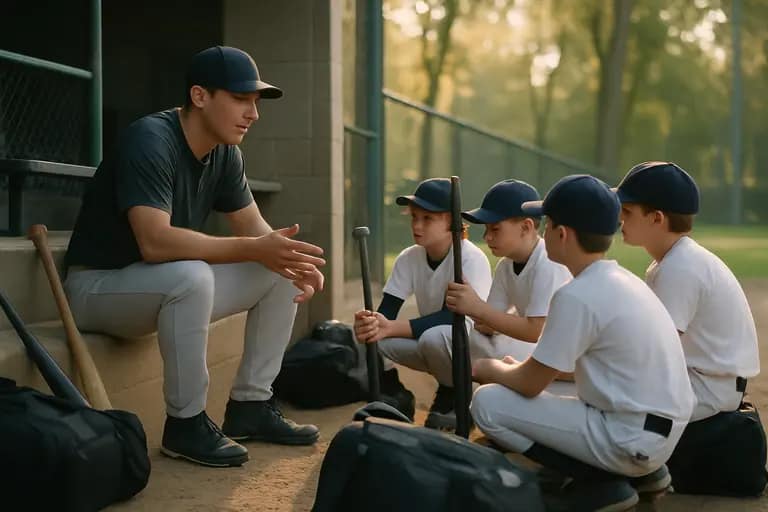
Systems Beat Speeches
Texas State also made a major women’s basketball hire on March 31, 2026, bringing in Chris Kielsmeier from Cleveland State. The research notes credit him with a 178-80 record over eight seasons at Cleveland State, including a 26-10 mark in 2025-26 and a run to the Great 8 of the WNIT. The stated goal under Kielsmeier was Texas State’s first NCAA tournament appearance since 2003, which would be the second in school history. Baseball coaches can use that as a mentoring lesson: goals need a daily system, not just a poster in the dugout.
If your team goal is to compete better in bracket play, the mentoring plan must define what players do on Monday and Wednesday. A catcher may need leadership reps, not only blocking reps. A shortstop may need a pre-pitch checklist. A pitcher may need a better routine after a walk. The coach should pair skill work with responsibility. Older players can lead stretch lines, demonstrate bunt coverage, or help younger teammates understand tournament pace.
Offensive Ideas Need Player Fit
The research notes also suggested Texas State might lean more on 12 personnel groupings, with one running back and two tight ends, because of tight end quality and depth. That is football language, but the baseball translation is useful: build around what your roster can actually do. Do not force a steal-heavy identity on a slow team. Do not call for squeeze bunts if your hitters have not trained bat control. Do not ask every pitcher to work like a power arm if your staff wins with command and change of speed.
Texas tournament baseball rewards coaches who know their roster. If you have three catchers, you can protect legs and keep bats fresh. If you have one dependable strike-thrower and several developing arms, you must plan innings before Saturday becomes chaos. If your team struggles with outfield communication, put that into practice before the next big venue exposes it. For a deeper baseball-specific planning angle, coaches can connect these ideas with showcase coaching strategies for Texas players, especially where measurable skills and player feedback meet.
What Texas State Coaching Means For Texas Baseball
Use The College Example Without Pretending It Is The Same Game
G.J. Kinne’s progress at Texas State is another useful case from the research notes. After being hired in December 2022, he brought in 53 scholarship newcomers during his first full offseason. Texas State then went 8-5 in 2023 and won the program’s first FBS bowl game in the First Responder Bowl in December 2023. Youth baseball coaches should not pretend they can roster-build like a college football staff. Still, they can learn from the idea that personnel, teaching language, and standards must line up.
For Texas baseball families, Texas State Coaching offers a practical model for change management. Write down staff roles. Teach fewer calls better. Let discipline show up in arrival times, equipment care, meeting habits, and dugout behavior. When a coach leaves, communicate calmly. When the competition gets tougher, simplify the plan before adding more signs. The college setting is bigger, but the coaching truth travels well: players grow faster when adults are organized, consistent, and clear about what matters next.