

For Texas families trying to turn fall baseball into better spring habits, UH baseball camps offer a clear skill-development checkpoint in Houston. The value is not just the college setting. It is the chance to connect a player’s swing, glove work, throwing plan, and game awareness to drills that can be repeated back home in Katy, Pearland, Cypress, Sugar Land, and across the Gulf Coast baseball corridor.
Why UH baseball camps Matter For Skill Work
The official Cougar Baseball Camps page lists several fall 2026 options at Don Sanders Field at Darryl & Lori Schroeder Park, including an Elite Prospect ID Camp on October 25, 2026, Hitting Under the Lights on November 16, 2026, and team camp dates on October 18, October 25, November 1, and November 8, 2026 Cougar Baseball Camps. Those dates matter because fall is one of the best windows for a Texas player to slow down, clean up movement patterns, and build a winter plan before tryouts and tournament weekends start crowding the calendar.
UH baseball camps Dates And Formats
The Elite Prospect ID Camp is listed for grades 9 through junior college sophomore players. Research notes describe a pro-style showcase, instructional work, and games, with skill attention on swing mechanics, plate vision, and defensive drills. For older players, that format gives coaches and families a useful comparison point: how does the player move when being evaluated, and how does the player adjust when instruction follows?
Hitting Under the Lights is listed for ages 7 through 18 on November 16, 2026. That wide age range means families should focus less on comparing players and more on the movement cues their own athlete receives. A 9-year-old may need posture, balance, and barrel awareness. A 16-year-old may need pitch-tracking, timing, and a cleaner plan with two strikes.
| Camp Format | Date Listed | Skill Focus From Research |
|---|---|---|
| Elite Prospect ID Camp | October 25, 2026 | Showcase work, swing mechanics, plate vision, defensive drills, games |
| Hitting Under the Lights | November 16, 2026 | Hitting mechanics, confidence, preparation for higher levels |
| High School Team Camps | October 18, October 25, November 1, November 8, 2026 | Game situations, defensive alignment, situational hitting, team planning |
What Parents Should Read In The Format
Parents should watch for teachable details, not just radar readings, exit velocity, or who looks the part in a uniform. Does the player understand the cue? Can he repeat it after a water break? Does his footwork improve when the pace slows? Those signs often matter more for youth development than one loud round of batting practice.
Fielding Progressions From Slow Reps To Game Speed
Fielding work is where many young Texas players can make fast gains because the fixes are often visible. A player who fields too high, stabs at the ball, or crosses his feet can improve quickly when the drill space is tight and the pace is controlled. The Baseball Positive coaching manual includes video references for fielding drills and UH Toss, and the research notes describe a method that uses slower ground balls in compact spaces to train glove position, body posture, hand work, and footwork Baseball Positive manual.
Slow-Speed Ground Balls Build Cleaner Hands
A good progression starts with the ball moving slowly enough that the athlete can feel the pattern. Coaches in Houston-area leagues can set two cones about a few steps apart, roll ground balls from short distance, and demand the same setup each time: feet active, chest over the ball, glove presented early, throwing hand near the pocket. The goal is not to make the drill look hard. The goal is to make the correct move show up again and again.
Once the player owns the shape, the coach can widen the starting point, add a shuffle, and then add a throw. If the hands fall apart, the pace should drop again. That is not a punishment. It is how a coach protects the rep quality. This is the kind of habit families can connect back to UH baseball camps: take one fielding cue home and repeat it for two weeks before adding the next layer.
Footwork Should Match The Throw
Young infielders often field the ball and then invent the throw with their upper body. That creates rushed arms, poor direction, and throws that fade. A better teaching point is to make the feet part of the catch. Right-handed infielders can work through the ball, replace the feet, and let the front shoulder aim the throw. Left-handed first basemen can train the same idea around the bag: field, gather, align, throw.
Hitting Work Under The Lights And In The Cage
Hitting camps can get noisy fast. Parents hear bat cracks, players chase distance, and younger hitters try to swing like the biggest kid in the group. The better approach is to look for the sequence: stance, load, timing, pitch recognition, contact point, and finish. Hitting Under the Lights is described in the research as an evening camp built around hitting mechanics, confidence at the plate, preparation for higher levels, and drills used by UH coaches.
Plate Vision Comes Before Bat Speed
Bat speed helps, but it does not save a hitter who sees the ball late. Plate vision starts with tracking. A simple home drill is to have a parent or coach toss from short distance while the hitter calls “up,” “down,” “in,” or “out” before deciding whether to swing. That forces the player to gather information instead of guessing. Older hitters can add counts: 0-0 approach, 2-0 damage pitch, two-strike contact round.
For families comparing Houston training options, this site’s notes on Houston baseball camp dates can help place UH sessions alongside the rest of the fall calendar. The key is spacing. A player needs time after instruction to repeat the drill, fail a little, adjust, and return sharper.
Age Changes The Hitting Goal
For ages 7 to 10, a strong hitting session may be as basic as better balance and fewer head pulls. For ages 11 to 13, the goal may shift toward contact point and direction. For high school hitters, the work should include pitch selection, count planning, and handling velocity without losing the middle of the field. A camp can introduce the cue, but the player’s weekly practice turns that cue into a usable skill.
Team Camp Lessons For Houston Area Coaches
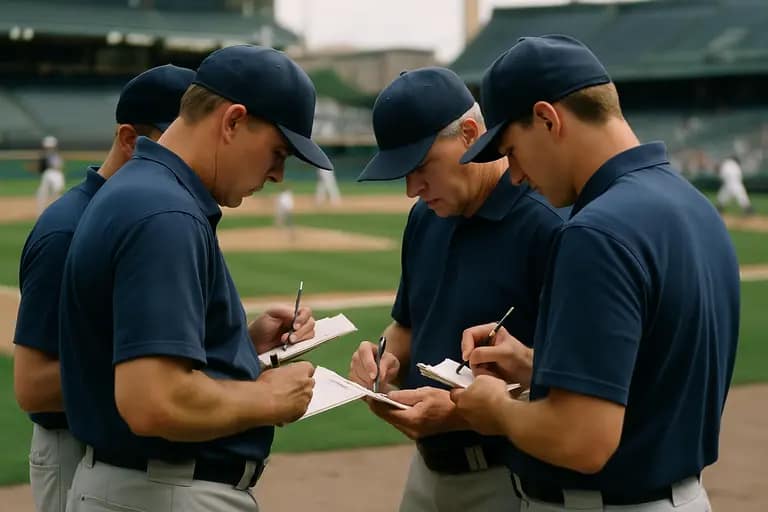
Team camps listed for high school groups give coaches a different kind of value. Individual skill work matters, but high school baseball is won and lost through team execution: bunt defense, first-and-third plays, cutoff communication, relay footwork, situational hitting, and defensive alignment. Research notes say the UH team camp format focuses on complete game situations, team defensive alignment, situational hitting, and offensive and defensive game planning.
Defensive Alignment Needs Shared Language
A high school team can have talented players and still give away outs if the language is loose. Coaches should leave a team setting with shared calls for bunt coverage, relay depth, and who owns shallow fly balls. Then they should bring those calls back to campus and rehearse them at half speed before using them in live innings. That is the same teaching principle used in good youth training: slow the play down first, then speed it up only after the group understands the job.
Pitching Control Fits The Same Plan
The research notes on UH’s program describe an emphasis on pitchers who throw strikes and control the zone, not just pitchers with velocity. That should ring true for Texas youth coaches. A 13-year-old who throws hard but walks the park puts pressure on the catcher, defense, and pitch count. A better bullpen progression starts with fastball command to both sides, then changeup feel, then breaking ball shape only when age, strength, and coaching support fit the player.
For younger pitchers, coaches can chart simple outcomes: first-pitch strike, two-strike miss, walk after getting ahead, and quality misses. Those numbers help a player see that command is a skill, not a personality trait. They also keep the bullpen from turning into a radar contest.
How UH baseball camps Fit Texas Player Development
The best use of UH baseball camps is to treat them as a checkpoint, not a finish line. A player should arrive with one or two clear goals, listen closely, and leave with a short practice plan. That plan might be 50 slow ground balls three times a week, two tee rounds built around opposite-field contact, or a bullpen chart focused on strike quality.
Texas baseball families do not need to chase every event on the calendar. They need the right instruction, enough recovery, and steady reps that match the player’s age and role. If a camp gives a player better language for his swing, cleaner footwork on defense, or a firmer plan on the mound, then the real work starts after the drive home from Schroeder Park.