

UIL Pitch Counts changed how Texas high school coaches plan arms, build bullpens, and teach pitchers to compete without turning every outing into a max-effort survival test. For grades 9-12, UIL rules listed in the research notes cap a pitcher at 110 pitches per day, with required rest tied to workload: 86-110 pitches requires four days of rest, 66-85 requires three days, 46-65 requires two days, 31-45 requires one day, and 0-30 requires no rest. Junior high rules for grades 7-8 use an 85-pitch daily cap with a separate rest scale. Those numbers matter, but the coaching value comes from how teams train before the count reaches the scoreboard.
Why UIL Pitch Counts Changed Texas Pitching Plans
The UIL pitch-count rule was approved by the UIL Legislative Council in October 2016, according to the research notes, and it shifted the Texas high school conversation from “How long can our ace go?” to “How many usable arms can we develop?” That is a healthier question for March district games, April tournament weeks, and May playoff series. It also lines up with what many youth coaches already see: the best high school staffs are not built in one bullpen. They are built through steady throwing routines, command work, recovery habits, and honest fatigue checks.
UIL Pitch Counts Reward Staff Depth
A 110-pitch ceiling does not mean a pitcher should be trained to reach 110 every outing. It means the staff needs a plan for the fifth, sixth, and seventh innings before the starter gets tired. Texas coaches should use weekday bullpens to prepare several pitchers for defined roles: starter, bridge arm, late-inning strike thrower, and emergency matchup arm. That makes practice more competitive and gives younger pitchers a reason to sharpen fastball command instead of waiting for a blowout inning.
For skill development, the rule pushes coaches to teach pitch efficiency. A pitcher who needs 22 pitches to finish the first inning is not just using up a number. He is showing a training issue: poor first-pitch strike rate, weak fastball location, slow tempo, or shaky fielding support. Coaches can attack those issues with short count-based innings in practice. Start an inning with a 1-0 count. Put a runner on second. Give the pitcher 12 pitches to record three outs. That drill teaches him to compete inside limits instead of treating limits like punishment.
Practice Must Match Game Rest Rules
UIL Pitch Counts also affect the calendar. If a varsity arm throws into the 86-110 range on Tuesday, the research notes state that he must rest four days before pitching again. Coaches should build practice weeks backward from likely game use. A heavy Tuesday outing should lead to recovery work, light catch when appropriate, lower-body mobility, and no surprise bullpen two days later. A pitcher who threw 30 or fewer pitches may not need a UIL rest day, but that does not erase the need to check soreness, sleep, warm-up workload, and whether he also played a demanding defensive position.
What The Injury Research Actually Supports
The best reading of the research is not “pitch counts fix everything.” A 2026 study of U.S. high school baseball players across 1,554,708 athlete-exposures during the 2013-14 through 2018-19 school years found no significant overall difference in shoulder and elbow injury rates across the three seasons before and after the 2016 NFHS pitch-restriction mandate, but it did find that specific policy pieces were associated with lower injury rates, including consecutive-day rest rules, lower daily maximums, and at least four rest days after high workloads high school pitch restriction study. That fits the coaching reality: a rule is only useful if the staff follows it, records it, and trains around it.
Rest Days Are Training Days, Not Off Switches
Rest does not always mean a player sits at home and does nothing. It means the throwing load changes. For a pitcher coming off a heavy outing, the next days can include shoulder care, hip mobility, light conditioning, video review, pickoff footwork without throws, and mental work on scouting reports. Coaches should be careful with medical language and stay in their lane, but they can still teach players that recovery is part of pitching.
One study from Japan, published in 2020, found that high school pitchers who threw fewer than 30 full-power pitches per day had a 2.3 times higher risk of shoulder or elbow injury and had injury onset an average 45 days earlier than pitchers who threw 30 or more full-power pitches per day daily pitch volume study. That does not mean Texas pitchers should throw hard every day. It does suggest a useful coaching point: sudden spikes and poorly planned throwing can be a problem, and very low preparation before high-stress games may not protect the arm either.
Watch Fatigue Before The Number Looks Scary
Pitch-count tracking is a floor, not a full evaluation. A pitcher can show fatigue at 42 pitches on a hot Tuesday in South Texas or look sharp at 70 pitches in cooler weather. Coaches should watch for common warning signs: fastball missing arm-side high, front shoulder flying open, slower tempo, loss of finish, repeated deep counts, and a player shaking or stretching the arm between pitches. Velocity drop can be one signal, but many high school dugouts do not have verified radar data, so visual checks still matter.
- Before The Game: Confirm available pitchers, prior workloads, catcher availability, and emergency arms.
- During The Game: Track pitches by inning, not just total count, and pair the count with command and body-language notes.
- After The Game: Record the official count, assign rest, and plan the next throwing day before players leave the field.
Building Better Pitchers Under The Rule
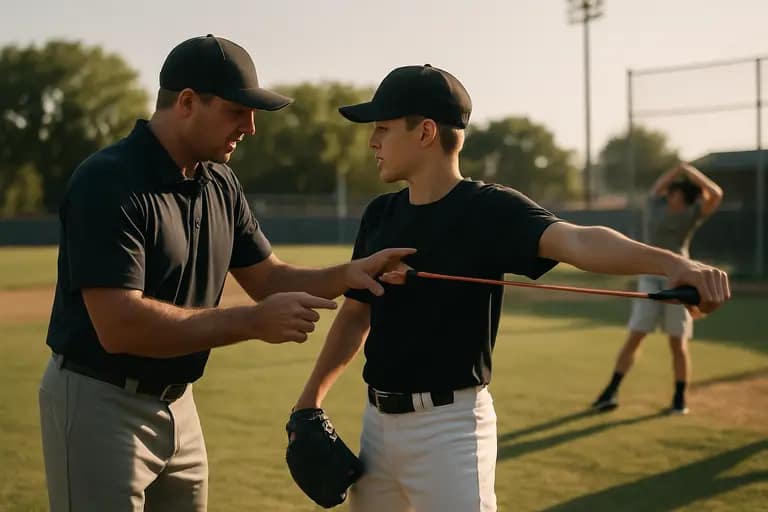
UIL Pitch Counts should push Texas staffs toward cleaner mechanics, not softer competition. The best developmental response is to train pitchers to win earlier in counts. That starts with fastball command to both sides, a usable changeup, and a breaking ball that can be thrown without overthrowing. A pitcher with two pitches he can land and one chase pitch he can control will usually survive pitch limits better than a harder thrower who depends on strikeouts and foul balls.
Use Bullpens With A Purpose
Not every bullpen needs to be long. A strong Texas high school plan can use short, focused sessions: 12 fastballs to the glove side, 8 changeups after fastballs, 6 breaking balls for strike feel, then 6 game-situation pitches from the stretch. Coaches should chart quality, not just volume. If a pitcher misses his first eight glove-side fastballs, the session has given the staff a clear teaching target. Fix the direction, posture, stride line, or release cue before adding more pitches.
For teams that want a deeper practice structure, a related arm-care approach can be built through bullpen games and arm care, especially when coaches want competitive mound work without treating every session like a full outing.
Develop The Non-Ace Innings
The most useful effect of UIL Pitch Counts may be the pressure it puts on player development. Coaches can no longer hide behind one dominant arm for every key moment. That means freshman and JV pitchers need real instruction, not leftover reps. Let them close controlled scrimmage innings. Put them in bunt-defense situations. Make them hold runners. Teach them to throw a 2-0 fastball for a strike with the infield expecting contact. Those details create varsity depth long before a playoff bracket tests the roster.
What UIL Pitch Counts Mean For Texas Coaches
UIL Pitch Counts are not just paperwork for the scorebook. They are a training framework for safer, deeper, more prepared Texas pitching staffs. The rule gives coaches a clear daily limit and rest structure, but the real impact depends on daily decisions: who warms up, who catches, who throws on the side, who needs recovery, and who is being prepared for the next district series.
For Texas baseball families, the takeaway is practical. Ask whether the team tracks pitches carefully. Ask how rest days are handled. Ask whether multiple pitchers are being developed instead of one arm carrying every meaningful inning. A good plan protects the athlete and gives the team more ways to win. The count matters, but the coaching around the count matters just as much.