

The best youth baseball coaching lesson from the Southwest Region Tournament is not a trick play or a louder pregame speech. It is a simple pattern: keep athletes connected, teach clearly, protect recovery, and make expectations plain before pressure arrives. As of September 6, 2026, the Southwest Region’s NTIS Champions Cup experience offered Texas coaches a useful model for tournament preparation, even when a team has limited shared practice time.
Texas coaches know the problem well. Players may come from San Antonio, Houston, Dallas-Fort Worth, Austin, the Valley, West Texas, or smaller towns where school ball, select ball, family travel, and heat all compete for attention. A coach rarely gets a perfect calendar. The Southwest example shows how a staff can still build trust fast by returning to a clear core: player continuity, shared identity, age-fit feedback, and a weekend plan that values legs, arms, and minds.
Youth Baseball Coaching From The Southwest Model
Youth Baseball Coaching With A Stable Core
One of the strongest ideas from the Southwest Region’s NTIS Champions Cup experience was continuity. USA Baseball reporting described Southwest coaches such as Norm Hebert and Juan Fontela keeping many of the same players together across age groups, including movement from 12U to 13U to 14U. That matters because a tournament team does not have months to learn body language, defensive habits, or who needs a calm word after a strikeout.
For youth baseball coaching, continuity should not mean a closed door. It means coaches build a returning nucleus while still giving new players a fair chance to earn trust. A stable core can help the dugout settle faster. It can also make practices sharper because returners already know bunt coverages, cutoff language, warmup standards, and how the staff wants players to respond after mistakes.
Texas teams can copy that idea without copying the exact roster model. A 12U club in Katy, a 13U team in McKinney, or a 14U group from Corpus Christi can track who leads well, who communicates on defense, who handles bench time, and who raises practice tempo. Skill still matters. So does the player who helps the group function when the bracket gets tight.
Tryouts That Measure More Than Tools
The Southwest NTIS identification process in the research used at least two tryout rounds: an open regional showcase and an invitation-only round before the regional team was formed. That structure gives coaches more than one look. A player can run, throw, hit, and field well in a showcase, but the second look helps a staff see how he listens, adjusts, competes, and treats teammates.
Local Texas tryouts can use the same idea at a smaller scale. Run the measurable station, then run a baseball station. Put players in relay communication, first-and-third defense, pressure baserunning reads, and live at-bats with immediate instruction. Watch the player after the rep, not just during it. Does he ask a useful question? Does he blame the field? Does he reset for the next ball? Those answers help coaches select a team, not just a collection of arms and bats.
Practice Design For Short Tournament Windows
Keep The Teaching Board Small
Southwest coaches reportedly had only a few tryouts and practices each year before the Champions Cup, yet the program was described as having won six consecutive NTIS Champions Cup titles as of August 2026. The lesson for Texas teams is not that practice time does not matter. The lesson is that limited time must be spent on the things most likely to show up under pressure.
A short tournament practice should not turn into a clinic with twelve themes. Pick the four that will decide games: catch-play quality, defensive communication, baserunning decisions, and pitcher-catcher tempo. If a team has ninety minutes, spend the first block on movement and throwing, the second on team defense, the third on situational hitting or baserunning, and the last on roles. A player should leave knowing what the team values and what his job may be.
This approach also helps coaches avoid overtalking. Young athletes can only carry so many verbal cues into competition. If a coach gives a hitter six thoughts before one at-bat, the coach has probably reduced the player’s chance to compete freely. Short cue. Clear target. Next rep.
Use Feedback Players Can Act On
Rutgers Youth Sports Research Council advises coaches to give specific instruction about what to do, rather than vague or negative correction, in its age-appropriate coaching strategies. Baseball coaches can use that immediately. Instead of saying, do not sail it, say, throw it chest high. Instead of saying, quit pulling off, say, hold your front shoulder through contact.
This is youth baseball coaching at its cleanest: the player knows the next action. Younger players need simple, emotionally steady feedback. Older youth players can handle more detail, but only if the feedback still points to a task. The goal is not to prove the coach saw the flaw. The goal is to help the athlete fix the next rep.
For Texas tournament teams, this matters because games can pile up. A player who hears only what he did wrong in game one may carry that weight into game two. A player who hears one useful adjustment has a path forward. Coaches set that tone pitch by pitch.
Mindset, Identity, And Family Alignment
Set The Jersey Standard Early
The Southwest experience also showed the value of identity. Coaches framed selection and competition around what it meant to represent USA and the Southwest. Texas teams can use the same principle without making it grander than it is. Tell players what the jersey means before the first game: run hard, speak well, support the bench, respect umpires, and compete after mistakes.
Identity works best when it is behavioral. A coach can say, we are tough, but players need to know what tough looks like. It may mean getting the sign after a bad call, covering first base after a weak swing, or cheering for the player who took your inning. Regional pride is useful only if it becomes daily conduct.
Coach Composure Before Bracket Pressure Hits
Southwest teams in the research were described as self-motivated, calm under pressure, and unwilling to give in when behind. Coaches do not create that mindset by waiting until the semifinal. They train it in practice. Put a runner on third with one out. Start the count 1-2. Give the defense a one-run lead. Then teach the breath, the plan, and the reset.
For more on handling bracket pressure with young players, Texas coaches can pair these ideas with competition coaching for Texas youth baseball. The key is to rehearse the moment before the moment owns the dugout.
Bring Parents Into The Plan
Family alignment is not soft work. It prevents confusion. Research notes from the 14U NTIS Champions Cup described parents valuing exposure to high-level competition, strong coaching, work ethic, and love of the game. Coaches can build on that by telling families how playing time, pitching use, communication, arrival times, and recovery will be handled.
A preseason parent talk should be direct and calm. Explain that development includes roles, not only starts. Explain that a player may sit, pinch run, close an inning, or enter for defense because the team has a weekend plan. Parents do not have to agree with every choice, but they should not be surprised by the philosophy.
Recovery And Safety In Texas Tournament Play
Plan Rest Before You Need It
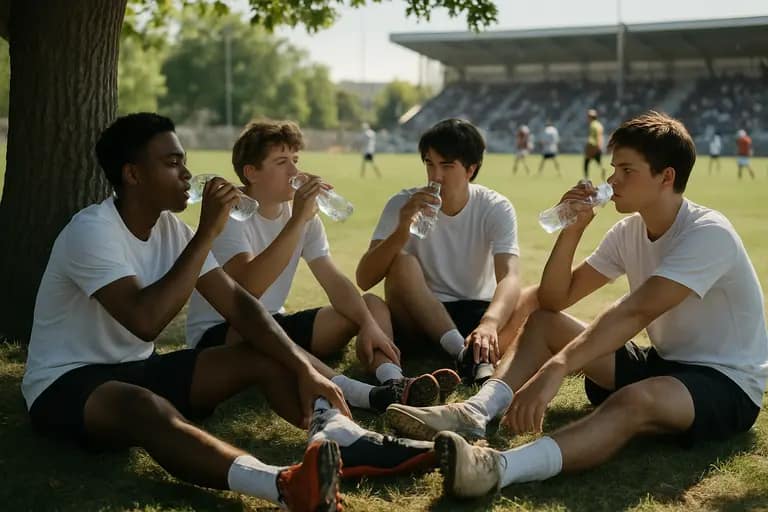
In Texas, youth baseball coaching has to respect heat, travel, and repeated games. Research on youth sports in hot conditions found that short rest periods, multiple same-day games without enough recovery, and poor hydration can raise heat-illness risk and reduce performance; longer rest between games can help safety and performance, according to youth sports heat research.
That finding fits the weekend reality for baseball families. A coach may not control the bracket schedule, but he can control warmup length, shade habits, catcher rotation, bullpen volume, and postgame routines. If a team wins at 10 a.m. and plays again at 2 p.m., the next four hours should not become a parking-lot endurance contest. Cool down, eat, hydrate, get out of the sun where possible, and restart the body closer to first pitch.
Rotate Roles With The Whole Weekend In Mind
Coaches often manage one inning at a time. Tournament coaches have to manage the whole day. That does not mean saving every top player for a game that may never happen. It means knowing which athletes are carrying the heaviest physical load and which players can handle a role change without panic.
Catchers need special attention because they squat, throw, block, hit, run bases, and often lead the defense. Middle infielders cover ground. Pitchers may be asked to play another spot. A safe tournament plan names backup options early, not after fatigue shows up. Players accept rotation better when coaches explain the reason: we are trying to win games and keep bodies ready for the full event.
Southwest Lessons For Texas Coaches
A Weekly Action Plan Coaches Can Use
The Southwest lesson for youth baseball coaching is practical: build the team before the pressure, then keep the teaching simple enough to survive pressure. A Texas coach does not need a national event budget to apply that. He needs a clear practice board, steady communication, and enough humility to protect kids from overload.
- Keep a returning core: Track players who add trust, not only players with loud tools.
- Use layered evaluation: Add a second look or callback for coachability, communication, and game feel.
- Name team standards: Define effort, respect, bench behavior, and response to mistakes.
- Limit practice themes: Teach the few situations most likely to decide tournament games.
- Use action words: Give players the next task, not a speech about the last mistake.
- Train pressure: Create count, inning, and score situations during practice.
- Align parents early: Share role, schedule, and recovery expectations before the event.
- Protect recovery: Plan shade, hydration, food, and position rotation before fatigue arrives.
If a team can do those things, the scoreboard still may not cooperate. Baseball has bad hops, tight zones, and line drives caught at people. But the player experience gets better, the dugout gets steadier, and the coach earns more trust. That is the part Texas coaches can control every week.
The Southwest Region Tournament lessons point toward a style of coaching that is demanding without being chaotic. It asks players to compete, but it also gives them structure. It values winning, but not at the cost of communication, recovery, or confidence. For Texas baseball families, that is the kind of standard worth carrying from one tournament weekend to the next.