

Miracle League fields matter in Texas youth baseball because access starts before the first pitch. A player using a wheelchair, walker, gait trainer, or other assistive device needs more than a kind coach and a buddy system. The field surface, gate width, dugout route, restroom access, parking path, shade, and volunteer setup all decide whether baseball feels possible for that family.
For Texas leagues, the facility question is practical. Many youth baseball complexes were built around grass, skinned infields, raised lips, narrow dugouts, and uneven walkways. Those features can be manageable for some players and a barrier for others. A Miracle League model answers that problem with adaptive field design, planned support, and a sports-first setting where the athlete is not treated as a visitor to baseball.
Why Miracle League Fields Matter In Texas
Miracle League Fields And Player Development
Player development is not only exit velocity, throwing mechanics, and tournament reps. For athletes with physical or intellectual disabilities, development can mean learning base running timing, taking a turn at the plate, tracking a rolling ball, greeting teammates, and building comfort in a game-day routine. The research notes describe Miracle League organizations as serving children and adults with physical and/or intellectual disabilities across the United States, Canada, and Puerto Rico. That scale shows that adaptive baseball is not a side project. It is a real branch of community baseball.
For coaches, Miracle League fields create a better teaching environment because the surface and layout reduce avoidable friction. If a player can move from the dugout to the batter’s box without fighting a rut, a step, or a muddy edge, the coach can focus on the sport. That changes the rhythm of practice. More time goes to throwing, hitting, fielding, and social connection. Less time goes to workarounds.
Texas Travel Pressure For Families
Texas families understand distance. A weekend tournament in the Metroplex, a clinic in Central Texas, or a league game on the other side of Houston can turn into a full-day plan. For families managing medical equipment, sensory needs, transportation limits, or sibling schedules, long drives can decide participation before registration opens.
Mansfield, Texas opened a new Miracle League Field on August 18, 2026. The research notes describe it as a $600,000 facility with adaptive features intended to help hundreds of local children with special needs avoid long travel just to play. For readers tracking local access, our related piece on the Mansfield Miracle League Field looks at what that opening meant for nearby baseball families.
Facility Design That Changes Daily Use
Rubberized Turf And Mobility Devices
The signature equipment decision is the playing surface. Fields built for Miracle League use custom rubberized synthetic turf. The research notes say this surface accommodates wheelchairs and assistive devices, reduces tripping hazards, limits maintenance, and supports more play across the calendar than traditional grass fields. For a Texas facility manager, that means the field is not just nicer on opening day. It is easier to keep usable after rain, heat, heavy foot traffic, and repeated weekly programming.
That surface matters most in the small moments. A wheelchair rolling to first base should not sink into a damp clay cutout. A player with balance challenges should not cross a mound lip or broken edge to reach a position. A buddy helping a hitter down the line needs predictable footing. These are field operations details, but they affect confidence.
Dugouts, Paths, And Spectator Areas
Accessible baseball is not finished at the foul lines. A good project should trace the entire game-day path from parking to check-in, restroom, dugout, on-deck area, field, seating, concession stand, and exit. If one link fails, the field still creates stress for families. Gates should allow assistive devices to pass without awkward turns. Dugout space should allow players, buddies, coaches, and equipment to move without crowding. Shade matters in Texas, especially for athletes who fatigue quickly or use medical equipment that should not sit in direct sun.
Facility committees should also think about parents and siblings. Spectator zones need accessible viewing points, not just a ramp placed far from the action. Families come to watch baseball, cheer a swing, clap for a run, and take part in the local ballpark routine. The design should treat that as part of the program.
Youth Development Starts With Access
Social Skills, Confidence, And Belonging
Inclusive sports research supports what many Texas coaches see on the field: access affects more than physical activity. A 2025 evaluation of multi-sport activity days in New South Wales, Australia reached 1,839 children and adolescents with disabilities, with participants reporting gains in self-esteem, belonging, confidence, social connections, and physical skills inclusive sports evaluation. That was not baseball-specific, but the lesson fits youth baseball planning. A well-run adaptive program gives athletes a repeatable place to practice, be known, and grow.
Baseball has a useful pace for this work. The game has turns, pauses, clear stations, and visible roles. A player can hit from a tee, run with a buddy, field from a marked spot, or celebrate a teammate. Coaches can adjust challenge level without removing the athlete from the team setting. That is why accessible fields can support motor coordination, communication, patience, and peer interaction alongside baseball skills.
Learning From Unified Sports Models
Programs that bring students with and without disabilities into shared competition also point toward better baseball planning. Evaluation of Special Olympics Unified Sports in U.S. schools found more than 6,400 elementary, middle, and high schools with unified teams, with the model tied to social inclusion and reduced bullying Unified Sports school programs. For youth baseball, buddies, peer volunteers, school teams, and local select players can support the same goal when they are trained well.
The key is not to treat volunteers as decoration. They need direction. A buddy should know how to offer help without taking over the play. Coaches should explain safety, communication, pace, and encouragement before the first inning. A strong buddy program can help an athlete feel like a teammate rather than a project.
Budget, Maintenance, And Local Operations
What Boards Should Price Before Building
Miracle League fields are not cheap community add-ons, and Texas boards should discuss cost early. The research notes list Mansfield’s 2026 facility at $600,000. They also note that Opelika, Alabama dedicated a new artificial turf Miracle League field on March 21, 2026, replacing an unsafe uneven surface, with the cost estimated between $300,000 and $350,000. Those figures are not interchangeable quotes for every Texas project, but they show the order of planning involved.
A local board should price the field surface, base layout, fencing, accessible dugouts, lighting needs, drainage, shaded areas, restrooms, parking connections, maintenance equipment, insurance, storage, and long-term replacement reserves. A lower construction bid can become a headache if the walkway is too steep, the restroom route is poor, or the surface warranty does not match field use.
Maintenance Is Still A Baseball Job
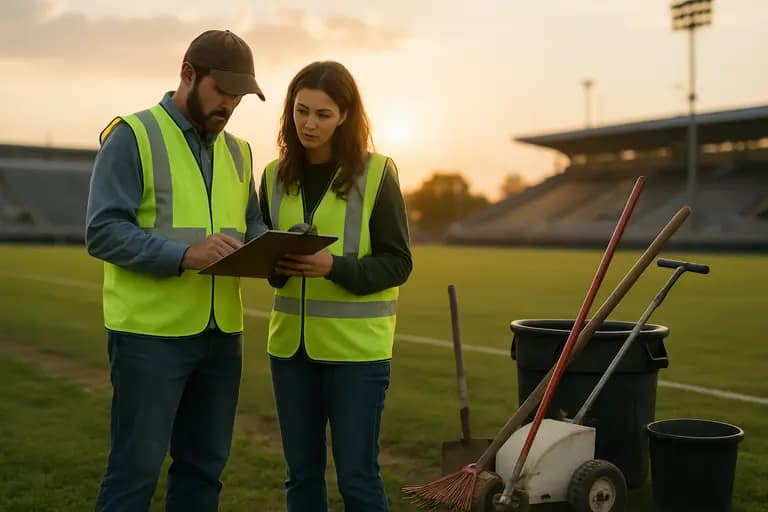
Rubberized synthetic turf can reduce mowing, edging, infield dragging, and mud repair compared with traditional grass and dirt. It still needs inspection. Facility crews should check seams, drainage points, trip edges, gate thresholds, loose fixtures, sun-exposed seating areas, and any transition from the field to concrete. Texas heat can punish surfaces, shade structures, and hardware, so a written inspection calendar beats a memory-based approach.
Equipment storage should be part of the same plan. Adaptive bats, tees, softer balls, cones, portable shade, first aid supplies, and communication tools need a clean, reachable space. If the gear is scattered across a complex, coaches lose time and the first practice feels disorganized. Good operations make inclusion feel normal.
What Accessible Fields Mean For Texas Youth Baseball
A Local Baseball Pipeline With More Doors
Texas youth baseball often talks about the pipeline from tee ball to school ball, select ball, college recruiting, and community coaching. Accessible fields widen that pipeline. Not every player will chase varsity innings or a tournament roster, but every player should have a fair chance to enjoy the sport, learn its routines, and belong at the ballpark.
Frisco, Texas celebrated 20 years in 2026 and opened a cushioned, wheelchair-friendly field, along with a special needs playground. That example, along with Mansfield’s 2026 opening, shows a clear Texas pattern: families need local facilities, not distant promises. When a field is closer, safer, and better designed, attendance becomes easier and programs can grow steadier volunteer bases.
Practical Next Steps For Facility Committees
A Texas league considering adaptive access should start with an honest field walk. Bring parents, coaches, athletes, a facilities lead, and someone who understands accessibility. Start in the parking lot and move as a player would move. Measure tight turns. Look for lips, slopes, soft spots, and narrow gates. Watch where shade falls during normal game times. Check whether a family can reach the restroom without crossing rough ground.
Then build the program plan alongside the construction plan. Miracle League fields work best when the surface, schedule, buddies, coaches, registration, medical readiness, and family communication all fit together. The field is the foundation, but the weekly experience is what keeps players coming back. For Texas baseball communities, that is the real facility standard: a ballpark where more kids can take the field, hear their name called, and play the game in front of people who came to cheer for them.