

Texas Baseball Weather can turn a clean practice plan into a phone-tree exercise before the first bucket of balls is opened. The recent Texas A&M fall exhibition change is a useful reminder for youth coaches across the state: weather planning is not a side task. It is part of coaching. On October 2, 2026, Texas A&M’s fall exhibition against Rice was cancelled due to inclement weather and rescheduled for October 9, 2026, according to an AOL report.
That was a college program with staff, facilities, and a fall calendar. Most youth teams have fewer resources, shared fields, parent work schedules, and players coming from different school zones. Still, the lesson carries over. If a major Texas baseball program had to adjust, local coaches should expect the same pressure and prepare for it before clouds build over the outfield fence.
Texas Baseball Weather Lessons From The A&M Delay
What The Reschedule Showed
The A&M-Rice exhibition was not played on its original October 2 date. It was moved to October 9. The available research does not provide a game result or detailed weather timeline for October 9, so the coaching lesson should stay focused on process: the program had enough schedule room to move the exhibition rather than forcing a risky date.
That matters for youth baseball because fall in Texas can be busy. Teams may be using fall ball for development, roster evaluation, or simply more reps after summer tournaments. Coaches often feel pressure to keep every scheduled workout. A reschedule can feel like lost momentum. In reality, a planned pause can protect players, preserve fields, and keep families from driving into unsafe conditions.
Texas Baseball Weather Backup Dates
For youth teams, Texas Baseball Weather planning starts before the schedule is published. If a team has eight fall workouts, coaches should assume at least one may be affected by storms, heat, wet fields, or lightning. That does not mean every team needs a second field reserved for every date. It does mean the head coach should know which practices are core teaching days, which can shift indoors, and which can be shortened without hurting player development.
A simple method is to label each practice as skill, team defense, live reps, or recovery. If weather cancels a live-rep day, the next available practice can absorb some of that work. If a recovery or light-skill day is lost, it may not need to be replaced. This keeps the staff from trying to cram three missed goals into one rushed evening.
Building Practice Plans Around Weather Risk
Separate Safety Decisions From Competitive Pressure
Weather decisions get harder when the team has a tournament coming, a pitcher needs side work, or a catcher has missed reps. Coaches should decide in advance who has final authority to stop or cancel an outdoor session. That person should not be negotiating with the parent who drove the farthest or the assistant coach who wants one more round of batting practice.
A good rule for staff meetings is this: safety calls are not votes. Gather information, check the field, review league or facility rules, then decide. Once the decision is made, communicate it clearly. If the team is waiting on radar, say that. If the facility has closed the field, say that. If lightning or unsafe field conditions ended the plan, do not soften the message. Clear language protects trust.
Use Indoor Time With A Purpose
Texas coaches often need a Plan B that does not waste a night. Indoor work can cover tee progressions, throwing mechanics, catcher receiving, baserunning reads with cones, classroom signs, or team standards. The goal is not to recreate a full field practice inside a cage. The goal is to protect the week’s development plan.
If your club is deciding how much indoor space it truly needs, this local resource on indoor vs outdoor training facilities can help frame the tradeoffs for Texas families. The main coaching point is simple: indoor space works best when the staff already knows what it will teach there.
- Name the weather lead: One coach checks forecasts, field status, and facility messages.
- Set a decision window: Give families a target time for go, delay, or cancel notices.
- Protect arm work: Do not rush pitchers into poor warmups after a long delay.
- Plan field recovery: Wet dirt, slick grass, and damaged mounds can create avoidable injury risk.
- Keep a short indoor script: Have a 45-minute cage or classroom plan ready before bad weather hits.
Communication Habits For Short-Notice Changes
Parents Need Fewer Guesses
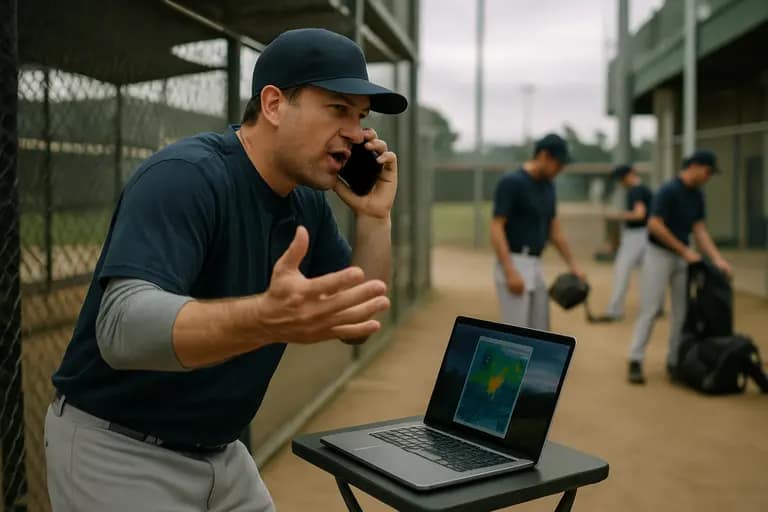
Most frustration around weather is not only about the cancellation. It is about uncertainty. Parents want to know whether to leave work early, pack food, bring siblings, or drive across town. A coach cannot control the storm line, but a coach can control the communication pattern.
Use the same channel every time, whether that is a team app, text group, or email. Avoid splitting key updates across several places. If the decision is pending, send a short note: field check at 4:30 p.m., next update at 5:00 p.m. That small habit lowers confusion and keeps the coach from answering the same question twelve times.
Players Need A Development Message
Youth players can read adult stress quickly. If coaches treat every rainout as a disaster, players may feel like they lost ground. Instead, explain the baseball reason for the change. For example: the field is too wet for safe defensive footwork, so the next session will start with first-step work and relay communication. That turns the cancellation into part of the plan.
Texas Baseball Weather also teaches adaptability. A player who learns to reset after a delay, warm up properly after waiting, and stay focused during schedule changes gains a skill that carries into school ball and tournament weekends. Coaches can build that mindset without giving a lecture. Model calm, keep the instructions short, and give the next clear baseball task.
What The A&M Reschedule Means For Texas Baseball Weather Plans
Coach The Calendar Before It Coaches You
The A&M example should push youth coaches to review their own fall and spring calendars. Which dates have no backup? Which weekends are packed too tightly? Which practices are too valuable to leave without an alternate plan? A schedule that assumes perfect conditions is not realistic for Texas baseball families.
A good Texas Baseball Weather plan does not need to be complicated. It needs to be written, shared, and used. Build in make-up options where possible. Know which work can move indoors. Give families predictable update times. Protect pitchers and catchers from rushed restarts. Keep safety decisions separate from competitive pressure. That approach will not stop rain, heat, or lightning, but it will help coaches respond like leaders instead of scrambling after the first bad forecast.