

For Texas baseball families searching for College Coaches Showcase Camp options in Richardson, the first job is separating verified event details from assumptions. As of September 15, 2026, the clearest supported Richardson listing in the supplied research is the Tiger Tournaments Fall Showcase ID Camp, scheduled for November 13, 2026, at the UTD Soccer Complex in Richardson, according to the organizer’s ID camps page. The research provided does not verify that this listing is a baseball-specific camp. That matters for high school baseball players, because a camp label alone does not tell families whether the event includes baseball instruction, baseball college coaches, measurable baseball testing, or recruiting exposure tied to the diamond.
What Is Verified For The College Coaches Showcase Camp
College Coaches Showcase Camp Dates And Site
The verified Richardson event detail is straightforward: Tiger Tournaments lists a Fall Showcase ID Camp for November 13, 2026, at the UTD Soccer Complex in Richardson. The venue detail is not a small footnote for baseball families. A soccer complex setting should prompt a follow-up question before any baseball player treats the listing as a baseball recruiting opportunity. Families should confirm the sport, field setup, evaluation stations, and staff assignments directly with the organizer before making travel or registration plans.
The date also lands during a busy fall evaluation window for many Texas athletes. For baseball players in North Texas, fall can include high school offseason work, select-team schedules, strength training, academic visits, and coach communication. A Richardson event can be convenient for Dallas-Fort Worth families, but convenience should not replace fit. The event has to match the player’s recruiting goal, whether that goal is getting a verified metric, meeting college staff, or learning where the player stands against older competition.
Age Range, Check-In, And Evaluation Window
IDCampFinder lists the Tiger Tournaments Fall Showcase ID Camp 2026 as a one-day, coed ID camp open to players ages 13–19, with check-in at 5:30 p.m. and camp programming running roughly from 6:00 to 9:00 p.m.; it also describes college coaches as part of the evaluation and exposure setting camp information. Those facts help families understand the time commitment, but they do not answer every baseball-specific question.
A three-hour evening format can be useful when the plan is clear. In baseball terms, families would want to know whether players are being evaluated through defensive work, batting practice, bullpens, pitcher-catcher sessions, game reps, or timed athletic testing. The supplied research does not verify those baseball activities for this Richardson listing. That uncertainty should be treated as a planning item, not a deal-breaker by itself.
Richardson Event Context For Texas Baseball Families
Why The Venue Detail Matters
Richardson sits in the middle of a strong North Texas youth sports corridor. Families from Dallas, Plano, Garland, Allen, McKinney, Frisco, Mesquite, and Rockwall can often reach UTD with a manageable drive. That location is valuable, especially on a school night or during a weekend tournament stretch. Still, baseball families should read venue names closely. A showcase held at a soccer complex may serve a different sport, different recruiting pipeline, and different coach audience than a baseball field event.
That does not mean a Richardson camp has no value to a baseball family. It means the value has to be proven before the player spends time, money, and energy on it. A middle infielder, catcher, pitcher, or outfielder needs a setting where college staff can see the tools that matter in baseball. A shortstop needs ground-ball work and throwing reads. A catcher needs receiving, transfer, blocking, and arm strength looks. A pitcher needs mound context, pitch data if available, and enough recovery space to avoid turning a showcase into a rushed bullpen.
What High School Players Should Confirm
For grades 9–12 players, the biggest issue is not just whether college coaches are present. It is whether the right college coaches are present for the right sport and whether those coaches are allowed to evaluate in the format being offered. Families should ask for the current coach list, the sport assignments, the session plan, refund terms, and whether the event provides player information to college programs before or after camp.
Younger players should be even more selective. Ages 13–14 can use ID-style settings for learning and measuring, but early showcase chasing can distract from skill growth. A seventh or eighth grader in Texas baseball often benefits more from steady practice, arm care, defensive reps, and controlled competition than from paying for exposure too early. Older players, especially juniors and seniors, should weigh whether the event lines up with their graduation year, academic profile, target schools, and video needs.
How Baseball Families Should Read The College Coaches Showcase Camp
Questions Baseball Players Should Ask
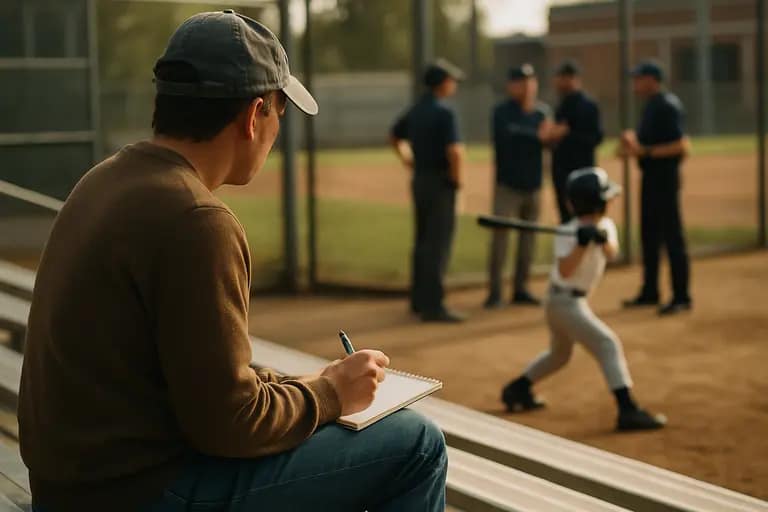
For baseball players, the College Coaches Showcase Camp label is not enough. A useful showcase should make the evaluation plan plain before registration. If the listing does not clearly state baseball, families should not assume baseball coaches will be there. They should ask direct questions and keep the answers in writing.
- Sport fit: Is this event specifically for baseball players, or is it for another sport?
- College staff: Which college baseball coaches are scheduled, and what roles will they have?
- Player work: Will position players hit, defend, throw, run, or play live innings?
- Pitcher plan: Will pitchers throw bullpens, face hitters, or receive velocity and pitch feedback?
- Recruiting output: Will players receive written feedback, video, metrics, or a player profile sent to coaches?
- Schedule pressure: How does the camp fit around fall ball, school work, and arm rest?
These questions are practical, not picky. A Texas family may be driving through evening traffic, taking a player out of normal training, or adjusting weekend tournament prep. The event should be worth that trade. Coaches helping players prepare can also use showcase coaching strategies for Texas players to build a plan around measurable skills, communication, and post-event follow-up.
Roster And Recruiting Prep
Good showcase prep starts before check-in. Players should have an updated academic profile, graduation year, primary and secondary positions, height and weight if requested, recent video if available, and a short list of schools they have already contacted. None of that depends on hype. It depends on being organized enough that a college coach can connect the player’s name to the player’s tools.
Baseball families should also protect workload. A pitcher who threw heavily in a tournament should not treat a Friday evening camp as a chance to empty the tank again. A catcher who has caught multiple games needs to think about legs, hands, and throwing volume. Position players should arrive warm, fueled, and ready for quick transitions. The best showcase performance often comes from simple readiness: cleats packed, glove broken in, bat legal for the setting, water ready, and contact information accurate.
What The College Coaches Showcase Camp Means For Richardson Planning
The College Coaches Showcase Camp search result can be useful for Richardson-area families, but only if it leads to verified answers. The supported 2026 facts point to a November 13 event at UTD Soccer Complex, a one-day evening format, an ages 13–19 listing, and college coach evaluation language. The supplied research does not verify a baseball-specific camp format for that event. Texas baseball families should treat that gap seriously and confirm the sport before registering.
For high school players in the Dallas-Fort Worth area, the right Richardson event can save travel time and create a local evaluation opportunity. The wrong event can burn a training night without moving the player forward. The smart play is to match the event to the athlete’s recruiting stage: younger players need development feedback, juniors need exposure tied to target schools, and seniors need clear coach access with a realistic roster fit. In a crowded showcase market, verified details beat broad promises every time.