

Texas A&M fall baseball gave coaches, families and local baseball followers a first public look at a heavily changed Aggies roster on October 9, 2026. Texas A&M played Rice in a 14-inning fall scrimmage at Olsen Field at Blue Bell Park and lost 9-5, with the official recap noting that the Aggies used 15 position players and 14 pitchers in the exhibition official Rice recap. For youth baseball families across Texas, the score was less useful than the usage pattern: fall exhibitions are where roles start forming, freshman comfort gets tested and pitching depth gets its first public checkpoint.
Texas A&M Fall Baseball Roster Picture
The biggest roster takeaway is not a single box-score line. It is the amount of turnover Texas A&M is working through before the 2027 spring schedule. In a September 16, 2026 media availability, head coach Michael Earley described the roster as roughly one-third returning players, one-third transfers and one-third high school or freshman additions fall practice notes. That split matters in a state where high school players and travel-ball families watch College Station closely as a development marker.
A roster built that way creates two fall priorities. The staff has to identify which returning players can set the daily standard, and it has to find out which newcomers can handle the speed of college baseball. Fall exhibitions do not answer every lineup question, but they do reveal who gets trusted with game reps when the staff wants competitive information instead of practice-only evaluation.
Texas A&M Fall Baseball By The Numbers
The Rice scrimmage offered a practical look at how wide the evaluation net was. Playing 14 innings gave Texas A&M room to spread out at-bats and mound work. Using 15 position players and 14 pitchers also signaled that the staff was not treating the night like a narrow dress rehearsal. It looked more like a controlled stress test.
For Texas youth coaches, that approach is worth noticing. Fall baseball is not only about locking in a batting order. It is about seeing players in game conditions: how they handle a two-strike count, how a pitcher responds after traffic on the bases, and whether a freshman hitter can stay on time against older arms. The Aggies’ usage pattern showed that the staff wanted real information across the roster.
Rice Scrimmage Notes From Olsen Field
The October 9 exhibition started with Clayton Freshcorn on the mound. Freshcorn threw 2.0 innings, allowed one run on two hits and struck out four. That line was one of the cleaner early data points from the night because it showed swing-and-miss ability in a short outing without asking him to stretch deep into the game.
The result, a 9-5 Rice win, should be read in the proper fall setting. A 14-inning scrimmage with 29 Aggies appearing is not managed like a spring weekend game. Pitchers may be working on specific pitch shapes. Hitters may be getting looks in spots they will not occupy in February. Defensive alignments may be more about evaluation than game preservation. Still, the public box score gives a first look at who created moments.
Freshcorn Set The First Pitching Marker
Freshcorn’s start matters because he is one of the known names in the returning group. The research notes also identify him as a player who returned after being selected in the 19th round of the 2026 MLB Draft. In a refreshed clubhouse, returning arms with draft interest carry extra weight. They can give a staff both performance and a reference point for younger pitchers.
For youth players watching from Houston, Central Texas, Dallas-Fort Worth or the Brazos Valley, the lesson is simple: fall innings are not empty innings. A short outing can still create a marker. Strike-throwing, tempo and the ability to finish hitters all show up fast, even in two innings.
Run Production Came From Several Spots
The Aggies’ offense spread its production across several players against Rice. Nate Savoie and Jorian Wilson each had RBI doubles. Zane Becker added an RBI single. Freshman hitters JD Alexander and Catcher Hopkins each delivered RBI base hits. Dylan Schlaegel had the only multi-hit game for Texas A&M.
That distribution is useful because a rebuilt roster needs more than one hot bat. It needs competition at multiple positions. RBI swings from both experienced and freshman players suggest that the staff had a chance to compare approaches across age groups in the same game setting. Schlaegel’s multi-hit night also gives the staff a clean offensive checkpoint from the exhibition.
Pitching Depth And Newcomer Evaluation
The pitching notes beyond Freshcorn were just as important as the starter’s line. Texas A&M received scoreless innings from Trent Collier, Wade Cooper, Cayden King, Trent Vilade and Hunter Vincent. Jarret Williams struck out the side in the 14th inning. In fall baseball, those shorter appearances are often where bullpen roles begin to take shape.
Because the Aggies used 14 pitchers, the staff got a wide sample rather than a long look at only a few arms. That matters for a team blending returners, transfers and freshmen. Some pitchers may be trying to earn leverage innings. Others may be adjusting to new pitch-calling language, college hitters or the pace of Olsen Field. The fall box score does not assign future roles, but it does show who turned in clean work when given a public inning.
Why Short Outings Still Matter
Short outings can be easy to overlook. They should not be. A scoreless inning in October can help a pitcher stay in the conversation when the staff builds its next round of evaluations. A strikeout-heavy inning, like Williams’ 14th, can stand out because it shows a pitcher could finish hitters without relying on defensive help.
For Texas travel-ball coaches, this is a useful reminder about showcase and tournament pitching. One inning is enough to show body language, fastball command and secondary pitch confidence. The same principle applies from 14U tournaments to SEC fall exhibitions: evaluators are rarely watching only the stat line.
What Texas Coaches And Families Can Take From It
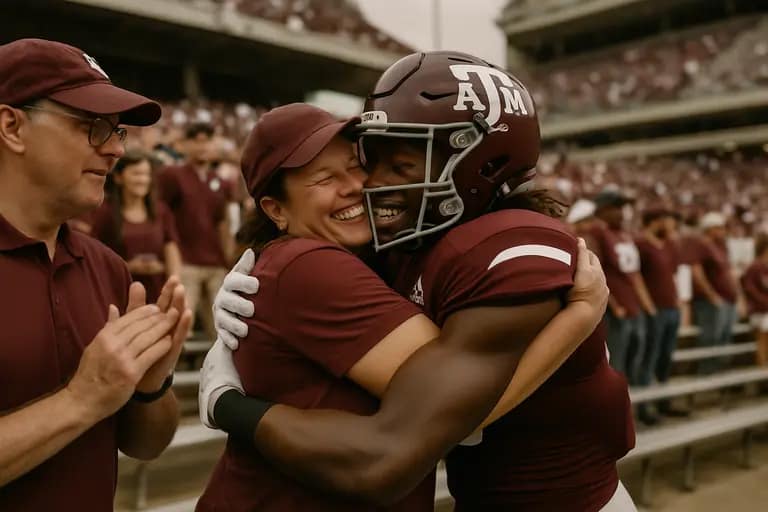
Texas A&M fall baseball also connects to the broader Texas player-development path. Many youth players in the state see College Station as a measuring stick, whether they are attending camps, playing fall tournaments or tracking college rosters. The Rice exhibition showed how quickly a college program has to sort through new players after summer arrivals and early fall practice.
For families comparing fall training options, the Aggies’ roster split reinforces the value of adaptability. Players who move from high school to college, or from one college program to another, have to adjust fast. That means learning new routines, accepting role competition and producing in limited looks. Families planning development weekends can compare that idea with local fall options, including Texas A&M camps that focus on age fit, dates and College Station planning.
The McNeese Date Needs Careful Context
The research notes say Texas A&M’s second fall exhibition was scheduled for Friday, October 16, 2026, against McNeese at Blue Bell Park, with first pitch listed for 7:00 p.m. Because today is October 21, 2026, that date has already passed. No verified McNeese result was included in the supplied research, so this analysis does not claim a score, standout player or attendance detail from that game.
That distinction matters. Fall schedules move quickly, and postgame information is not always included in the same notes that announced an event. For Texas baseball families trying to track college programs, the safe approach is to separate confirmed results from scheduled dates. The Rice game gives confirmed performance details. The McNeese listing confirms a second exhibition was planned, but not the outcome from the material provided here.
What The Rice Exhibition Means For Texas A&M Fall Baseball
The Rice scrimmage did not settle the Aggies’ spring roster, but it did frame the work ahead. Texas A&M fall baseball is operating with a roster mix that requires fast evaluation, staff clarity and player buy-in. The returning group offers continuity. The transfers bring older competition. The freshmen bring upside and pressure for early development.
The clearest baseball takeaways are practical. Freshcorn gave Texas A&M a starting point on the mound. Several relievers posted scoreless innings. Williams finished the long scrimmage with a strikeout-side inning. Offensively, RBI swings came from both established and new names, while Schlaegel produced the only multi-hit game. Those are early markers, not final answers.
For the Texas youth baseball audience, the larger lesson is about how college programs use fall competition. Coaches want to see players perform outside the practice script. They want to test depth, see how newcomers respond and identify which players can repeat quality work. Texas A&M fall baseball gave a clear example of that process on October 9 at Olsen Field, and the Rice exhibition now serves as one verified checkpoint in the Aggies’ longer roster-building process.