

UIL baseball playoffs changed the planning model for high school programs in Conferences 3A through 6A, and the ripple reaches Texas youth baseball teams that are building players for that stage. Starting with the 2023-2024 school year, UIL began piloting a two-out-of-three postseason format in 3A, 4A, 5A and 6A from bi-district through state, unless both coaches agree to a single-game format, according to the UIL postseason baseball information. For youth coaches, that is not just a high school rulebook item. It changes how families, select teams and middle school-age players should think about pitching depth, recovery, travel, weather delays and pressure baseball.
How UIL baseball playoffs Changed The Series Model
The old youth habit of treating bracket baseball as a one-day survival test does not fully match the postseason model players may face in Texas high school baseball. A two-out-of-three series asks a roster to win across multiple games, with different pitching choices, different defensive matchups and sometimes different days. A team that wins Game 1 still has to manage the series. A team that drops Game 1 still has a path, but only if its pitching plan and dugout response hold up.
UIL baseball playoffs Format At A Glance
For Texas baseball families, UIL baseball playoffs now offer a clear signal: postseason readiness is not only about the top arm or the hottest hitter. UIL materials state that the pilot applies in Conferences 3A through 6A, while Conferences 1A and 2A are not part of the automatic two-out-of-three requirement. The same UIL postseason information also states that if the format is not agreed upon, a coin flip can decide between single elimination and the two-out-of-three series.
Where The Pilot Applies
The pilot reaches the larger-school classifications: 3A, 4A, 5A and 6A. That matters for youth baseball because many tournament players in Texas are aiming toward those high school rosters. UIL has six conference levels, 1A through 6A, and Conferences 2A through 6A have the top four district finishers advance to the playoffs, with separate Division I and Division II brackets in 2A through 6A based on enrollment. For a 12U, 13U or 14U player, that structure is a preview of how deep the player pool becomes as school baseball approaches.
Why Series Play Matters For Texas Rosters
A three-game ceiling per playoff round puts a premium on roster balance. In a single-game format, one ace can carry a night. In a series, the second starter, third arm, catcher stamina and defensive substitutions start to show. That is where Texas youth teams can learn from the high school format without pretending youth baseball should copy every high school demand.
Pitching Depth Becomes A Development Target
Coaches at the youth level can use this shift as a reason to develop more players on the mound. That does not mean chasing extra innings in the fall or asking young arms to do more than they should. It means giving more players controlled mound work, teaching strike throwing, and building confidence in relief roles. In series baseball, the pitcher who records six outs in Game 2 may be just as valuable as the starter who opens Game 1.
Catchers And Defense Carry More Weight
Two-out-of-three baseball also exposes catching depth. A catcher who handles a full first game may not be the best option to catch every inning across a series. Youth teams can prepare by training a second catcher, rotating practice reps, and teaching pitchers to work with more than one receiver. The same applies to infield defense. A third game often rewards the team that still makes routine plays after long travel, heat, delays or a late Saturday restart.
Schedule Pressure, Weather And Travel
UIL’s series rules put schedule management in the middle of the competitive plan. In a two-out-of-three series, Game 1 and Game 2 may be played before Friday. If a deciding third game is needed, it cannot be played until after the end of instruction on Friday or on Saturday, according to UIL postseason rules in the baseball postseason manual. That instruction-time detail is a Texas school baseball issue, but youth families know the same pressure: school hours, work schedules, hotel decisions and field availability all collide during tournament weeks.
Weather adds another layer. UIL materials state that if one game has been played but weather prevents Game 2 on Saturday, the winner of Game 1 advances. If two games are split and Game 3 cannot be played on Saturday because of weather, Game 3 may be played on Monday of the following week. UIL materials also state that if a two-out-of-three series fails to complete a full game by the end of Friday, the series automatically reverts to a one-game format. Those rules show why Texas teams should never treat weather planning as an afterthought.
For youth programs, the travel lesson is simple: build plans that can flex. Families may need to know whether a tournament could stretch late, whether a team has enough pitchers available under its own event rules, and whether the roster can handle a second day after a weather delay. The same thinking appears in local tournament planning, including fall event decisions covered in Texas baseball tournament dates.
What This Means For Youth Tournament Preparation
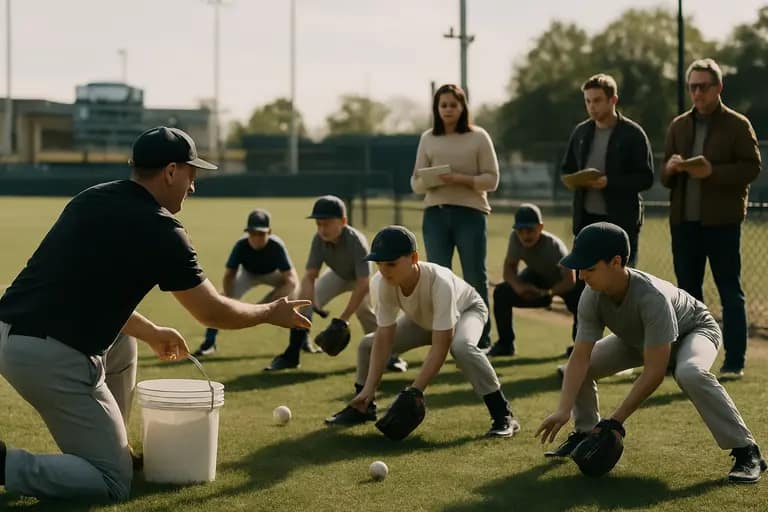
Youth teams do not need to turn every weekend into a high school playoff simulation. They do need to prepare players for the baseball skills that a series format rewards. That starts with calm dugout management. A Game 1 loss in a series is not the end. A Game 1 win is not a trophy. Players who learn that rhythm before high school will be better equipped when bracket pressure rises.
- Plan multiple pitching paths: Prepare starters and relievers for different score situations, not just perfect bracket scripts.
- Train more than one catcher: Series baseball can strain one receiver, especially in warm Texas conditions.
- Practice short-memory routines: Players need a reset process between games, especially after errors or tough innings.
- Discuss travel before brackets: Families should know how late games, weather delays and added nights could affect plans.
- Track recovery honestly: Coaches should watch fatigue, body language and arm soreness across multi-game weekends.
The best youth response is not panic. It is better planning. A Texas team that carries only one trusted pitcher into a Sunday bracket may still win a youth event, but that model does not match the direction of larger-school high school postseason baseball. Better youth development spreads responsibility, keeps more players engaged and gives coaches more choices when the game changes.
What UIL baseball playoffs Mean For Youth Teams
UIL baseball playoffs now give Texas youth programs a practical target for player development. The target is not just velocity, batting averages or weekend medals. It is the ability to compete across a series, manage the staff, protect players, handle travel and respond when weather changes the schedule.
For coaches, the takeaway is to teach tournament players how series baseball feels before they reach high school. For parents, the takeaway is to value roster depth and player growth over one-game heroics. For players, the message is even clearer: the next level rewards the teammate who can help on Game 1, Game 2 or Game 3. That is the real youth baseball connection to Texas postseason play.