

Challenger Little League takeaways from the recently concluded 2026 exhibition point Texas youth baseball families toward a clear lesson: adaptive baseball events are not side attractions. They are baseball events with planning needs, volunteer roles, player development goals and community value. The provided research supports one specific 2026 national exhibition, not a Texas bracket or local tournament result, so the Texas angle here is practical application for leagues, tournament directors, coaches and families.
What Challenger Little League Showed In 2026
2026 Exhibition Recap
On Saturday, August 29, 2026, players from Pennsylvania and California took part in the 2026 Challenger Division Exhibition Game at Volunteer Stadium in Williamsport, Pennsylvania, as reported by the Williamsport Sun-Gazette. Because that game has already been played, the useful sports angle now is not schedule promotion. It is what the event showed about format, family involvement, access and the way adaptive baseball can sit inside a major youth baseball setting without losing its own purpose.
The teams came from different parts of the country, with the Pennsylvania group from Berwyn-Paoli and the California group from East County in Oakley, according to the provided research. That pairing matters for Texas baseball because travel is one of the first barriers any adaptive tournament or showcase-style exhibition must solve. A Dallas-area family, a Rio Grande Valley family and a Panhandle family can face very different trip lengths, hotel costs and day-of-game stress even before the first warmup throw.
Challenger Little League Format And Skill Growth
The Challenger Division is Little League’s adaptive baseball program for individuals with physical and intellectual challenges, and Little League lists participation for players ages 4–18, or up to age 22 if still enrolled in school, through its Challenger Division information. The research also notes that every player bats and that traditional scores are not kept. That changes the job of the coach. Instead of managing a bracket, the coach manages confidence, timing, safe movement, attention, communication and steady repetition.
The Challenger Little League model gives players baseball tasks that can be adjusted without removing the baseball feel. A swing can be off a tee, a ball can be rolled, a buddy can help with direction, and a base path can become a place where success is measured by effort and completion. Texas coaches who work weekend tournaments know how much player mood and confidence can affect the next inning. In adaptive play, those same factors are not soft extras; they are part of the game plan.
Takeaways For Texas Tournament Planning
Access Starts Before First Pitch
Texas tournament operators often focus on field inventory, gate times, umpire coverage and bracket pacing. Those items still matter, but adaptive baseball asks planners to begin earlier. Parking, shade, restroom distance, check-in pressure, walking routes and dugout space can shape the day before a player steps into the box. A clean schedule is helpful, yet a family also needs to know where to unload equipment, where a player can take a break and who can answer a question without sending them across the complex.
The biggest planning lesson from the 2026 exhibition is that access is a baseball operations issue. It is not only a facility note. If an adaptive event is added to a tournament weekend, it should not be squeezed between bracket games as a ceremonial pause. It needs warmup time, field reset time, an announcer or field director who understands the format, and volunteers who know the difference between helping and rushing. Texas complexes can build stronger events when the adaptive game has its own field rhythm.
Volunteers Need Baseball Jobs
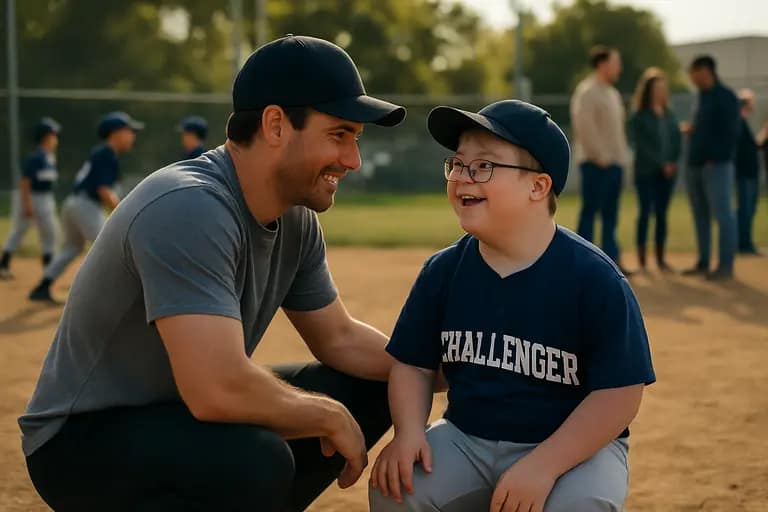
Volunteer energy matters, but clear jobs matter more. A buddy system can help players as needed, according to the research, but buddies must understand that the player remains the center of the moment. That means assisting with safety, direction and comfort while letting the athlete swing, run, throw or celebrate as independently as possible. A buddy who does too much can unintentionally take away the player’s baseball experience.
For Texas leagues, volunteer preparation can be simple and still effective. Before an event, organizers can hold a short field meeting and assign jobs tied to the game itself:
- Buddy support: assist players only as needed and follow family or coach guidance.
- Dugout flow: help players find batting order spots without crowding the bench.
- Base path safety: watch spacing, direction and pace around the bags.
- Family contact: answer basic schedule and facility questions near the entrance.
- Field reset: keep bats, balls and helmets organized between hitters.
That kind of role clarity also connects with the wider work of youth baseball organizations, where access, coaching, sponsors and volunteers all shape whether players keep coming back.
Community Value Beyond Scorekeeping
Families Are Part Of The Event
The research describes families cheering from the fences and celebrating each player’s effort during the August 29 exhibition. That detail is easy to overlook, but it is one of the strongest takeaways for Texas tournament communities. In many youth baseball events, families are treated mainly as ticket buyers, drivers and snack-table workers. In adaptive baseball, family presence can be part of the emotional structure of the game. Players hear familiar voices, volunteers learn names, and the field feels less like a performance space and more like a team setting.
That should influence venue setup. If families are expected to support players from the fence line, sight lines matter. Shade matters. A short walk to seating matters. Loudspeaker volume matters. The game-day environment should make it easier for a player to stay comfortable and easier for a parent or guardian to remain close without blocking play. These are small details, but Texas families who spend long days at tournament parks know that small details can decide whether a player has enough energy for the next at-bat.
Inclusion Still Needs Structure
Inclusion is strongest when it has structure. A welcoming message is not enough if the schedule is unclear, if volunteers are unsure, or if the field setup creates avoidable stress. The 2026 exhibition showed how adaptive baseball can be placed in a high-profile youth baseball setting while still focusing on participation, sportsmanship and player growth. For Texas events, that means tournament directors should avoid treating adaptive play as an add-on. It deserves the same level of field assignment, staff briefing and family communication as any other event block.
Scorekeeping is not the main story in this format, but skill development is still real. Players can work on bat path, hand-eye timing, throwing direction, base running, listening for cues and interacting with teammates. Coaches can also learn. They get better at patient instruction, shorter verbal cues, modified drill design and reading a player’s comfort level. Those coaching skills can improve the wider league environment, including tee ball, coach pitch and early kid pitch divisions.
Why Challenger Little League Matters For Texas
For Texas families, Challenger Little League offers a reminder that baseball development is not limited to tournament wins, radar readings or ring ceremonies. The sport also grows when more athletes can wear a uniform, take a turn at the plate and be recognized by their local baseball community. That matters in large metro areas with crowded complexes, and it matters in smaller towns where one strong volunteer group can set the tone for the whole league.
The most useful takeaway from the concluded 2026 exhibition is practical: adaptive baseball succeeds when access, volunteers, family experience and player skill work are planned together. Texas youth baseball already knows how to organize long weekends, manage field traffic and build local pride around events. Applying that same care to Challenger Division games can make the tournament calendar stronger without changing what makes baseball familiar. The field still has bases, bats, teammates and applause. The difference is that the event is built so every player has a real place in it.