

UIL baseball rules for 2026-27 give Texas coaches more than a rulebook update. They affect August workouts, pre-season planning, game balls, scrimmage calendars, postseason format discussions, and first-base setup before the 2027 NFHS rule date. The best coaching response is simple: read the rule changes early, assign staff duties, update parent communication, and make compliance part of the practice plan instead of a late checklist item.
What UIL Baseball Rules Change For 2026-27
The safest way to read UIL baseball rules for 2026-27 is to separate what already applied on August 1, 2026, from what becomes a field-equipment issue on January 1, 2027. Heat stress policy is already in force for Texas schools. The NFHS base rule is tied to the 2027 effective date, with UIL schools able to prepare before that date based on the research provided.
August 1 Heat Requirements
Beginning August 1, 2026, UIL made heat protocols mandatory for outdoor athletic and band activities. The required standard uses Wet Bulb Globe Temperature, or WBGT, for practice modifications, rest and hydration breaks, and rapid cooling zones. UIL’s heat stress plan also requires onsite rapid cooling equipment for full-body ice-water immersion when the WBGT threshold reaches the listed yellow-zone trigger, based on activity class and conditions UIL heat stress plan.
For baseball, that matters before a pitcher ever toes the rubber. Fall skill work, off-season throwing, tryout-style sessions, and early pre-season practices all need a heat plan that can be used by more than one adult. A head coach should not be the only person who knows where the thermometer is stored, where the ice tub is located, or who can stop activity when WBGT requires a change.
January 1 Base Equipment Date
NFHS baseball rule changes taking full effect on January 1, 2027, include the requirement for a double first base or the alternative use of an 18-inch square first base. The NFHS baseball rules page is the authority coaches should use for the national rule framework NFHS baseball rules. Based on the research notes, UIL schools could opt in during 2026, with the 2027 rule becoming the key date for mandatory use.
The double first base is not just a purchase order. Coaches need to teach footwork. The white portion is in fair territory, and the solid contrasting color portion is in foul territory, with no gap between the two. Batter-runners and fielders use the proper side based on the play. That means first basemen, pitchers covering first, catchers on dropped third strikes, and bunting groups all need reps before the rule shows up in a tight district game.
Schedule And Roster Planning Under UIL Limits
Texas high school baseball seasons get crowded fast, especially for programs balancing varsity, sub-varsity, junior high, tournament weekends, field availability, and weather delays. The 2026-27 regular season limits in the research notes should push coaches to build the calendar backward from district play rather than stacking early games just because dates are open.
Contest Totals And Tournament Choices
The regular season contest limits listed in the research are tied to how many tournaments a team enters. A team playing no tournaments may play up to 26 games. With one tournament, the limit is 23 games. With two tournaments, it is 20 games. With three tournaments, it is 17 games. That tradeoff is a coaching decision, not just an administrative detail.
A tournament-heavy schedule can expose young players to pressure, travel demands, and quick turnarounds. A fuller non-tournament schedule can give a coach more control over pitching plans and opponent selection. Neither path is automatically better. The right answer depends on roster depth, arm readiness, school-week demands, and whether younger players need game innings or practice instruction.
Scrimmages And School-Week Control
Under the research notes, teams are limited to two scrimmages per calendar week, with up to four schools participating. Only one scrimmage may occur during the school week, with another possible at the end of the week. Once a team begins interschool games, no scrimmages are allowed. That means coaches should use scrimmages for specific teaching goals: bunt defense, first-and-third offense, catcher communication, pickoff timing, and live reads off the bat.
The regular season also allows one contest, game or doubleheader, per school week, except from Friday after school through Saturday midnight, when there is no limit. For coaches, that rule should shape pitching calendars, bullpen days, and catcher workload. If a Tuesday game is your only school-week contest, do not treat Monday like a max-effort showcase. Keep the week connected.
Equipment, Baseballs, And First-Base Teaching
UIL baseball rules in 2026-27 also touch what coaches order, inspect, and teach. The research notes state that NOCSAE/NFHS certified game and practice baseballs are mandatory at all levels: varsity, sub-varsity, and junior high. That is a direct equipment-room issue, and it should be checked before the first full team practice.
UIL Baseball Rules Checklist Before Practice
Build your first week around UIL baseball rules instead of waiting for an umpire, athletic director, or opposing coach to point out a gap. A practical staff checklist can stay short and still cover the major risk areas.
- Heat setup: Confirm who records WBGT, who has authority to modify practice, and where rapid cooling equipment is stored.
- Baseballs: Separate certified practice and game baseballs from old inventory that does not meet the 2026-27 requirement.
- First base: Decide whether to train now with the double first base or 18-inch first base before the January 1, 2027 NFHS date.
- Scrimmages: Place scrimmages before interschool games begin and keep the weekly limit visible on the staff calendar.
- Coach training: Confirm that every coach completes the UIL Coaches Certification Program annually before the sport season.
Equipment compliance can feel less exciting than batting practice, but it protects the program from preventable problems. Assign one assistant to baseball inventory, one to base setup, and one to heat station readiness. If your staff is small, involve the athletic trainer or campus athletic coordinator where school policy allows.
Teaching The Double First Base
Do not teach the new first-base setup only as a safety rule. Teach it as baseball. On routine ground balls, the first baseman needs clean foot placement. On bunts, pitchers must know where the runner is expected to go. On dropped third strikes, catchers need a throwing lane and a target side. On pickoff plays, the first baseman still has to receive the ball, hold the bag legally, and avoid turning a routine out into a collision.
Use slow walk-throughs first. Then add fungo pace. Then add baserunners. Young players learn footwork better when coaches reduce speed before adding pressure. That approach also helps umpires, players, and parents see that the rule is not a trick. It is a field-use standard that changes habits around one of the busiest bags on the diamond.
Coach Training And Communication Duties
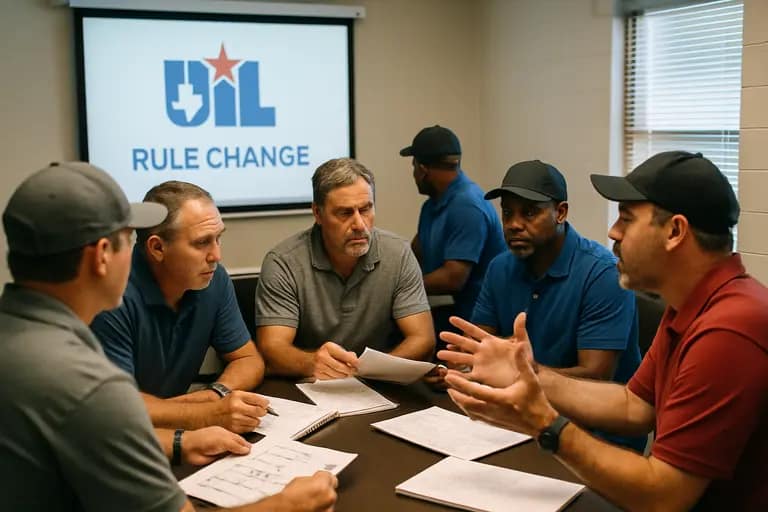
For Texas coaches, UIL baseball rules are not only about what happens between the lines. The research notes say all coaches must complete the UIL Coaches Certification Program annually before their sport season, or before school starts if the sport is out of season. During 2026-27 and 2027-28, student coaches enrolled in a UIL-approved university coaching program may volunteer as unpaid assistant coaches under certain criteria.
Staff Roles Before The Season
Head coaches should make compliance visible. Put training dates, certification status, scrimmage limits, equipment checks, and heat procedures in one shared staff document. That document does not need to be fancy. It needs to be current, factual, and easy to use during a busy school day.
Parent communication should be just as clear. Tell families how heat decisions will be made, why practices may change length, why certain baseballs are required, and why first-base drills may look different before January 1, 2027. Most parents are more patient when they understand that a coach is following a written standard, not making a last-minute call from the hip. For a broader safety framework that fits Texas weather and youth baseball routines, coaches can review this Texas youth baseball safety playbook.
Postseason Format Conversations
The research notes also cover postseason format. Since the 2023-24 season, Conferences 3A through 6A have used two-out-of-three postseason series unless both schools agree to single-game elimination. If weather or other constraints prevent a full three-game series before certification deadlines, the format can revert. Coaches should not wait until the bracket is set to discuss pitching depth, travel windows, and how they will handle a possible format change.
This affects roster management in practical ways. A team built around one top arm may look different in a single game than in a series. A team with three reliable starters, strike-throwing relievers, and flexible defenders can handle a longer weekend with less panic. Use district play to find those answers. Do not use the postseason as the first test of your second catcher, third starter, or late-inning defensive replacement.
Why UIL Baseball Rules Matter For Texas Dugouts
UIL baseball rules matter because they turn good intentions into repeatable coaching habits. Heat policy tells staff when to adjust. Schedule limits force smarter calendar choices. Certified baseball requirements clean up equipment standards. The first-base change asks coaches to teach safer, clearer footwork before the 2027 effective date. Training rules remind every adult that coaching in Texas school baseball carries duties beyond writing the lineup.
The practical move is to start with a staff meeting, not a speech to players. Confirm the dates: August 1, 2026 for mandatory UIL heat protocols and January 1, 2027 for the NFHS first-base rule taking full effect. Then set the calendar, inspect the baseballs, plan first-base instruction, and write down who handles each safety duty. Players do not need coaches who sound worried. They need coaches who are ready.