

The 2026 Little League World Series ran from August 19-30, 2026, and it is now a finished event. For Texas coaches, LLWS coach strategies should be treated less like a Williamsport dream board and more like a practical review: what helps young players handle pressure, stay healthy, and keep learning when the schedule tightens.
Most Texas teams will never reach that stage, and that is not a failure. The real coaching value is in the preparation habits. Tournament baseball in Texas can include heat, travel, bracket stress, late meals, short rest, and emotional swings for families. A coach who prepares players for those conditions gives them something bigger than a weekend trophy. He gives them a safer, steadier way to compete.
LLWS coach strategies After August 2026
What The Finished Tournament Teaches Coaches
Because the 2026 event has already concluded, the useful question is not who might respond under pressure. The better question is how coaches can use the event as a teaching mirror. High-stakes youth games expose habits. Teams that communicate clearly, share the pitching load, and practice pressure spots tend to look calmer when the inning gets loud.
Young players rarely rise to a moment they have never rehearsed. If the first bases-loaded defensive meeting happens in an elimination game, the coach has waited too long. Texas coaches can recreate parts of that stress in a safe practice setting: crowd noise from teammates, a scoreboard count, a time limit, or a one-pitch at-bat with the game on the line. The goal is not fear. The goal is familiarity.
LLWS coach strategies For The Texas Calendar
Texas youth baseball has its own rhythm. Spring league, summer tournaments, school breaks, private lessons, and fall ball can run together if adults are not careful. That calendar can build skill, but it can also hide fatigue. A player may look fresh on Saturday morning while carrying innings, bullpen throws, catching workload, and weekday lessons from the prior two weeks.
A coach preparing a team for tournament pressure should start with a shared calendar. Ask families to report outside pitching, catching, and showcase work. That is not prying; it is player care. Coaches who need a related framework on roster depth and safer workloads can use Junior League lessons from Seguin as a local planning companion.
Build Arms Before You Build A Bracket
LLWS coach strategies For Arm Care
Arm care has to sit at the center of tournament preparation. A five-year Little League, USA Baseball, and University of North Carolina study found that overuse was the primary cause of arm injuries in youth pitchers ages 8-13, and the data did not support the idea that breaking pitches increased injury risk in that age group Little League pitching study. That finding does not give coaches permission to rush advanced pitches. It does remind us that volume, rest, and workload tracking deserve daily attention.
A separate 10-year cohort study of adolescent pitchers reported an overall arm injury incidence of 25.6 per 100 athletes, with a 5.4 percent cumulative risk of surgery arm injury cohort study. Those numbers should make any youth coach pause before handing the ball to the same trusted player one more time because the bracket feels urgent.
Pitching Depth Beats Hero Innings
That is where LLWS coach strategies should push coaches toward depth. The best time to develop the fourth, fifth, and sixth pitcher is not the night before a district game. It is during ordinary practices, lower-pressure league innings, and controlled scrimmages where a player can learn to throw strikes without feeling like he is carrying the town on his back.
For Texas teams, pitching plans should include more than pitch counts. Coaches should track warm-up volume, bullpen work, catcher innings, soreness reports, and recovery days. A pitcher who also catches, plays shortstop, and takes a private lesson in the same week is not working from a clean slate. The lineup card should reflect the whole athlete, not just the game in front of you.
Practice Plans That Match Tournament Stress
Simple Cues For Young Pitchers
Young players do not need a college-level lecture between pitches. They need short, repeatable cues. For pitchers, that may sound like: balance, eyes to the mitt, finish to the plate. If the coach stacks five mechanical corrections into one mound visit, the player often leaves more confused than helped.
Keep a small set of team language and use it all year. Infielders can hear, “feet first, glove out front.” Hitters can hear, “see it up, stay through it.” Catchers can hear, “receive, breathe, lead.” These phrases are not magic. They work because players hear them in calm practices before they hear them in tense innings.
Pressure Reps Without Panic
Pressure training should feel competitive, not chaotic. Start with small moments. Put runners on second and third with one out. Give the defense one job: get an out at the plate only if the ball takes them there. Give the offense one job: score without running into an avoidable out. Then stop and ask players what they saw.
A practical pressure block can include:
- One-inning games: Start with a score, a base situation, and a clear number of outs.
- Silent defense: Let players run the communication so coaches can see who understands coverage.
- Reset pitches: Teach the pitcher and catcher to slow the inning with breath, eye contact, and a simple target.
- Bench roles: Assign charting, timing, and encouragement so non-playing moments still build focus.
These drills help players understand that pressure is information, not a monster. A tight chest, fast heartbeat, or noisy dugout does not mean a player is failing. It means the game matters, and the player has a routine to return to.
Communication, Recovery, And Roles
Parent Messages Before Travel
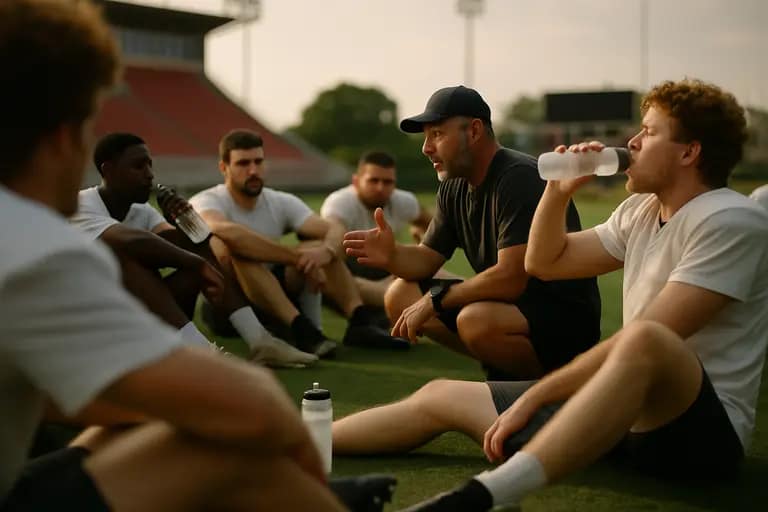
Parents can support tournament preparation better when they know the plan. Before a high-stakes event, coaches should send a clear note covering arrival times, hydration expectations, rest priorities, conduct standards, and how pitching decisions will be made. This prevents sideline confusion when a popular player is held out because of rest.
Texas travel weekends can tempt families into late dinners, extra batting cage rounds, and long postgame conversations in the parking lot. Those moments are part of baseball culture, but coaches should remind families that sleep and food are performance tools. A 12-year-old does not recover like a professional athlete with a training staff.
Rest Windows And Position Plans
Recovery should be written into the plan, not squeezed in after the fact. Catchers need attention because squatting, throwing, blocking, and foul tips pile up. Middle infielders need leg recovery. Pitchers need true no-throw windows when rules and soreness call for them. Coaches should never frame rest as weakness.
Position planning also lowers anxiety. If a player knows he may enter in the fourth inning at second base, he can prepare. If the bench only hears instructions after something goes wrong, players begin to feel like spectators. Good tournament teams keep every player connected to the next inning.
Why LLWS coach strategies Matter For Texas Teams
Turning A National Stage Into Local Coaching Habits
The best use of LLWS coach strategies is not copying another team’s signs, chants, or uniforms. It is bringing the right habits back to local fields in San Antonio, Houston, Dallas-Fort Worth, Austin, the Valley, East Texas, West Texas, and every small-town complex in between.
Texas programs that treat LLWS coach strategies as a safety and development checklist will be better prepared for bracket play. They will know who can pitch, who needs rest, who can handle a pressure bunt, and who needs a quieter conversation before the next at-bat. That kind of coaching does not guarantee a trip to Williamsport. It does give young players a healthier baseball experience and a better chance to enjoy the big moments they do earn.